


Securing the future of Poșta Română
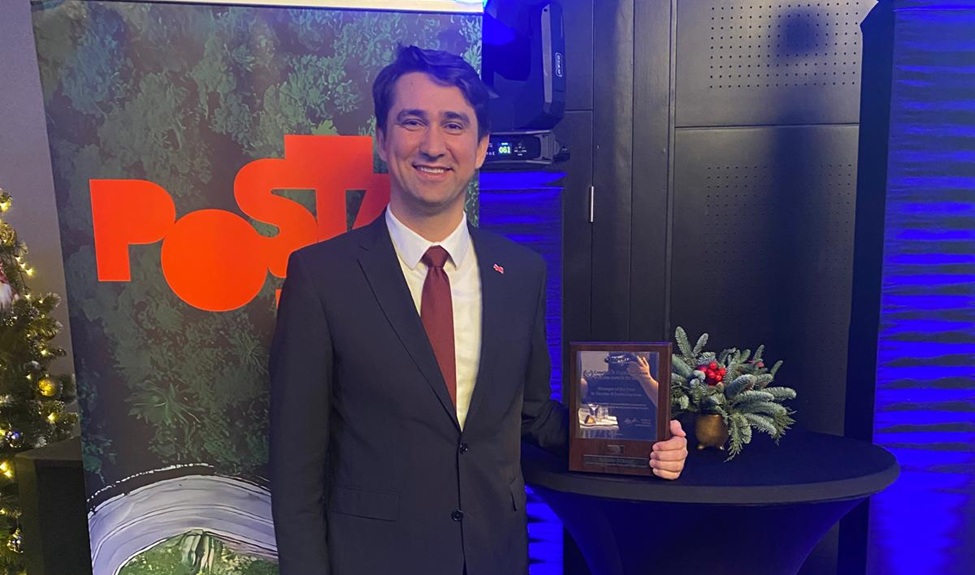
Post & Parcel speaks to Valentin Ștefan, Chief Executive Officer, Poșta Română about transformation, rebuilding public trust and driving change.
Why did you move from finance into the postal sector?
After studying and working in the US, I returned to Europe seeking a new and meaningful challenge. I wanted more than just a career—I wanted a mission: to take a vital institution like Poșta Română, modernise it, and restore its role as a trusted cornerstone in communities nationwide. While my experience in finance gave me discipline and strategic insight, transforming an organisation requires vision, courage, and relentless determination. The company faced a poor reputation and lacked clear direction, which made it the perfect challenge. That opportunity continues to inspire me every day and drives me to push boundaries and create lasting change.
What convinced you that the company could be turned around?
What convinced me that the company could be turned around was what I discovered when I reviewed the financials. I saw not just inefficiencies, but concrete opportunities: the extensive postal network was underused and could support e-commerce growth, the logistics operations could be optimised to reduce costs, and the company had a trusted brand that could be leveraged to expand financial and parcel services. Poșta Română is like a hidden gem: its value was always there, it just needed strategic focus, modernisation, and operational improvements to truly shine. From that moment, I began working on the transformation step by step, focusing on unlocking the company’s full potential and turning these opportunities into tangible results.
What was your goal when you started?
 The main goal was to secure a future for Poșta Română — to ensure that the company remains relevant – not just in five years, but in 10 and 20 years as well. That meant building a modern business model that truly serves the needs of our customers.
From there, we focused on building on our strengths. We have a very strong shareholder in the Romanian government. While we cannot use those resources freely, the backing itself gives us stability. Also because of their backing, it wouldn’t be fair to aim to compete with other national private companies. Our ambition should be larger: to become a strong player at least at a regional level, if not across the European Union.
What timeframe do you have in mind for this transformation?
I have a clear mandate. I signed a contract with the shareholders in which we agreed on specific objectives to be achieved over a four-year period, and my role is to push the company to reach certain performance levels within that timeframe.
At the same time, if we truly want to become an international company and a highly reliable service provider, we know that four years is not enough. We are not fooling ourselves into thinking that this transformation can be completed within a single mandate. What matters is that, by the end of these four years, the company is on a solid path forward.
The goal is to ensure that those who take over after our term have something meaningful to build on, rather than having to start from scratch.
Can you describe logistics in Romania today?
Romania is going through a very positive period in its development. There is strong growth across almost every field, and a significant amount of capital is flowing into the country through multiple channels — from remittances sent by Romanians living and working abroad, to EU funds, as well as revenue generated within the economy itself.
I truly believe these are the golden years for Romania, with many opportunities emerging, including in the logistics sector.
How does the postal operator fit into Romania’s economic transformation?
 There are many opportunities. One of them is that we can help reduce pressure on public spending. We can become a one-stop shop for government services. Whether a citizen needs to collect a driver’s licence, pick up a passport, pay taxes, fines, or road fees, all of this could be done in one place — the post office — instead of across multiple institutions.
The challenge is getting all parts of the government to understand that this is the right approach.
What were the biggest obstacles when you started the job?
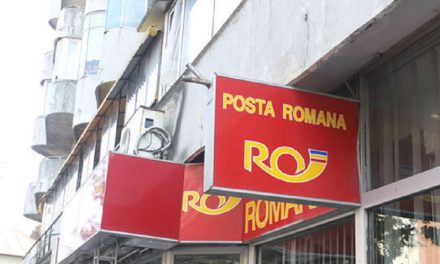
Despite being the largest company in the industry by revenue, number of employees, and operational reach, most people under the age of 40 had little to no idea what Romanian Post actually does. As a result, they didn’t trust us or bring their business to us. Many believed the best solution was to shut the company down or sell it.
In contrast, people over the age of 40 tend to recognise the essential role Romanian Post plays in everyday life — delivering pensions, mail, and newspapers. However, this group is generally less aware of the company’s financial challenges.
How do you hope to / have you changed the perception of the post?
When I took on this role, Romanian Post was widely seen as outdated and inefficient, almost irrelevant in the modern world. I wanted to completely change that perception. My mission has been to transform the company into a modern, reliable, and forward-looking institution that people can trust and rely on every day. We’ve done this by modernising operations, expanding digital and e-commerce services, improving delivery speed, and making our network more accessible to communities across the country. Today, we are no longer just a postal service—we are a proud competitor in logistics and soon to be in commerce, proving that Romanian Post can deliver real value.
My goal is for people to see us not as a struggling institution, but as a dynamic, essential force driving progress in Romania.
What initiatives are you most proud of achieving so far?
 There are a lot of initiatives that I am very proud of, and I want to thank my team and colleagues for making them possible. One of the top achievements is our hub network across the entire country, which is unique in Romania—no other competitor has this so far. Another notable accomplishment that received attention is the new visual identity of the Romanian Post, a necessary step that aligns with our technological modernisation and investments. A further special milestone is the launch of our subsidiary in Chișinău, Republic of Moldova, the first one during my mandate. There are also many smaller achievements that I am proud of, such as the steps we have taken in digitalisation and providing medical healthcare for our 21,500 employees, something that had never been done before.
How has the war in Ukraine affected Post Romania?
The ongoing war in Ukraine has affected Poșta Română in several concrete ways, impacting both our operations and our role as a national institution. First, the conflict has reshaped logistics and regional transport flows, increasing demand on supply chains across Eastern Europe. As traditional routes through Ukrainian and Black Sea ports were disrupted, Romania became an important transit country for goods moving between Ukraine and the EU, which has influenced logistics volumes and network utilisation across multiple sectors, including postal and freight services.
For Poșta Română specifically, the war has presented both operational challenges and opportunities to demonstrate solidarity and adaptability. Early in the conflict we launched initiatives like “Solidari cu Ucraina”, using our infrastructure to collect and transport humanitarian aid such as food, hygiene products, and medical supplies to Ukraine at no cost. We also simplified customs procedures for personal belongings sent to Ukrainian refugees, helping families stay connected and supported.
The broader regional context has meant that logistics flows have been less predictable, requiring us to adapt our planning and improve flexibility in cross‑border services. At the same time, we have worked to reinforce our mission as a resilient public institution that supports communities in times of crisis.
Above all, the war has strengthened our commitment to regional cooperation and to providing reliable service even under difficult circumstances.
Do you have a message to the industry?
Whenever I travel abroad and meet people in similar roles, I always try to share the same message: postal companies need to be less conservative and more innovative. Innovation is part of our DNA — it’s what we used to do in the past.
For some reason, over the last 10, 20, or even 30 years, we have become very conservative. At times, it feels like we are standing in the way of progress instead of being the ones driving it. We can change the society we live in.
I believe we all need to accept that we must move from purely traditional models to alternative ways of doing business, and we should be the first ones to lead this transition rather than reacting to it.
About Valentin Ștefan
Florin-Valentin Ștefan is the General Director of the Romanian Post (Poșta Română), a position he has held since 2021. During his tenure, the company has accelerated a comprehensive transformation program, focused on digitalisation, service diversification, and substantial infrastructure investments. Under his leadership, Romanian Post has expanded its financial and logistics services, modernised its nationwide operational network, and adopted technology-driven solutions to improve efficiency and delivery quality. At the same time, the company has strengthened its social role, supporting vulnerable communities and implementing projects in disadvantaged or crisis-affected areas. Romanian Post is thus positioning itself as both a key economic player and a vital social connector, with a dual mission: modernising postal services while fostering social cohesion.