


Home shopping – it's booming, but are the delivery companies ready?
Predictions of growth in home delivery have been thoroughly vindicated, but is the e-fulfilment market keeping up with demand? Peter Rowlands reports
Home shopping, particularly Internet shopping, is on the increase. Research group IMRG reports that online shopping grew 19 times faster than high street shopping last year, and doubled in value during the first six months of this year (to £4.75 billion). By any standards these increases are substantial, and they mean that more product than ever before is being sent to people's houses in vans.
Yet if you look back the Internet delivery market over the past two or three years, at first glance the picture comes over as one of retrenchment and withdrawal.
Many of the fulfilment houses that were only too quick to add an "e" to their proposition three years ago seem to have retreated to their traditional markets, and mainstream logistics companies like Exel and Tibbett & Britten, while still active in the market, have not swept the e-fulfilment board in quite the way that early indicators suggested they might.
So what's happening? Who is handling all the expansion in home delivery, and will there be enough carriers capable of accommodating further growth if it comes at the predicted rate?
It rather depends who you ask. With a few exceptions, the big logistics groups still seem in the main to be wary of home deliveries. Among specialists, however, it's a different story. David Birnbaum, leader of the new management team that took control at iForce last year, told e.logistics Magazine: "It's as if we're in a time-warp back to 1997, when the dotcom boom had hardly started. There's real growth in prospect."
That reading of the market is echoed by Martin Palmer, recently appointed logistics director at fulfilment specialist Amethyst. "We're getting a high level of enquiries at the moment from companies wanted to expand in home shopping," he says. Significantly, he adds that these include new start-ups as well as traditional suppliers that have dabbled in Internet shopping in the past. "The dotcom boom may have been and gone, but there are still entrepreneurs who think there's room for them in the market," he says.
At the turn of this year, when the US recession was finally biting across Europe and the impending Gulf conflict was causing a hiccup in market confidence, such bullishness might have seemed like whistling in the wind. Now, however, against a background of irrefutable statistical growth in home shopping, it seems a much more plausible reading of the market.
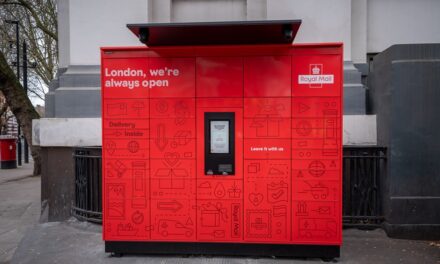
One problem, of course, is that many of the schemes that have evolved over the past three years to tackle home delivery issues have now been put on hold or even discontinued. For instance, several promising drop-box unattended delivery systems have disappeared, and the companies behind those that remain have been unashamedly switching their primary focus to the more profitable business-to-business market.
Meanwhile, Parcelforce Worldwide famously withdrew its evening delivery service last year. It says it is still "reviewing" the possibility of restarting the service, but that probably won't happen this year. Companies that used it were reportedly delighted with the results, but at the time the economics were simply not in its favour.
John Wilkins, Royal Mail's head of development for home shopping, comments: "There's strong demand from consumers, but retailers were slow to offer it. Their mentality was that it was a cost of sale, and not rechargeable. Yet those who took it up recognised that they could pass on the cost, and even mark it up, without losing business."
The good news, perhaps, is that the steady growth in home shopping can only fuel any moves to bring the service back. "There is definite evidence of a growth in demand," Wilkins says. And in the meantime, Parcelforce Worldwide is continuing to carry the standard for home delivery in other ways – for instance, with its Local Collect service, which allows consumers to redirect consignments to their local post office for picking up when it suits them. Approaching a million and a half consignments have been handled this way since its launch, the organisation says.
Some carriers seem to be having more success with evening deliveries. Amtrak, for instance, has been trialling the concept for six months within the bounds of London's M25 motorway, and has been sufficiently encouraged by the results to extend the service to nine other centres. These are due to be joined by half a dozen more over the coming months.
How has it managed to pull off this success? Managing director Jonathan Smith says this has a lot to do with having a flexible work force run by "seventy managing directors" at its franchised companies. "The only thing you're flexing is labour," he says, "and we find our people seem to like split shifts and part-time working."
Perhaps worse than any of the symptomatic flaws in the present home delivery market is the underlying reality that e-tailers still tend not to attach a high priority to delivery. Some do, but the overriding sense is that when it comes to setting out their delivery options and terms, many e-tailers equivocate, evade the issue or transfer the delivery cost burden squarely to the consumer.
Keith Basnett, who heads fulfilment specialist Zendor, takes a reasonably positive but nonetheless realistic view of the situation. "The more that home shopping grows, the more people will be aware of the problems of delivery, and the more inclined to do something about them," he says. But one obvious solution – for suppliers to pool their resources – is unlikely to happen, in his view. "They'll never agree to work together," he believes.
He does however feel that national solutions are more likely to succeed than local ones. "There are too many local entrepreneurs in home delivery," he says. "The onus to improve matters will be on the big players."
One weapon in Zendor's armoury is its extensive pool of local "couriers" – individuals in cars or small vans who know their own locality well, and are better able to fit deliveries in with consumers' lifestyles than bigger carriers. Several other delivery companies owned by catalogue groups – Reality and Parcelnet, for instance – also use couriers in this way, and home delivery specialists from outside the catalogue field are now also considering ways of tapping into this resource.
An example is Amethyst; Martin Palmer confirms that his company is looking at ways of harnessing courier deliveries. "It's a very appealing model," he says. Amethyst already works with Zendor in other aspects of fulfilment, so this might be a logical next step.
In the early days of the dotcom revolution, there was a belief that a new kind of "parcels aggregator" would emerge to handle at least some home deliveries (and other business too). Such a company would buy from the most appropriate carriers for each consignment type or traffic flow, if possible at the best rates for each job. Firesend probably epitomised this concept.
In practice, few successful examples have emerged. Firesend collapsed, and rival Deliverynet was eventually taken over. However, its buyer, Parcel2Go, is still flourishing, and Postvan also says it is growing.
More recently a new aggregator has emerged in the form of Home Direct Delivery Service, which was started by air freight and recruitment specialist Mike Brading. Actually he prefers to call the company "a facilitator offering multiple delivery options".
This is no virtual company; it has its own warehousing and handling system. But it buys in the delivery service on a fit-for-purpose basis. Brading says success depends on a range of factors such sufficient volume of throughput, industry knowledge and good working relationships with carriers. He draws confidence from the fact that in his experience, "home delivery is definitely a growth market."
Director Chris Summers adds an important operational caveat. "You've got to separate B2B and B2C operations if you want to succeed. There are too many differences to allow them to run side by side. If you do combine them, one will fail – and it will be B2C."
Perhaps the ultimate in tailored local delivery is the service operated in west and north London by Beck & Call. The company will accept consignments on behalf of any consumer in its area, and deliver it within a one-hour time window specified by the recipient. In its own market it has grown steadily, and it now has a staff of nearly 30 including 18 drivers at an enlarged depot in Fulham. So far, though, the concept has not been replicated elsewhere.
Founder Benedict Ely admits there are unique features about its present location ("a dense population with a high level of disposable income," as he characterises it), but feels that the business is genuinely scaleable, and adds: "There's a lot of potential in other parts of the country." He accepts, though, that it's a complex operation in which it is "not easy" to get all the elements right – a judgement which perhaps explains why the company has seen virtually no successful imitators so far.
One of the most contentious aspects of home delivery is the question of who should pay for it. Clearly it will ultimately be the consumer, but the real issue is how the charge is represented. As Peter Hughes, strategic business development director at Amethyst, succinctly puts it: "There's plenty of protest about the cost of home delivery, but there's a widespread reluctance to pay the price."
Zendor's Keith Basnett agrees. "Many consumers are reluctant to pay a delivery charge," he comments, and suggests: "Maybe the charge should be bundled with the item price, so that it's invisible to the consumer." The problem of course is that this can make the apparent selling price uncompetitive, as well as spreading the cost of the most expensive deliveries among all recipients.
Royal Mail has made what could be a revealing discovery about consumers' willingness to pay in order to smooth the delivery process. Of the 1.4 million consignments that have so far been redirected to post offices for collection through its Local Collect service, it says the vast majority entered the system following a failed delivery to the consumer's home. That means most of the users will have paid the 50p handling charge voluntarily on these items.
In this instance, consumers clearly preferred paying a fee to confronting the greater difficulty of being at home to take receipt, or travelling further to a local delivery office to fetch their goods.
Ironically, though, Royal Mail would prefer not to have to make this charge. It points out that if retailers sign up for the Decide & Deliver scheme (it only costs a couple of hundred pounds a year), then consumers can nominate their local post office as the delivery point from the outset, and don't have to pay extra for the facility.
Only about sixty retailers have so far signed up to the scheme, and the organisation believes it could achieve far greater savings from avoiding redeliveries if more were participating. "There's fairly steady growth," says Royal Mail's John Wilkins, "but it's taking longer to build up than we'd hoped." One reason might be that retailers have to put a link on their Web site, and also (more signficantly) vary the barcode labels on items despatched through the scheme: not a great hardship, but perhaps a commitment that puts some off.
Nevertheless, Wilkins insists: "People are looking convenience, and are willing to pay more for it." That's a judgement supported by Jonathan Smith of Amtrak, who is clear about where responsibility for delivery should lie. It's with all parties concerned, he says, and adds: "Suppliers, carriers and consumers should all understand the value in the delivery transaction," he says. "If one party doesn't understand it, the transaction is likely to fail."
He's not prescriptive about exactly who should pay what towards delivery, or whether the charge should be expressed separately or rolled into the product price. "The important thing is for everyone to understand the value, and accept that it's not something to be ashamed of."
Alternative delivery trial 'proves the potential'
Lucky consumers in two Nottingham postcode areas who miss a home delivery by Royal Mail can pick up the goods from their local post office without charge. Undelivered items are taken there by default (elsewhere there would be a 50p charge).
The city is the focus of Royal Mail's ongoing trial of unattended delivery options, which was started last year. John Wilkins, head of home shopping product development, says it has proved that the underlying concepts have a lot of potential "if we get the business model right."
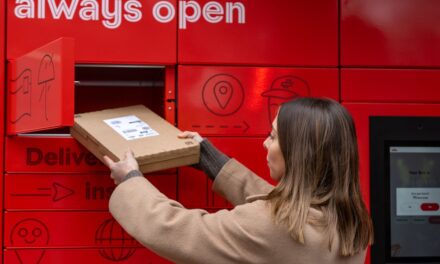
He says the majority of consumers have been found to choose post offices as their first alternative delivery location, although a signficant number of "early adopters" also like the ByBox box banks, which have "an awful lot of potential".
The challenge is to find the best location for the boxes, Wilkins says. Initially, perhaps unexpectedly, delivery offices have proved the most popular location for them, but he sees them spreading into the community later "just as ATMs were originally positioned outside banks, but then spread beyond them."
When it comes to making journeys to pick up deliveries, consumers attach marginally more importance to the opening hours of the pickup point than travel distance, Wilkins reports, but they do also place value in being able to walk to the location.
The experiment is likely to be extended to other towns later, Wilkins says, although final approval for this had not be granted when we closed for press.