



Postal banks put their stamp on financial services market
Germany's Deutsche Post is the centre of attention with the initial public offering (IPO) of 50 percent of its subsidiary Postbank–and subsequent possible acquisition by Deutsche Bank–due to take place in June. However, there have been changes afoot in other countries, with some postal services continuing to make major inroads into their countries' financial services markets.
"The postal systems around the world are dinosaurs, but there's a lot of potential there," says Stuart Castledine, a partner with Calleva, a consultancy advising a number of postal banks on the development of their banking services. "Postal administrations are not new kids on the block. Many of them have been going for 150 years.
"Letter delivery services brought the need for the branches you see today," he explains. "In addition, governments found that if post offices provided savings opportunities, they could use these to fund the national debt. Things have evolved considerably since then."
At the heart of the community
More so even than banks, post offices play a huge role in the communities in which they are located. For example, in the UK around 24 million people visit a post office branch each week to carry out over 45 million transactions. Indeed, around 98 percent of the population lives within one kilometre of a post office outlet. As a result, there is often very negative political and media reaction when post office outlets close. "There are very few places in Europe where people say there are too many post offices," Castledine notes.
Post offices have a reputation for stability and reliability, which is often not enjoyed by many of their banking peers, in addition, many of them have very strong technology infrastructures. Time UK's Post Office network has over 40,000 point-of-sale terminals. It processes 4.2 billion transactions a year, more than the 3.8 billion processed by the whole of the country's banking sector.
"People have an affinity with post offices as organisations that do not lose their customers' money," says Castledine. "They are reliable, government-backed organisations."
That said, it is only relatively recently that the provision of financial services has become a major objective for many of the world's postal banks. As public service organisations, most of them lack the business awareness of private companies, are heavily regulated and very political.
This lack of financial clarity" has led to a blurring of where the post offices actually make their money. Castledine estimates that in the UK, the Post Office gets 40 percent of its income from fees paid to it by the Department (ministry) of Work and Pensions (DWP) to make unemployment payments. "It would be much cheaper for the DWP to pay benefits by direct debit into people's bank accounts," he comments.
Time Post Office in time UK recently appointed a new chief executive–David Mills, formerly of HSBC–in an effort to leverage the Post Office brand in financial services. "It needs to optimise its cost base and develop new' income streams, but there are limits to which you can do this politically," says Castledine. "Closure of post office branches is bad news. Governments react badly to news that you're going to close post offices, but they recognise that it's inevitable."
As a result, the UK Post Office has opened its branch network to products offered by banks such as Lloyds TSB, Barclays Bank and Alliance & Leicester, as well providing its own range of financial services.
A major development in the Post Office's expansion into financial services was the creation of Post Office Financial Services, a 180 million (euro) joint venture with Bank of Ireland. The Post Office will not have to make a cash injection in the new project and it will also gain a banking partner with knowledge of product development. Products are due to be rolled out in the next two years and customer relationship management will be done through a single-point-of-contact call centre using newly developed systems. Personal loans are already being offered and an insurance product is due on the market in July. These will be followed by savings products and credit cards.
The venture benefits Bank of Ireland by providing a low-cost way for the bank to access the UK market–it is currently present only through its building society subsidiary, Bristol & West.
One postal network that has transformed itself is Kiwi Bank, set up by the New Zealand postal service. All 270 post office branches were offered the chance to run Kiwi Bank franchises and 260 accepted.
Kiwi Bank positions itself as the only New Zealand-owned bank in the country and plays strongly on its community focus. It also takes a swipe at its banking competitors, which are all owned by Australian banks. The welcome page of the bank's website sets the tone of its focus: "Welcome to Kiwi Bank, the totally New Zealand-owned bank, where the profits stay in New Zealand. We'll keep your fees low and have outlets in more communities than army other bank in the country."
The bank does not have its own ATM network, but offers the full complement of branch, direct and internet banking services. Its branches are open the same hours at the New Zealand Post network. The big selling point is fees–Kiwi Bank's charges are 50 percent lower than those of the country's main banks.
Japan's 100 million postal accounts
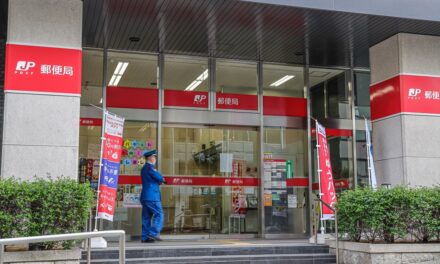
No country has a better record at accumulating savings than Japan. The country's post office–Japan Post–converted to a public company in 2003 and offers postal services, savings and life insurance products. In a country of 126 million people, Japan Post has 111 million accounts. Additionally, interest on post office savings qualifies for tax relief.
Japanese savers have deposited (yen) 229 trillion (US$2 trillion) in Yampo, the postal savings network. The funds are mainly invested in state-owned organisations, with only a very limited amount lent to the public.
A sign of Japan Post's technological strength can be seen in its ATM network. The 25,000 ATMs of the Yucho network are owned by the postal system, while the largest banking ATM network totals only 8,000 cash machines.
Equally impressive is the ability of Japan Post to sell life insurance through its branches. Kampo, the company's life insurance subsidiary, sells an average of 5 million life insurance policies per year and now has over 76 million life policies in force. As with Yampo, only a tiny fraction (2 percent) of Kampo's assets are lent to retail customers. The bulk of the assets are invested in government bonds.
Technology is becoming more important to postal banks as they seek to offer differentiated products through a range of different channels.
La Poste, the French postal network, is best known for its ubiquitous passbook accounts–the Livrets A and B. However, it has also been at the leading edge in the deployment of new technologies.
In 2002, La Poste handled 377 million customer contacts by telephone, via its lapostefinance.fr website, Minitel or through the ATM network. Over 5 million customers signed up for La Poste's home banking information and transaction services. In addition, the group's Video-Poste Net Bourse attracted 30,000 customers, and more than half the orders for stock market transactions are now placed over the web.
La Poste had 10.7 million CCP postal banking accounts at the end of 2002. The company also offers a range of bundled products–called Adispo and Bagoo–tailored to 16 to 25 year-olds. There are over 1 million of these accounts open at present.
In addition, La Poste has issued around 4 million debit cards, while over 1 million customers hold the joint loyalty and debit card called Adesio.
Postbank readies for IPO
As of now, there are no independent postal banks of any significance in Europe. It is therefore a testament to Wulf von Schimmelmann, who has headed Deutsche Postbank for the last five years, that it has a chance of flying by itself. He has earned kudos for radically improving Postbank and demonstrated the truth of his long-held belief that pure retail banking is the business to be in.
So confident is he in Postbank's future that this former McKinsey partner decided to bring forward the bank's IPO by several months to 21 June, the last possible day if Postbank is to qualify for inclusion in the DAX stock market index by the end of September.
With an 11 percent market share, Postbank is Germany's largest retail bank, serving 11.5 million customers (and 4.5 million households that count it as their primary bank). It has grown by over 400,000 clients a year since 2001, an indicator, says Postbank, of high customer satisfaction.
Although Postbank has Germany's largest retail distribution network, operating from more than 13,000 post offices, customers often find themselves standing in the same long queues as people wishing to mail parcels. It is unsurprisingly weak on cross-selling–the average customer has just 1.8 products–so Postbank's sales culture remains a priority for development.
Consumer credit is a key area for expansion, but it lost out to DZ Bank last autumn in the bidding for Norisbank, HVB's consumer finance subsidiary. While von Schimmelmann considered the price for Norisbank was too high, he has said that Postbank will keep its eyes and ears open for the right purchase. It remains eager to cooperate with appropriate institutions that can help it acquire a greater share of its customers' wallets.
Von Schimmelmann says that staff are already getting better training and cites double-digit growth over the last two years in new products such as credit cards, life insurance and mortgage savings accounts. Last November, it acquired EntriumCity from DiBa, the direct bank now owned by ING Group, in order to boost its presence and performance in financial advisory services.
Postbank is aware that its financial performance trails behind retail banks in other countries. Pre-tax return on equity (RoE) of 10.7 percent in 2003 was much better than the domestic commercial banks, but well below its chosen peer group of international banks. The pre.tax RoE target for 2004 is 15 percent.
While its cost-income ratio has fallen steadily over the last two years, it was still an alarmingly high 76 percent in 2003. Cost-cutting has already reduced the number of full-time staff from 11,800 to 8,700 and another 1,200 jobs are expected to go by 2005.
Retail banking operations provided the lion's share of 2002 profits, accounting for 381 million (euro) (US$457 million) pre-tax out of a total of 497 million (euro). According to Postbank, retail contributes 70 percent of its net profits, a much higher proportion than at the big commercial banks, which range from 17 percent for Deutsche Bank to 30 percent at HVB.
At the end of last year, it signed agreements to handle payment processing for both Dresdner Bank and Deutsche Bank. Today, Postbank is counted among the market leaders in payment transactions, and the new agreements will boost its share of Germany's domestic payments market to over 15 percent.
Post office networks in
selected countries
Population Post office
Country (millions) outlets
Japan 127.2 24,700
UK 60.1 16.000
Germany 82.3 13,600
France 60.1 17,000
Italy 58 14,000
Netherlands 16.1 2,500
Belgium 10.3 1,322
Ireland 3.9 1,000
New Zealand 3.9 270
Deutsche Postbank at a glance
Retail customers 11,100,000
Corporate customers 40,000
Telephone banking customers 2,600,000
Internet banking customers 1,600,000
Savings accounts 18,000,000
Current accounts 4,500,000
Brokerage accounts 470,000
Credit cards issued 670,000
Life insurance customers 220,400
Accident insurance customers 79,400
Savings deposits 39.1 billion (euro)
Funds under management 4 billion (euro)
Branches 13,514
Source. Deulsche Peslbark
Breakdown of La Poste's financial
services turnover
CCP Postal banking accounts 39%
Livret A&B passbook accounts 18%
Commission 12%
Insurance 10%
Other savings products 12%
Investment funds 5%
Money transfers 4%