


DHL Italy want to be an elephant that can dance
The Deutsche Post World Net and its subsidiary DHL are in the middle of a fundamental consolidation process. The ITJ spoke to Sal di Franco, Managing Director of DHL Italy.
Taking four express networks and making them into one should be a win-win situation for company and customer alike.
But Sal di Franco, who, as head of DHL Italy and its Italian subsidiary, is managing just such a consolidation process for Deutsche Post World Net (DPWN) in Italy, knows things are not that simple south of the Alps.
Italy is different
In Italy many things are different. Here, Italy’s legion of small producers often prefer to deal on a personal level with small logistic companies, but as DHL/DPWN grows, di Franco is upbeat. <
And the workforce?
The 7,500 staff involved in Italy have been redivided into three units under DPWN’s international consolidation plan. The main piece of the jigsaw is DHL Express, formed officially on January 1 and bringing together DHL, Danzas’s freight operation, Deutsche Post’s Euro Express — the product of the 2001 merging of companies MIT and SAV and the acquisition of Ascoli. Bergamo-based SAV and Milan-based MIT together brought 70 depots, hubs and affiliate depots into the equation when they were purchased by Deutsche Post. MIT had 300 directly employed staff and 455 vehicles to add to SAV’s 372 directly employed staff and 772 vehicles. MIT’s domestic business was about one third express and two thirds standard deliveries, while SAV did not offer express services. SAV is a road transport specialist which currently boasts 400 staff, 1,000 vehicles and 70 branches in Italy.
The second new unit in the Italian trio is DHL Danzas Air and Ocean, which incorporates Danzas’s cargo and ocean freight activities, while DHL Solutions incorporates Danzas’s logistics activities.
DHL Italy – the ideal
DHL Express country manager di Franco sees DHL in Italy leading the way for DPWN integration programmes elsewhere. <
Of the three new units in Italy, DHL Express will see the most dramatic consolidation, and as di Franco sees it, it will have the biggest potential for growth. <
Lengthy process
Di Franco expects that DHL Express will align itself in the Italian market behind the leaders Bartolini and TNT and thereby save its constituent parts from an uncertain future. <
The integration began in 2003 and will continue throughout 2004. This year approximately EUR 600
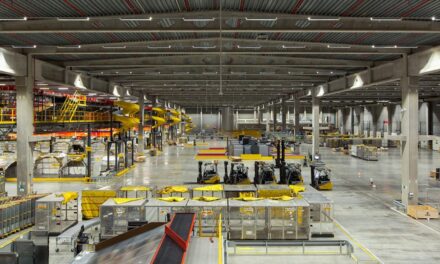
million is to be spent on staff training. A ‘small’ part of the push is also a new, EUR 3 million, 11,700 sqm automated hub near Milan which will have a capacity to handle around 50,000 parcels a day. The group now has 13 such distribution hubs in Italy, while logistic agreements have been signed recently with compaflies including Natuzzi, Rinascente, Crai, Barilla and Angelo Costa.
In a discussion with the ITJ, di Franco indicated that further infrastructure needs will be defined by September, although business targets for DHL Express are already in place.
<
No job losses
The company is also working on establishing closer ties between the three DHL units, according to di Franco. A common lean management structure and a unified,
Franco said, <
One other potential stumbling block for DHL in Italy is whether there really is a growing demand for outsourcing logistics. Analysts have warned that large logistics companies entering the Italian market are in danger of losing money because many Italian companies are small and see little advantage from out-sourcing anything more than basic transport.
<