



Few people in Japan can understand Postal Privatisation
Few people in Japan can quite understand Junichiro Koizumi's obsession with privatising the post office.
In a poll for the Asahi newspaper, just 2 per cent of respondents said changing the status of the country's most trusted institution – the prime minister has written books on it – should be a top priority for the new cabinet. Eighty per cent thought reforming the nation's rickety pension scheme and improving the economy were a better use of his time.
Mr Koizumi is not listening. After naming Heizo Takenaka, his most trusted policy general, as minister in charge of postal reform, the prime minister declared in his weekly email diary: "The new cabinet could be dubbed the 'Postal Privatisation Implementation Cabinet'." Advisers say he is making postal privatisation, due to begin in April 2007, several months after he is due to step down, the centrepiece of his final two years in office.
Why is Mr Koizumi investing so much political capital in this? The answer is that the post office – an enormous institution once run by the prime minister's grandfather, Matajiro, and which employs one in three of all public servants – has become a symbol of all that is wrong with Japan for Mr Koizumi.
Richard Katz, a US economist, describes the post office as nothing short of the nexus of politics and money that has sustained Japan's corrupt post-war political system.
Mr Koizumi's motives are thus political and financial. Politically, the vast post office network, which has 24,000 branches nationwide, has been a vote-gathering machine for the LDP. Its 280,000 full-time employees have been loyal supporters of a political party that, until now, has unquestioningly supported their needs. Postmasters-general, half of whom continue to pass down their jobs, in feudal fashion, to male heirs, have received healthy stipends and tax waivers. In return, their loyalty has been all but assured.
The prime minister, whose relationship with his own LDP party has always been ambiguous, appears intent on breaking that bond. For him, his advisers say, the post office has come to represent a dirty style of politics in which money has been sprinkled around in return for votes.
The link is more than symbolic. The post office, which controls an astonishing $3,300bn of assets in its savings and life insurance units, has been a near-bottomless piggy bank. "About one-quarter of household savings have gone to postal savings and postal insurance," says Naoki Tanaka, president of the 21st Century Public Policy Institute of a financial institution that is two-and-a-half times bigger than Citigroup. "That's abnormal."
The tabular content relating to this article is not available to view. Apologies in advance for the inconvenience caused.Japan has traditionally funded a second budget, unique in the industrialised world, from post office savings, paying for public works programmes designed to spread wealth countrywide.
The LDP has used that money skilfully to win votes in rural areas that are over-represented in parliament. That, say critics of the system, helps explain why it has ruled, almost unbroken, for half a century.
According to Mr Tanaka, the post office's influence has been more pernicious still. Not only has it infected politics, he says, but it has poisoned the financial system. That is because the post office, with its savings guaranteed by the government, has been at the centre of a system that has never learned how to take proper risks.
In Japan's catch-up phase, the government told not only the post office, but also banks, where to lend money. This ensured that capital was allocated to priority industries deemed necessary for the good of Japan Inc.
That strategy may have been successful when Japan was far behind its western competitors, he says. But it is inappropriate for a mature economy.
"If you have the government guaranteeing a large lump of the nation's financial resources, that inevitably leads to big distortions," Mr Tanaka says. "We should leave it to market mechanisms. The public must learn to share in the risk."
These arguments resonate with Mr Koizumi, who has built his premiership on the notion, so far more rhetorical than practical, that government should "leave to the private sector what it can do".
That is the theory, though it is proving a hard sell to a public that prizes the post office as a dependable institution where its money is safe and its network guaranteed.
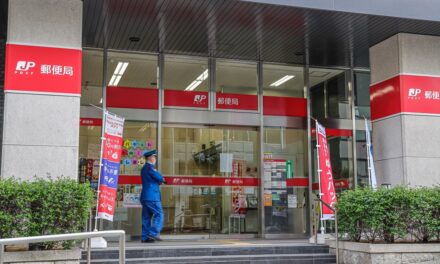
Walking into one's local post office, an apparent paragon of efficiency and neighbourliness, it is hard to discern the institution that is claimed to be warping the entire nation's political economy.
It is not only the public that is mistrustful. Surprisingly, privatisation is also raising opposition among private companies – in mail delivery, banking and insurance – the very constituents who theoretically have most to gain from privatisation.
Yamato Transport, a successful parcel-delivery service, has taken Japan Post to court, arguing that it is unfairly using its monopoly privileges to invade private sector areas.
Banks and insurance companies have also voiced concern that, unless a level playing field is created, a privatised post office could trample the opposition by offering a wider range of products through its vast network.
Mr Koizumi's reform risks alienating not only the public, the unions and his own party but also the private sector in whose name the privatisation is being carried out. It may be fortunate for him he is not seeking re-election.