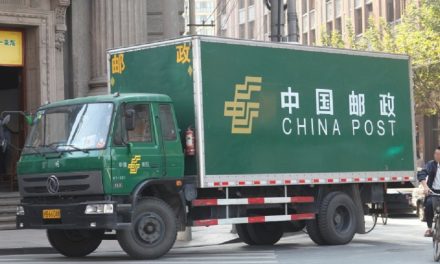




China’s courier industry evolving rapidly
China’s courier industry is evolving rapidly as WTO-related legislation prises open the sector and market forces shape its development. The three main industry groupings are:
The largest player and former monopoly operator, China Post, has seen its market share erode steadily over the past decade — mostly by the foreign carriers, which have been investing heavily in China since 1984 when UPS started handling international express packages. Now nearly 60 overseas air companies provide cargo services in some 40 cities across the country. According to an analyst with China Merchants Securities, the major global players now control a 62percent of market share in the international express mail sector. This inevitably will increase as China grants unrestricted market access to foreign enterprises in express service by 2005 — by then the market could be worth some Rmb5bn (USD600m).
A decision by DHL in mid-2004 to launch China Domestic, a local door-to-door postal delivery service, aroused criticism from China Post, which has been striving to check erosion of its monopoly over the domestic postal sector since the arrival of foreign courier companies in China in the 1980s. Perhaps, in part to prevent a backlash, DHL said it would abide by a controversial state postal rule-proposal prohibiting non-state mail companies from delivering parcels under 500g. The regulation was first proposed in February 2002, but was dropped five months later following protests from foreign firms, only to be reintroduced in November 2003 in a draft amendment to the Postal Law — a move which prompted complaints by international organisations that China was not complying with its WTO commitments to liberalise the market. It is unclear what the fate of the provision will be, but for the time being DHL plans only to deliver parcels that are heavier than 2kg.
China Post’s desire to insert restrictions on foreign delivery companies into the Postal Law was fuelled by a desire to protect its domestic-delivery market share more aggressively than it did its international-delivery share. A monopoly a decade ago, it now has only 38percent of the international forwarding service market, but still holds on to 90% of the domestic delivery market, with 1,000 small companies dividing the remainder between them. If DHL is able to carve out a significant piece of that market for itself without running foul of regulators, other foreign firms are likely to follow its lead.
The reason for foreign interest is obvious. China’s express-mail market is estimated at USD1.8bn a year, and has grown by an average of 20percent annually over the last decade as the country’s economy and international trade burgeoned. Foreign carriers have benefited most with business growing by 30percent or more a year, with many making considerable profits.