


DHL dispatches its message to USA
DHL has hopes that red and yellow will be as popular a color combination for the holidays as red and green.
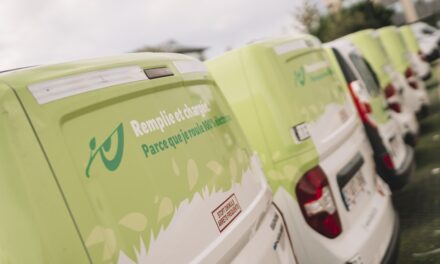
The colors for the global shipping giant are part of the new look adopted after its USD1.1 billion acquisition of Airborne last year (the two previously used white and different shades of red).
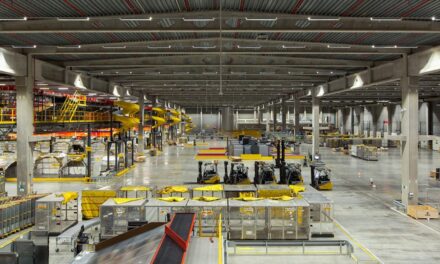
The new look popped up virtually overnight this summer on 426 warehouses, 2,841 retail store locations, 15,338 drop boxes, 17,000 uniformed personnel, 18,000 vehicles and 275 million pieces of packaging.
"We said we have to paint everything yellow as quickly as we can," says Dick Metzler, executive vice president marketing of DHL Americas. "We really did fast-track this. It was almost a military operation."
DHL, a leader in shipping just about everywhere but the USA, introduced the colors as part of a brand overhaul that includes a U.S. ad campaign by Ogilvy & Mather in New York. The campaign, begun in August with Olympics TV ads, has been designed to put DHL in consumers' minds as the holiday shipping season approaches.
The humorous TV ads pitch DHL as a shipping alternative to FedEx or UPS for owners of small to midsize U.S. businesses. Historically both DHL and Airborne courted larger companies, overlooking the smaller businesses that generate 75percent of new jobs and 52percent of the gross domestic product, according to Inc. magazine.
That market represents "a big part of the profit pool, and we have an opportunity to do something there," Metzler says. "There can't be a strong DHL globally without a strong DHL in the U.S."
But DHL, owned by German-based Deutsche Post World Net, historically has had low brand awareness here, even though it is recognized worldwide. DHL hadn't advertised in the USA in 20 years. And even with a USD150 million campaign that runs through February, it is being outspent by rivals.
"We said we had to nail (content of the ads) in a way that broke through in unprecedented ways," Metzler says. "People don't know who we are and what we do. We had to put ourselves in the same set without making any claims and didn't want to overpromise."
And because rivals outspend DHL, "Every dollar we had had to work harder."
The ads work to challenge FedEx and UPS with a big dose of in-your-face humor. They also break an ad "no-no" by featuring rivals alongside DHL. "We had to come from nowhere to a parity position right away," says Fred Lind, senior partner and creative director at Ogilvy & Mather. "FedEx and UPS are both good companies, and people like them. The main job was to get people to consider DHL in the same breath."
In one ad, FedEx and UPS trucks sit side-by-side at a stoplight. When the drivers realize they are headed for the same customer, they take off in a race. When they arrive, they find DHL is already there.
In a second ad, FedEx and UPS drivers face off across opposite sides of a railroad crossing. Holding them up is an endless train of freight cars carrying DHL trucks. In both ads, the announcer says, "DHL. Competition. Bad for them. Good for you."
"The yellow trucks were pretty prominently featured in the ads to make everyone realize the DHL army has arrived and it's going to have a pretty big impact," says Mike Wilson, senior partner and creative director at Ogilvy & Mather. "It's hard to miss yellow and red."
The ads also had a pretty big impact on consumers surveyed for Ad Track, USA TODAY's weekly poll. Of those familiar with the ads, 23percent like the ads "a lot," above the Ad Track average of 21percent.
Among the key target group of 30- to 39-year-olds, the ads were even more popular. About 33percent in that age group like the ads "a lot."
And 27percent vs. the average of 21percent consider the ads "very effective."
"Some people do humor well and some people don't," Metzler says. "I think we nailed it. We were being a little bit irreverent and implying a little bit of fun."
Since the ads began, tests of DHL's unaided consumer brand awareness show a 40-point climb.
"We are unabashedly putting the stake in the ground," Ogilvy's Lind says. "We are here, and FedEx and UPS should be a little nervous. We are here and will not be denied."