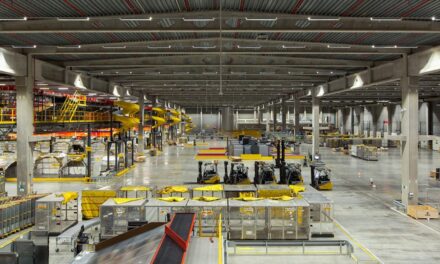




DHL darting into a growing market
Express and logistics giant DHL recently announced its intention to acquire a further 20% stake in Blue Dart Express. The move will increase its control of the company to 88% and highlights DHL’s ambition to expand in the Asia-Pacific region. It also reflects a growing trend of international expansion within the industry.
DHL announced recently that it is looking to acquire a further 20% stake in Blue Dart Express, of which it currently owns 68%. The move is indicative of DHL’s faith in the Asia-Pacific region and is one of numerous international mergers and acquisitions of late in the logistics industry.
The acquisition makes DHL the first international express and logistics company to offer its own domestic and international services in India. Through the acquisition of a majority stake in Blue Dart, India’s largest courier firm, DHL will have access to an extensive network covering 13,700 locations, warehouses at 14 locations and 2,717 delivery vehicles.
The move confirms the group’s ambitions for the Asia-Pacific region, which is attracting global express and logistics operators due to the potential in the area’s growing economies. DHL is investing more than $215 million in China and will also set up a joint venture with New Zealand Post.
It is also reflective of increasing moves by logistics and freight companies to offset volatile market conditions with greater economies of scale. In an industry that relies heavily upon fuel prices and economic factors, such as seasonal business and overseas trade, international expansion allows companies to spread costs over a greater revenue base and reduce their reliance on any particular economic region.
China’s huge potential for air-express companies is clear and the majority of express integrators have seen explosive growth in their Chinese operations over recent years. It has thus provided solace for companies whose operations elsewhere have struggled.
India, like China, is a growing and maturing economy, but has yet to prove that it has the potential to yield as much business as China. The pace of economic change and investment is slower in India, where emerging strengths are currently concentrated in service businesses such as software development, call centers and back-office work.
Nevertheless, as the world’s second most populated country, with just over 1 billion inhabitants, and with a growing economy, India could increasingly become the focus market for major global express players in the near future.