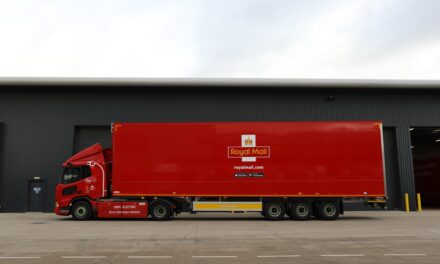




Enter the competition: a resurgent Royal Mail braces for a new challenge
The 30-minute ferry journey across the Solent to the Isle of Wight is famously one of the most expensive, mile-for-mile, in the world. So it seems strange that Royal Mail should have chosen the island as the location for a vehicle repair centre serving three sorting offices on the south coast of England.
Such inefficiencies are typical of the challenges facing Adam Crozier, chief executive of Royal Mail, as he tries to ready the UK's 350-year-old postal carrier for full competition with a spread of private sector operators in less than six months time.
"I said, do they need a holiday or something? A wee break by the seaside," Mr Crozier recalls. "You then find a chain of events. You find that, in all seriousness, it is because that is where the vehicle repair shop is."
Royal Mail has come a long way since Mr Crozier joined the organisation at the end of 2002. Then the business was losing Pounds 1m from operations every working day. Today it makes a Pounds 2m-a-day profit. The three-year turnround holds valuable lessons for the government's attempts to make the public sector more efficient, according to Mr Crozier. The national postal carrier has shed thousands of staff and improved its performance as a result – a trick Gordon Brown would love to replicate for other public bodies.
But the carrier is facing a difficult test with the opening of the postal services market to full competition in less than six months, three years earlier than originally planned under European Union guidelines and long before most other European countries. The operator is entering a critical phase, locked in a battle with its regulator that it claims will determine the success or otherwise of this experiment in liberalisation. It is also lobbying the government behind the scenes to be allowed a part-privatisation, transferring shares to staff in a politically contentious change to its current 100 per cent state ownership.
The challenges facing the Royal Mail today are very different from those of three years ago, when ministers persuaded Allan Leighton to take over as chairman. Mr Leighton, who swiftly hired Mr Crozier, confronted a business that the duo claim was close to insolvency, missing all its performance targets and riven by industrial unrest and staff absence.
They responded by focusing on driving up financial and operational performance. They cut Royal Mail's headcount by 33,000 to around 196,000 people through voluntary redundancies, outsourcing of support functions such as IT and natural wastage. They also made structural changes to improve efficiency, most notably scrapping the second daily delivery, which accounted for 3 per cent of the post delivered but 20 per cent of the operational cost.
Finally, they sought to improve industrial relations. Three years ago, Royal Mail had the worst strike record in the UK, losing an average of 50,000 days every year to industrial action. In the first quarter of 2005, this was down to 866 days.
An important element of the financial turnround was to improve conditions for postal workers, raising basic pay by 25 per cent, moving all postmen and women from a six-day to a five-day week and giving a Pounds 1,074 bonus to everyone in the business when Royal Mail announced record profits in March. Morale has lifted. In the latest internal staff survey, 70 per cent said they enjoyed working for Royal Mail, compared with 57 per cent 18 months ago.
This is evident from comments by postmen at North London's Almeida Street depot. Bill Duggan, delivering letters to the antique shops on Islington's Upper Street, points to the Royal Mail logo on his shirt and claims that people trust the badge. "Ninety-five per cent of my customers know me personally and I know most of their backgrounds," he says. "We are respected."
Restructuring enabled Royal Mail to cut a lot of bureaucratic waste, cutting the number of management levels between Mr Crozier and postmen such as Mr Duggan from 17 to five.
"Over the last three years we have been disproving the adage, particularly common in the public sector, that the answer to everything is to throw more bodies at it," Mr Crozier says. "I think what we have shown is that absolutely isn't the answer. The answer is to get better organised and more efficient, have highly motivated people, hopefully who are earning more money."
Removing teams of staff and management consultants increased the speed at which Royal Mail could make decisions and act, according to Mr Crozier. The move to single daily delivery is a case in point, he adds, noting that he recently discovered a team had been formed to come up with a model for introducing the service in 1988. This kind of "dithering" was the reason why countries such as the Netherlands, Germany, France and the US had all introduced single daily delivery before Royal Mail, Mr Crozier claims.
"What had happened (in Royal Mail) was that a team of 400 people, with the help of consultants, had been creating an elaborate model of what single delivery would look like in our 2,400 delivery offices. We said, wouldn't it be easier to actually split this team and get them to do it for real?"
When Royal Mail began its renewal plan, the business had 1,400 restrictive practices – agreements forged with the union that placed severe limits on what staff could be asked to do. It has since removed hundreds of these, but many remain. "It is the kind of place where every now and then you lift up the carpet and you sort of wish you hadn't because you find that there are issues," Mr Crozier admits.
The process of getting Royal Mail on a sound financial footing is not complete. The business needs to find a way of reducing its Pounds 2.5bn pensions deficit, which will grow into a Pounds 4.5bn balance sheet liability when Royal Mail adopts international accounting rules next April. In addition, Royal Mail wants to spend Pounds 2bn on technology to match the more modern sorting systems used by Deutsche Post and TNT, the Dutch national carrier, both of which have licences to operate in the UK. The Dutch and the Germans have machinery that sorts mail down to the house numbers on the postman's walk, while the British still do this by hand.
"If you think about our business very simply, we pick up stuff, we sort it out and we deliver it," Mr Crozier says. "There is a great opportunity to automate in the sortation area and that obviously requires a lot of capital investment."
He would also like to invest in the Post Office network, which last year lost Pounds 110m in spite of a major restructuring exercise, largely because of the cost of maintaining the rural branch network. The government has promised to pay a subsidy of Pounds 150m a year to support rural post offices until 2008, but warned the network will have to support itself after this date.
"There is a lot to do there to really turn that into a more modern retail business and to create a sales culture as opposed to a transaction culture, which it was."
If Royal Mail's performance were measured by a 10-rung ladder, the business would currently be on rung three or four, according to Mr Crozier. This is borne out in Royal Mail's failure to hit 11 of its 15 performance targets for 2004-05. Returning to profitability was merely the first in a three-stage road to recovery, says Mr Crozier. The second stage, which the business has now entered, is about customer service and creating products that fit the needs of the business market, which makes up 93 per cent of Royal Mail's operational activity and all of its profits.
"Our current suite of products were developed 15 years ago around what we could do rather than what customers wanted us to do," Mr Crozier says. Royal Mail is currently working with customers to develop a new product range, replacing everything except first and second-class post.
The third stage in Royal Mail's turnround plan is preparing the business for full competition from January. To this end, Mr Crozier has locked horns with Postcomm, arguing that the Âregulator cannot impose too many restrictions on Royal Mail when it is the only carrier in the market required to deliver post to every address under the universal service obligation (USO) – the requirement to deliver certain types of mail to any address in the UK, irrespective of whether that service is profitable or not.
"We are actually genuinely welcoming of competition because we believe it will drive a lot of the right behaviour in the organisation, but only if we are allowed to compete fairly and only if the right balance is struck between the USO and the need to bring in competition," says Mr Crozier.
Postcomm has awarded licences to operate in the UK market to eight companies. Royal Mail has contracts with several of these companies to deliver their sorted post to UK households and business addresses. But these "downstream access agreements" are not necessarily profitable for Royal Mail.
Competitors such as Business Post, whose UK mail business broke even less than a year after it began trading, have been cherry picking from Royal Mail's most profitable customers. Paul Carvell, Business Post's chief executive, has forecast that Royal Mail will lose 20 per cent of its market share to new entrants.
Mr Crozier is particularly concerned about Postcomm's proposals to freeze the company's average domestic prices from 2006 to 2010 and tie profit levels to efficiency improvements. The regulator has dismissed the Royal Mail's warnings that the price freeze would send the operator into a "spiral of decline". Sarah Chambers, Postcomm's chief executive, told a conference in London earlier this month: "I don't think we expected anything other than the reaction we got from Royal Mail." She cited the operator's unfulfilled prediction that the last set of price controls imposed in 2003 would result in "all sorts of ghastly things happening".
Ms Chambers also reacted sceptically to Royal Mail's claims of a "sea change" in the competitive pressures it faces, saying the regulator's analysis suggested that even after this round of price controls expires in 2010, the operator will still control more than 85 per cent of the market.
The fight over price controls turns partly on the question of how profitable, in an ideal world, a state-owned company with a near monopoly should be. Postcomm predicts its proposed controls would cut Royal Mail's annual profits to about Pounds 285m, although it says the operator could increase this if it achieves greater than the 3 per cent efficiency savings that are already built in to the regulator's projections.
The Royal Mail retorts that the regulator appears determined to starve it of the profits it needs for future investment. Stephen Agar, the company's director of regulatory affairs and wholesale, told the London conference the price controls would produce a "last-resort, last-mile postal operator functioning in a declining market".
The government is about to launch a review of the impact of postal market liberalisation on Royal Mail, which the postal carrier hopes will address some of these issues and advise cutting it some slack (see right). Some form of partial privatisation may be discussed in the review, although the government will not contemplate a conventional sale of shares to the stock market. Royal Mail has been wary about going public with its proposals to give its employees a stake in the business by persuading the government to part with some of its 100 per cent shareholding. Rumours of a "John Lewis-style" privatisation, in which shares would be ring-fenced in an employee-owned trust, have been scotched.
Royal Mail would also like the Treasury to transfer its pensions deficit to the state's balance sheet, removing the liability from the postal operator's books.
Mr Crozier says the decision on the company's future rests with the government and the review. "What we need them to look at is what they feel they can do as shareholder," he says. But he declined to be drawn on whether some form of employee share ownership was essential. "It's a matter for the shareholder to decide what they feel they can do," he says.
Royal Mail is no longer such a basket case business that its management has to worry about whether the wheels will fall off, but the road ahead still has many potential pitfalls.