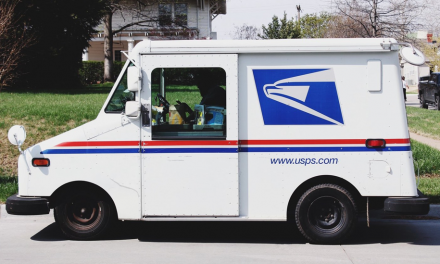




House passes bill to update US postal service
A bill designed to make the Postal Service more competitive _ and which might help head off the rate increase planned for next year _ was passed overwhelmingly by the House Tuesday night.
The measure was approved by a vote of 410-20.
It will bring the post office into the 21st century, helping it avoid a "death spiral" of rising rates and declining business, Rep. Tom Davis, R-Va., said.
The first major overhaul of postal operations in more than three decades keeps the requirement for the agency to provide service six days a week to every address, but gives the post office more flexibility in some operations and in rate setting.
If passed by the Senate and signed by President Bush, the measure would relieve the agency from a requirement that it put $3.1 billion in Civil Service retirement savings annually in escrow.
In April the Postal Service announced it is seeking a 2-cent increase, to 39 cents, in the price of First Class postage, as well as equivalent increases in other rates. At the time it said the increase was needed because of the escrow requirement, and the agency urged Congress to eliminate the need for the raise.
Postal officials have been seeking changes in the law that governs their operations for years and a presidential commission made a series of recommendations last year.
Increasing use of the Internet has led to declines in First Class mail, the most lucrative for the post office. It is expected to be surpassed for the first time by advertising mail this year or next.
Crucial to the post office is more flexibility in setting rates, especially in services where it competes with private companies such as FedEx and United Parcel Service.
Under the House bill, rate increases for market-dominant products such as letters and periodicals would not exceed the annual change in the Consumer Price Index. But the Postal Service would be given more pricing freedom for competitive products.
The independent Postal Rate Commission, which must pass on proposals for any increase, would be renamed the Postal Regulatory Commission and given broader powers, including subpoena power to demand information from the post office.
While the bill was passed out of committee 40-0 with strong bipartisan support, a question remains as to whether Bush would sign it.
The White House has opposed freeing part of the escrow funds to hold down rates, preferring that all of this money be used for retirement health benefits.
It also opposes a provision concerning retirement payments.
For most government agencies the full cost of pensions earned by military veterans who also worked in government jobs comes from the Treasury.
The Postal Service, however, must cover the full cost of pensions, not only for the time the worker was at the agency, but also for military service, a cost shifted to the post office in the last Congress.
Because the post office does not receive federal funds for its operations, military retirement benefits for people who later joined the post office are, in effect, included in the price of stamps. Shifting the military portion of the benefits back to the Treasury would have the effect of increasing the federal deficit, which the administration opposes and which led the Office of Management and Budget to say the president's advisers might urge him to veto the measure.
The Postal Service processes and delivers 206 billion pieces of mail to more than 130 million addresses in the United States every year. More than 9 million American jobs, $900 billion in commerce and 9 percent of the gross domestic product depend upon mail and package delivery.
__
The bill is H.R. 22.
__
On the Net:
Postal Service: http://www.usps.com/