



UPU and UNI sign agreement to promote social dialogue among postal sector partners
The Universal Postal Union (UPU) and Union Network International (UNI) have signed a cooperation
agreement to promote social dialogue aimed at the sustainable development of postal services at the
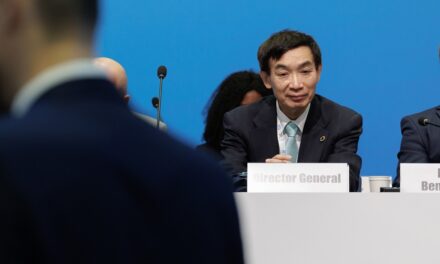
international level. The agreement was signed at UPU Headquarters in Berne, Switzerland, by UPU
Director General Edouard Dayan and UNI General Secretary Philip Jennings.
In terms of the agreement, the two organizations will establish joint actions focusing on the impact of
postal sector development on jobs, particularly in the area of health and security, as well as the
improvement and development of postal staff skills. The two organizations also agreed to continue to
promote the provision of postal financial services – particularly electronic money transfer services –
through the international postal network. This is not only seen as an important source of job creation, but
also as an essential service to give millions of migrant workers and their relatives – among them the
world’s poorest – access to affordable money transfer services.
UPU Director General Edouard Dayan welcomed the closer working relationship with UNI and said it will
contribute to the goal of developing a culture of social dialogue in the postal sector. “The challenge for
governments, Posts and the UPU as an organization is to provide a forum where all stakeholders can
meet to engage in constructive dialogue on issues of common interest. There are good examples where
postal operators, through continuous dialogue with trade unions and consumer organizations, were able
to make adjustments to their network without lowering productivity and quality of service. This agreement
is further proof of the important role that the UPU plays in bringing together all postal sector actors and to
serve as a genuine global forum for the development of the entire sector,” Dayan said.
UNI General Secretary Philip Jennings said it was a key global agreement for UNI, the first that the union
has entered into with a United Nations organization. "We are facing the future together in a rapidly
changing postal business environment and we believe that dialogue at all levels between governments,
operators and unions is the best way forward. The agreement emphasizes the importance of people and
places them at the centre of the postal industry. We are proud to be an official observer in the UPU. We
have a joint interest in promoting the sustainable development of the sector as well as effective and
affordable postal financial services through post offices, particularly money transfer services, thereby
helping some of the poorest workers in the world," he explains.
About the Universal Postal Union (UPU)
The UPU, a United Nations specialized agency based in Berne (Switzerland), is the primary forum for
cooperation between Posts. In addition to maintaining a genuinely universal network that provides
modern products and services, it establishes the rules for international mail exchanges among its 190
members and makes recommendations to stimulate mail volume growth and to improve the quality of
service for customers. Each year, five million employees process and deliver 430 billion domestic letterpost
items, some six billion international items and more than 5.4 billion ordinary parcels. The UPU is
closely involved in the debate on the new Information Society and is firmly convinced that combining the
Post’s physical, electronic and financial networks creates ideal conditions for e-business development
and for narrowing the digital divide.
About Union Network International (UNI)
With 15 million members – 2,5 million of them postal sector workers – Union Network International is one
of the largest groupings of trade unions in the world. A total of 900 trade union organizations in more than
160 countries are affiliated to UNI. It was created in 2000 in response to changes in the global economy
and the impact of technology on increasingly overlapping industries. By pooling resources, UNI aims to
give union members a more effective voice with multi-national corporations, with governments and with
international institutions.