



Post office banking delivers
Post office banking delivers: for banks looking for growth opportunities, the distribution of retail financial services via the post office is not a bad option. Post offices generally have more extensive networks, a broader base of customer relationships and 100 percent brand awareness, argues Carl Holsters of the Belgian Post Group.(CONFERENCE REPORT: POST OFFICE BANKING)(Company Profile)
Retail Banker International, Issue. 541, p 10(2) 10-31-2005
By Carl Holsters
European banks have been slow to exploit the distribution capabilities of domestic post office networks, focusing instead on the expansion opportunities provided by organic growth and mergers and acquisitions (M&A), said Carl Holsters, member of the executive committee of the Belgian Post Group, speaking at VRL's International Retail Banking Forum (IRBF) last month.
And with revenues from postal services shrinking, the contribution made by retail financial services is becoming increasingly significant, helping European post offices prepare for full deregulation of the postal sector in 2009, when they will lose their national mail monopolies.
Retail financial services are provided by most European post offices, though the contribution they make to post office revenues varies widely. In Italy they account for 43.5 percent of revenues, while in the UK, Belgium and Sweden their contribution is less than 10 percent.
In common with many postal service providers around the world, the Italian post office had been losing money and over a period of around three years returned to profitability primarily through the introduction of retail banking services, said Holsters.
There is no simple operating model for the provision of financial services through the post office, said Holsters, but five clear typologies can be identified. They include:
1. A separate subsidiary with a banking licence, which is fully or majority owned by the post office, such as Deutsche Postbank in Germany or how La Poste will operate in France as from 2006;
2. A joint venture owned by the post office and a banking partner, such as the Belgian Post and Fords, and the UK Post Office and the Bank of Ireland;
3. A fully integrated model in which the post office has separate partners for each financial product, which it distributes mainly on a private label basis. Examples of this type of model include Poste Italiane in Italy, Die Post in Switzerland and La Poste in France, as it operates today;
4. A distribution model in which the postal operator distributes products for one financial services provider across all product lines. Examples of this type of exclusive relationship include Correos/Deutsche Bank in Spain and Posten/DnB NOR in Norway; and
5. A shared network in which the postal operator and financial services provider jointly own the branch network. This type of arrangement exists between TPG and ING in the Netherlands.
Successful role models
Europe's most successful model of financial services distribution via post offices is perhaps Italy's BancoPosta, which has a 4 percent share of both current accounts and personal sector financial assets.
"They are not a bank, they are a brand," commented Holsters. "Instead of converting postal managers into bankers, they imported senior bankers from the market to produce products for them."
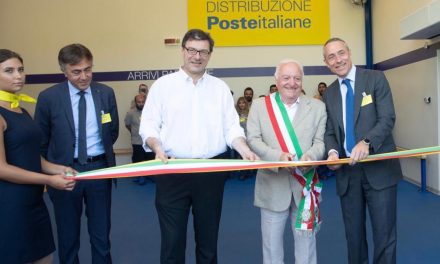
BancoPosta distributes financial products mainly on a private label basis, but has some tailored and co-branded products with partners such as MasterCard and Deutsche Bank. BancoPosta's major strength is its network of 14,000 branches–Italy's largest retail network–which includes at least one branch in each Italian municipality.
"They are the only financial services outlet in small villages," said Holsters, "which gives them in some markets a monopoly."
Since the appointment of Francesco Mengozzi as director last March, BancoPosta has initiated a major staff training programme. The bank has had some success with the introduction of tiered levels of service (eg, separate queues for Postamat card holders) and has launched several strong advertising campaigns for products such as PostePay, a leading Italian pre-paid card.
In Germany, Deutsche Postbank is a very successful model, generating almost 20 percent of revenues for Deutsche Post, which Holsters described as a huge operation with an extensive logistics operation. Deutsche Postbank has a 5 percent share of current accounts and a 2 percent share of personal financial assets.
Deutsche Postbank has grown organically and by acquisition. In 2003 it acquired Entrium City, a financial advisory business consisting of nine branches and 100 mobile financial advisers, and just this month acquired full control of BHW, Germany's second-largest building society.
Deutsche Postbank has successfully segmented its network of around 9,000 branches: around 800 offer a full portfolio of financial services and have a full-time or part-time financial adviser, while the remaining 8,200 offer basic services.
It has successfully targeted the small business market and has developed third-party transaction processing services for clients such as Deutsche Bank and Dresdner Bank, owned by German insurance company Allianz.
Deutsche Postbank reported return on equity of 13.7 percent last year, which "by German retail banking standards is a very good result", said Holsters.
The one to watch, he said, is La Poste in France, "which in 2006 will be launching a separate postal bank, much to the dismay of traditional French bankers, who see a huge competitor coming on the horizon".
Strategic advantages over banks
Postal services have a number of advantages over banks in the mass market segment, which can be exploited in the delivery of retail financial services. They usually have the country's largest network of branches, which–unlike private sector banks–they are under political pressure to maintain.
They also have relationships with every household through the provision of mail services and public/universal services such as pensions, welfare benefits and utility bill payments.
"The post in general and the man who delivers the mail, namely the mail man, specifically, have a very positive image all over the world because he is the last survivor (of many now defunct home delivery services)," said Holsters. "Research shows that is a very strong image to build on."
And the post office brand, which has 100 percent awareness in most countries around the world, is a very strong asset. One of the biggest strategic mistakes, said Holsters, took place in the UK when the Royal Mail brand was replaced–a mistake that was acknowledged when the brand was reinstated, he argued.
Belgium's Banque de la Poste
Banque de la Poste, which is a 50/50 joint venture between the Belgian Post and Fortis, commenced its own restructuring some three years ago, when it began the process of separating the retail and the mail operations, relocating some 3,400 staff from the former to the latter.
The bank's potential, said Holsters, lies in the 60 million customer contacts made in its 1,300 branches each year, but this is an asset that has yet to be fully exploited. Indeed, Banque de la Poste lags its peers on a number of measures.
There is, said Holsters, a strong correlation between market share of branches and market share of deposits, which for most banks are roughly similar. In Banque de la Poste's case, however, a 20 percent share of branches correlates to at most a 5 percent share of any single financial product.
"With a distribution network of that size, our market share should be much bigger than it is today," he said.
Banque de la Poste also lags its peers in the area of cross-selling. "We have 1.3 million clients in the bank and when we look at the overlap, very few have two or three products with us," said Holsters. While 970,000 customers have current accounts and 590,000 have savings accounts, only 280,000 have both.
And in the area of sales productivity, there is a huge discrepancy between the top performers and average performers: each employee in the top decile of full time equivalent (FTE) sales staff generates 2.1 million (euro) ($2.5 million) of business, compared to an average of 1.1 million (euro). Banque de la Poste's target for 2007 is 3.5 million (euro) per FTE employee.
And just three years ago 52 percent of branches were unable to capitalise on promotional activity to make sales, though this percentage has since fallen to 13 percent.
Commercial development initiatives
To support its commercial development, Banque de la Poste has launched initiatives in the areas of network restructuring, bancassurance and sales enhancement.
The bank has committed to continue the separation of mail and retail operations at branch as well as regional level, with separate managers for each area, rather than a single manager overseeing both areas.
It has begun to implement counter specialisation and self-service facilities to focus services and reduce queuing times. It is also experimenting with branch opening hours to match supply with demand, and with ATMs which distribute both cash and stamps.
Eighteen months ago the bank started boosting the network by opening small post offices in supermarkets and other areas of high traffic such as railway stations, government offices and community halls. It expects to boost the number of outlets to around 2,000 by 2013.
The bank is also rationalising its banc-assurance activity, having transferred its insurance contract from Axa Belgium to Fortis Bank last March. "Bundling banking and insurance is impossible when you have two competing suppliers," commented Holsters. "To do it efficiently you need one supplier for both."
The anticipated benefits of this new arrangement include more integrated cross-selling and customer relationship management.
Sales stimulation
The bank is also investing heavily in a sales stimulation programme, which will involve 16,000 man hours of training. "We close the whole post office and we train people for two days," said Holsters. "We provide the services in a neighbouring post office, because we believe that selling in the branch has to do with everybody taking a piece of the action and not just one or two specialised people."
The distribution of financial services via the Belgian post office, concluded Holsters, helped to restore the organisation to profit last year. Banque de la Poste earns around 60 million (euro) annually on a recurrent basis, said Holsters, and "we've only just started".
"Post office distribution of financial services is an opportunity for many bankers to look at," said Holsters.
"It's probably one of the few ways left–apart from either buying a sick bank and getting sick yourself or buying a healthy bank and spending all your money–to diversify and plan expansion both inside and outside Europe."
COPYRIGHT 2005 VRL Publishing Ltd.