



DHL Supply Chain expands in South Africa as the economy “gains momentum”
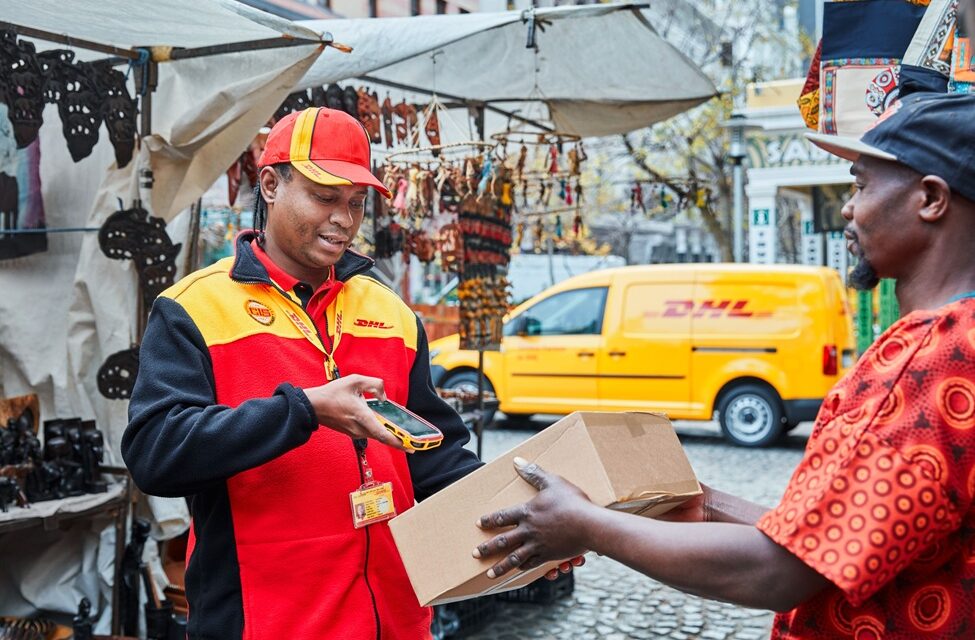
DHL Group today announced a planned investment of over EUR 300 million in Sub-Saharan Africa (SSA), reaffirming its long-term commitment to a region of growing strategic importance in global trade. The multi-year initiative will be invested in DHL Express, DHL Global Forwarding and DHL Supply Chain to expand infrastructure, improve service capabilities and unlock opportunities for companies in key industries such as e-commerce, fresh produce, energy and life sciences & healthcare.
Africa’s trade opportunities are increasing as regional integration advances. The AfCFTA creates a continental market that can deepen intra-African trade and open new corridors with the rest of the world. Progress depends on further infrastructure improvements and trade facilitation. Cross-border flows of goods remain resilient, and African companies are increasingly integrated into global value chains.
According to the latest update of the DHL Global Connectedness Tracker, Sub-Saharan Africa led all regions globally in the first half of 2025 with a 10% year-on-year increase in trade value, followed by North America with 7% and South and Central America and the Caribbean with 5%. Current forecasts from September 2025 show that the region’s trade volume will grow by an average of 4.3% per year from 2025 to 2029 – the second fastest growth globally after South & Central Asia.
“Africa is at a pivotal point in its trade development,” said John Pearson, CEO of DHL Express. “Despite global uncertainties, the continent continues to show resilience and dynamism. Our investment reflects confidence in Africa’s development and DHL’s commitment to enabling the trade flows that drive inclusive growth. By strengthening our network and capabilities, we aim to make it easier for African companies, from small and medium-sized enterprises (SMEs) to large corporations, to compete in the global market.”
At DHL Express, the investment includes upgrading hubs, increasing air freight capacity and expanding time-defined deliveries to emerging cities, which are considered demand markets according to the AfCFTA. As the only integrator with its own air freight network in sub-Saharan Africa, Express will connect these cities more closely to the Africa-Europe and Africa-Asia routes, building on recent growth in Ethiopia and Nigeria.
Hennie Heymans, CEO of DHL Express Sub-Saharan Africa, added: “Our focus is on being closer to customers and making cross-border shipping easier and more reliable. As commerce grows, businesses demand predictable transit times, consistent delivery performance, and support that understands local conditions. Through better services and customers, we will help more African companies to act efficiently and operate on a larger stage.”
DHL Global Forwarding will focus its investments on strengthening key industry solutions that drive Africa’s trade growth. The division is expanding its capabilities in energy and industrial projects, supporting Africa’s role in the global energy transition, improving cold chain and fresh produce logistics for agricultural and horticultural exporters, and scaling its expertise in Life Sciences & Healthcare with specialized temperature-controlled transportation solutions. These enhancements build on DHL’s established freight forwarding network and customs expertise along key African trade routes connecting the continent to Europe, Asia and the Middle East.
Amadou Diallo, CEO of DHL Global Forwarding Middle East and Africa, said: “Customers are navigating changing trade patterns and stricter regulatory requirements, so reliability and visibility are more important than ever. We are empowering freight solutions with deeper local expertise and enhanced digital tools to give customers clearer control over their shipments from origin to destination. The goal is simple: to keep the movement of goods predictable and to help customers capture growth where demand arises.”
DHL Supply Chain will expand its transportation solutions, especially in the Life Sciences & Healthcare sectors. This also includes more options for temperature-controlled transports to carry out important medical transports faster. This is happening because supply chains are changing and the demand for logistics services in South Africa is increasing.
Orkun Saruhanoglu, CEO of DHL Supply Chain Middle East and Africa, added: “DHL Supply Chain is expanding in South Africa as the economy gains momentum and supply chains evolve. We see a growing demand for specialized, outsourced logistics solutions, especially in the Life Sciences & Healthcare and transportation sectors. By expanding capacity, strengthening transport-oriented solutions and applying our expertise in contract logistics, we will help customers improve service quality, manage risk and grow with confidence.”