



Weighing up the issues
From PRECISION MARKETING, January 15th, 2001
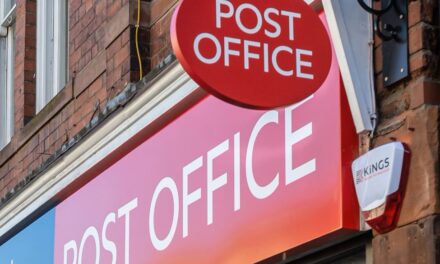
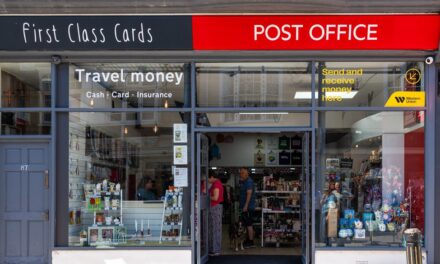
Judging by the latest directives coming out of the European Commission (EC) in Brussels, the Post Office can rest assured that it will still have a virtual monopoly on UK postal services – for the foreseeable future at least.
All the national postal services in Europe are allowed to have a monopoly on post weighing up to 350g in their own countries. The EC had been looking at reducing this to 50g, but it now seems likely the limit will be set at 150g.
In the UK, the newly regulated market won’t come into effect until March 23 when the Postal Services Commission (Postcomm), will have the power to grant licences to all the postal services operators. As things stand today, it is an offence for anybody other than the Post Office to operate postal services weighing less than 350g in any part of the country.
As reported in PM last week, Royal Mail has threatened to quadruple the cost of direct mail for rural areas if the new regulations go ahead, as it claims the competition would end its ability to subsidise services in unprofitable regions.
The DMA (UK), which has been pushing for a reduction to 50g, is disappointed by the EC’s decision. David Robottom, director of development and postal affairs at the DMA, says: “For the UK, the impact on our market is minimal – 150g means you are not going to open up much of the market, maybe another five or six per cent, but not enough to encourage much competition.
“My reaction is it’s not offering an awful lot. They’re just tinkering with it. I don’t think you’ll have many major competitors against Royal Mail [the letters division of the Post Office] domestically. The whole idea was to open the market and introduce competition on a level playing field. Now, you have a ridiculous state of affairs where it’s been diluted from the original 50g and has minimal impact.”
In other countries, where deregulation has occurred, Robottom claims competition has benefited the old monopoly provider most because it has forced them into being better focused commercially. The DMA says it would like to see Royal Mail remain the carrier of first choice, but to be operating within a much more competitive environment.
Robottom adds: “All of us want Royal Mail to be successful from a UK plc point of view. But we want choice, because choice can bring pressure, and competition can bring improvement in quality of service.”
Most people involved in the direct marketing industry appear to echo the DMA’s sentiments. Mark Roy, group managing director of The REaD Group, which works with a number of UK blue chip companies on all aspects of data-driven direct marketing, says: “I think the industry wants a level playing field, where commercial organisations can compete equally in an environment where the best people win the contracts. That may be Royal Mail, it may be someone else.”
Tom Nangle, managing director at mailing and fulfilment specialist CFM Direct, suggests opening up the market would be a good thing for the industry in terms of making pricing more competitive. “When you produce a mailing pack the single largest cost that a customer has is postage – it probably accounts for as much as 50 or 60 per cent,” he says. “So some competition in the market to bring down the cost of mailing would be welcome as far as our customers are concerned.”
While the Post Office accepts the need for greater competition, it remains concerned that postal operators will come in and cherry-pick the most profitable parts of the market.
A Post Office spokeswoman explains: “We have to deliver post to all destinations in the country at a uniform and affordable price. What we’ve been arguing very strongly is that if you were to open up the market too far, too fast, our ability to do that will be destroyed. Anybody coming into the market would potentially be able to pick off the most profitable areas. For example, they may decide to just deliver post within the M25 area.
“The costs to deliver would obviously be much lower than if you’re delivering to a Welsh hill farm or an island off Scotland. At the moment we estimate it costs about 15p to send a letter across London. It costs up to £2 to send a letter from London to somewhere remote in Scotland. So one side is subsidising the other.
“If you get companies coming and picking out the most profitable bits then we’ve lost the ability to subsidise the more expensive routes. It may mean we couldn’t afford to keep a uniform price in the same way. So there are worries if it gets opened up too much. We aren’t in favour of the weight going down to 50g but we’re quite happy for it to go down to 150g.”
While it’s easy to appreciate the Post Office’s resistance to change, mailing houses are unanimous that competition would bring about improvements, many of them pointing to weaknesses in the service being offered by Royal Mail. Some go so far as to suggest that the administration and organisational sides of the company have never been worse.
Nangle suggests that recent rail problems aside, service levels have deteriorated over the past year or so, and he sees the introduction of greater competition as a way of remedying the situation. “Somebody in the market guaranteeing a crisper service wouldn’t go amiss. Service is paramount,” he says. “It’s no good Royal Mail saying it’s a first class service and delivering it three days later. Service is an issue for a lot of our customers.”
Graham Cooper, operations director at Mail Marketing International, one of the UK’s largest direct mail companies, agrees with Nangle. He says:
“We have experienced varying levels of service and it has been a cause of concern. Consistency is important particularly for direct mailers. When they don’t know if it will take two days or two weeks it’s difficult to plan for response handling.”
Postcomm will also have the power to fine the Post Office if it doesn’t meet its delivery targets. This, at least, is being heralded by mailing houses as a positive step.
Cooper says: “It would be helpful having an outside body setting the targets for quality of service. In the past, Royal Mail has set its own targets which is a strange way of doing things.”
John North, general sales manager at Bell & Howell, which acts as a solutions provider for mailing organisations, also believes there is a desire among volume mailers to receive guaranteed service levels that are standard across all competitors.
“Mail houses are held accountable for failure to deliver on time by their customers,” he says. “The customers themselves would not understand if Royal Mail was part of the problem on late delivery so if they were asking their mail houses to compensate them for under-performance then it’s only fair if Royal Mail or whoever is involved in that compensation as well.”
Another contentious issue for mailing houses surrounds the Post Office’s discount structure. Currently, Royal Mail is offering discounts to dot-coms mailing their first catalogues through the organisation. It also uses a TMI – tailormade incentives – method, giving customers a discount over and above the standard tariff discount only if they can prove they’re doing a mailing that otherwise wouldn’t have happened.
If a company normally puts an ad on TV, for example, but decides instead to put that money into direct mailing, Royal Mail would see that as a new mailing and will offer a discount. However, Nangle explains that some of its clients have been looking to increase the volume of their mailings, yet Royal Mail has been unwilling to provide them with a further discount.
“Hopefully, the competing companies will say switch to us and we’ll give you an extra two per cent discount. If it brings real market forces to bear, it will benefit every body. That can only be good for the business. We read in the press that direct mail volumes are still rising and a bit of competition might increase that still further,” he says.
A lot of volume mailers also feel aggrieved because they believe they’re not getting a fair slice of the cake in their work share agreements with the Post Office. North explains: “Most volume mailers already do mail sort to quite fine levels, and they feel the benefit of that is not fully passed on to them.”
Many in the industry also suggest that Royal Mail’s delivery times and pick up times are too regimented. Direct mailers would like to have access to differentiated levels of service because their industry is in competition now with e-commerce, which has no boundaries in terms of when messages can be created, delivered and responded to.
North explains: “That is an area where a lot of paper-based mailing sees a tremendous amount of opportunity, but doesn’t see Royal Mail as able to adapt and change rapidly enough, primarily because it still sees the process of deregulation as a major threat rather than an opportunity.”
While some of these criticisms are quite damning, it is worth remembering that Royal Mail and its offshoots are by no means well off – it plunged from making an operating profit of £157m in the six months to September 30, 1999, to recording a £33m loss last year. And a clear danger with deregulation is it could end up squeezing an already loss-making organisation even more.
Everyone in the direct marketing industry is adamant they would like to see Royal Mail being used because they are the carrier of choice not because they’ve got the monopolistic right to carry mail. But by setting the weight at 150g, this is almost the equivalent of artificially maintaining a monopoly and isn’t going to deliver an enormous number of benefits to volume mailers.
By effectively promoting competition, the benefits for the direct marketing industry are clear: greater competition will lead to improvements in service – which many mailing houses report has long been an issue with the Post Office – and better value for money. Stricter requirements and standards through Postcomm will also sharpen up quality.
The UK is purported to have the best postal system in the world, and an efficient Royal Mail remains critical for the continuation of the direct mail industry. But many believe the regulators will have to get their act together soon because if postal services don’t react to direct marketers’ needs, the danger is that they will defect to other direct marketing media such as telemarketing and online services.
Copyright: Centaur Communications Ltd. and licensors
Page : 16
PRECISION MARKETING, 15th January 2001