



END (US) POSTAL SERVICE'S MONOPOLY
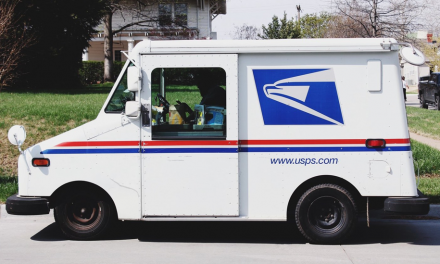
The U.S. Postal Service has raised its rates twice this year and is already
talking about raising rates again next year. It has also made noises about
eliminating Saturday mail deliveries. But the big problem with the Postal
Service is not any of these particular policies. The big problem is that it is
a monopoly and that the government keeps it a monopoly by law. Why were people alarmed about the threatened elimination of Saturday mail
deliveries? Would we panic if some supermarket said that it would close on
Saturdays? No — because we would just shop at some other supermarket. The
Postal Service's problems are more serious because nobody else is allowed to
deliver mail. Nobody else is even allowed to put anything in your mailbox. Even though
you bought the mailbox yourself, it is treated as if it is the property of the
Postal Service. Moreover, the Postal Service can impose its own rules on
possible rivals, such as Mailboxes, Etc. This is a monopoly plus. The other side of the coin is that the Postal Service gets its monopoly and
its various privileges — including exemption from taxes, zoning laws and
vehicle license requirements — at the cost of being subservient to Congress.
By its own admission, the Postal Service has 26,000 post offices that are not
making money. But closing them would bring on Congressional wrath. So would
any attempt to seriously downsize its huge work force. The net result is that the Postal Service is not only a rare privileged
monopoly, it is an even rarer money-losing monopoly, due to such politically
imposed inefficiencies. That is what is behind the constant rate increases and
the threats to cut back service. Although people who send first-class mail were exempted from the most
recent rate increase, they are likely to be targets for the next one. But
people who send first-class mail are not only already paying their own way,
they are overpaying and subsidizing junk mail and other things that are not
pulling their own weight economically. People in a number of other countries have begun waking up to the fact that
a government monopoly of mail deliveries is bad news for the public, both as
people who send and receive mail and as people who pay the taxes to subsidize
a losing operation. New Zealand has allowed its postal service to close more than a third of
its post offices and has started the process of privatization. Sweden,
Finland, Australia and the Netherlands have also started the process of
privatization. By contrast, the U.S. Postal Service is not only keeping its subsidized
monopoly, it is seeking to use its privileges to expand into other businesses.
It has already been selling T-shirts, mugs and other miscellaneous items, and
making money from copiers in post offices. What is wrong with that? What is wrong is that private businesses provide
all these same goods and services — and these businesses are subject to all
the taxes, zoning laws, vehicle licensing fees and other legal requirements
from which the Postal Service is exempt. Nor can private businesses borrow
money on the basis of the government's credit, rather than their own earning
power, as the Postal Service can. This is not simply unfair, it is uneconomic. When the post office's copier takes business away from a local copy shop,
it also takes taxes away from the local government. More important, the
economy's resources do not flow to the most efficient user but to the
operation with the most privileges. One of the bases for the Postal Service's claims for its privileges is that
it is bound by law to deliver mail everywhere in the country for the same
price. That means that the guy who lives miles out in the middle of nowhere
gets his mail deliveries subsidized by people who are mailing letters from New
York to Chicago, which costs less than the price of a first-class stamp. But that is trying to justify one privilege by another. Why should someone
who lives in isolation have someone else pay the costs created by his
isolation? If the isolation is worth it, then let the person who benefits pay
for it. That goes not only for the cost of delivering the mail, but also for
the cost of delivering electricity, water and other things that cost more to
deliver to someone living out in a desert or up on a mountain top. Monopoly means inefficiency and a money-losing monopoly means even more
inefficiency. Make it a business like any other business and let others
compete with it. {DOCTYPE} NO Copyright (c) 2001, Lexington Herald-LeaderLEXINGTON HERALD-LEADER, 16th July 2001