

Delivering the goods
The majority of the British public enjoys its weekly trip to the supermarket so much that it is yet to consider realistically the purchasing of groceries online.
High-profile retailers have discovered this the hard way in the last year, having launched e-grocery operations before discovering the market isn’t as developed as they had thought.
Somerfield’s 24-7 operation is perhaps the best known e-grocery failure. It went online in September 1999, but closed just nine months later with the loss of three picking and distribution centres in London and Bristol. The company, which had recently bought Kwik Save, said it needed to concentrate on the convenience store aspect of its operation.
“The hard fact is that 24-7 has not been growing and represents a significant distraction to management at a time when its focus has to be on the core Somerfield and Kwik Save business,” said newly-appointed executive chairman John von Sprekelsen at the time.
Little demand
Budgens’ e-grocery venture was pulled in September for similar reasons, although its distribution centres were kept on to service the company’s separate Teleshop operation, which has local authority contracts for deliveries to the elderly.
Chief executive Martin Hyson said: “The launch of our internet shopping service has established that at this stage there is a low
level of customer interest. We believe that we can deliver greater value to our shareholders by focusing on our core proposition of neighbourhood stores.”
It is significant that both retailers blamed the closures on the need to focus on local outlets rather than become bogged down in distribution logistics.
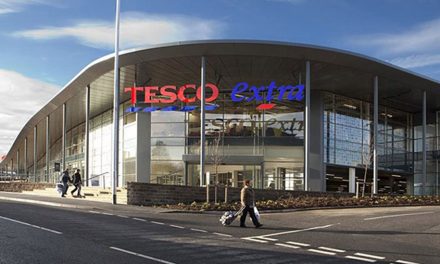
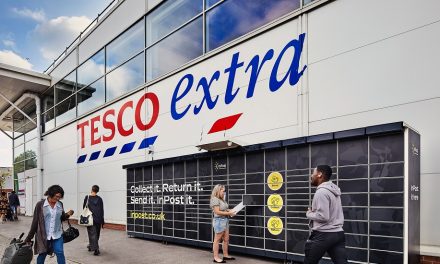
Tesco.com, operated by supermarket giant Tesco and the world’s largest online grocery retailer with over 750,000 registered users, is bucking the trend. Unlike 24-7 and Budgens, however, Tesco.com has shunned purpose-built distribution centres in favour of more localised methods.
Orders placed with the service are fulfilled by supermarket staff, who simply hand-pick the orders from the customer’s nearest store,
Tesco is the world’s largest internet grocer. Its success is underpinned by keeping the emphasis on a local service
Distribution
E-grocers market overview
from where they are delivered within two-hours at a charge of £5 per order. Tesco claims not to make a profit from the delivery charge, and with more than 6o,ooo orders a week, Tesco.com customers don’t seem to mind the fee.
Tesco.com’s innovative approach to e-grocery retailing, which has resulted in a projected annual turnover of £200m this year, has allowed it to roll out its service at speed. Unlike Somerfield and Budgens, Tesco hasn’t had to plough resources into the venture and has stolen a march on the opposition, fostering a large customer base.
Tesco’s closest supermarket competitor is Sainsbury’s. Its Sainsbury’s To You online shopping scheme was launched in May and has the ability to deliver to 60% of the UK population, but with a different focus to that of Tesco.com.
Mixed approach
Although home delivery is made from 33 Sainsbury’s stores, the company’s approach has, like last year’s e-grocery flops, embraced a central distribution model with the open-ing of two “picking centres” in Gorton, Manchester and Park Royal, London.
Park Royal, which opened in June, covers 16,722m2 (180,000 sq ft) and stocks 15,000 lines. At 6,o38m2 (65,000 sq fi), Gorton is less than half the size of Park Royal but also stocks 15,000 products. It has a capacity for 5,000 weekly orders, although Sainsbury’s isn’t saying whether or not these are being fulfilled.
The time taken to set up these centres may have allowed Tesco.com to forge ahead, but Sainsbury’s’ e-commerce director, Angela Megson, is confident about a mixed approach to distribution.
“We are expanding our service by offering delivery by a combination of stores, medium and large picking centres,” she says. “We have 33 stores online which will give us rapid penetra