



Koizumi's Campaign
Junichiro Koizumi leans forward and bangs the table with his fingertips, tapping out each point with a click of his nail or a thud of his knuckle. In contrast to the drab ranks of Japanese politicians who speak with all the vigour of a funeral dirge, the prime minister is a showman who squeezes every moment for dramatic effect. Occasionally he leans back in his canary-yellow chair – not for him the squat, leather armchairs of old – and sweeps his hand through the air as though slicing at an invisible enemy.
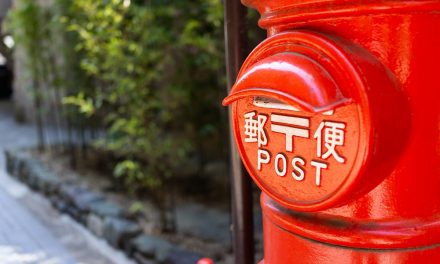
The subject under discussion – a seemingly minor change to the status of the post office – is not obviously worthy of such passion. But Mr Koizumi, in one of his first interviews since completing a year in office last month, is employing the language of war.
"Osaka castle is surrounded by moats," he begins cryptically, alluding to one of the country's most impregnable medieval fortresses. "If you want to attack the headquarters, you have to attack the outer moat first, fill it in, and then attack the inner moat. Only then can you enter the castle itself." He pauses for effect. "The postal services are the outer moat."
The bill to introduce an element of private competition into mail delivery, he implies, is merely a staging post on the road to the bigger goal of full privatisation. The broader implication of the castle-storming analogy is that Mr Koizumi's reform programme, criticised as timid and ineffectual by some, is steadily advancing on its ultimate target: the very heart of Japan's state- controlled economic structure.
"The biggest aim of my cabinet is to leave to the private sector what the private sector can do. It has been one year since I took office, and within two [more] years reforms should be firmly in place," he says, implicitly brushing aside suggestions that he may not be in office that long. "I am sticking to my basic policy that there will be no growth without pain or reform. I believe that structural reform is proceeding well."
That is not how it looks to some. To many advocates of reform, who seized on Mr Koizumi as the only leader capable of shaking Japan from its 10-year economic slumber, the prime minister has achieved little in his first year save frittering away his political capital. "What can he possibly achieve with 40 per cent popularity that he failed to get through with 80 per cent?" asks one worried diplomat.
Even his firm supporters, who cite changes to politically sensitive budget allocations as evidence of progress, keep their claims modest. "Structural reform is going in the right direction but it has been a little slow," says Yoshihiko Miyauchi, a businessman and president of the government's Council for Regulatory Reform.
Mr Koizumi does not acknow-ledge even that. He paints a picture of his first year as one of preparing the ground for reform, a process he expects to complete on schedule. This year, he says, three main policy initiatives will push his programme forward: the first phase of post office privatisation; the abolition of the state housing loan corporation; and a speedier disposal of the non-performing loans weighing down the financial system.
On the first, he says, his ultimate goal is to privatise the post office savings and insurance system, thus liberating from state control an estimated Y370,000bn ($2,900bn) of funds, the world's largest savings pool. Instead of these savings being funnelled via government bonds and state loans into wasteful building projects and other make-work programmes, say his advisers, they can be allocated by the private sector to more productive uses.
"Addressing this issue," says Mr Koizumi, "is the most effective way of trying to fundamentally reform government."
The same philosophy underlies his determination to scrap the state housing loan corporation, traditionally the main lender to would-be home owners. Like the post office savings, say advisers, these cheap sources of funds crowd out private sector banks and distort lending practices.
"People said that private institutions could not provide the loans that the housing loan corporation provided and that, without it, ordinary citizens would not be able to buy a house," says Mr Koizumi. "But as soon as we announced we intended to scrap it, those private financial institutions . . . have come up with more favourable products."
Mr Koizumi's third priority for the coming year is also aimed at reinvigorating the private sector, this time by forcing financial institutions themselves to clean up their act. "Until recently there was opposition to any acceleration or expeditious disposal of non-performing loans because doing so, people said, would cause unemployment," he says. "But we shall accelerate the disposal of NPLs so that financial institutions can regain their soundness." His administration's failure to acknowledge the scale of the bad loan problem in the banking sector – which by some reckoning is technically insolvent – has been a principal cause of frustration to many economists. Yet Mr Koizumi is being warned by other influential commentators that to move too quickly to resolve the bad loan problem – which at its extreme would mean closing down large swathes of Japanese industry – would be catastrophic.
"The opposition say I should get more warm-hearted and that liquidating businesses is not the same thing as reforming. I'm called the Callous Reformer," he says. "But from overseas I am criticised for being lukewarm."
Indeed, as Mr Koizumi implies, he is hedged in on both sides. Move too slowly with reform and he will be accused of doing nothing; too swiftly and he could tip the economy, which has been stagnant and deflationary for years, into a downward spiral. Thus, in spite of his cost-cutting rhetoric, he has moved cautiously with his stated aim of reducing the fiscal deficit. He has also prevailed on the Bank of Japan to loosen monetary policy by pumping liquidity into the lifeless financial system.
"We've got this zero interest rate monetary policy and a [lax] fiscal policy and yet the economy is slow to return to positive growth," he says. "The causes are structural and that is why as I said earlier – talking about the postal services, the highway corporation and so on – we have to address these structural issues."
If the state of the economy leaves Mr Koizumi little room for manoeuvre, then politically, too, he is walking a tightrope. He owes his position more to support from the party rank and file than to its senior figures, who regard his efforts to roll back the state as an attack on their power base. He has already been forced to sack one of his closest allies, Makiko Tanaka, the former foreign minister. And many political commentators expect a cabinet reshuffle this summer that would see him make further concessions to the old guard of the Liberal Democratic party.
Mr Koizumi insists that it is his opponents, not himself, who are shifting ground. "The forces of resistance are turning to the forces of support," he says. "We have entered the stage of implementing our new policies with the majority support of members of the Diet." So much so there is now "no need" to carry out his oft-repeated threat of dissolving parliament to punish recalcitrant members of his own party.
Mr Miyauchi sees it differently. "He is trying to change the LDP from within, but probably in vain," he says. "It seems more reasonable to me for him to leave the party."
Mr Koizumi's assault on the post office may finally settle the dispute as to whether it is he, or his enemies, who have given in. If he pushes the legislation through this summer, he may begin to restore the faith of sceptics who have grown to doubt his ability to reshape Japan's economic and political landscape. But if he is stopped at the first moat, critics will conclude that Japan's entrenched interests lie deep within a fortress too strong for even Mr Koizumi to breach.