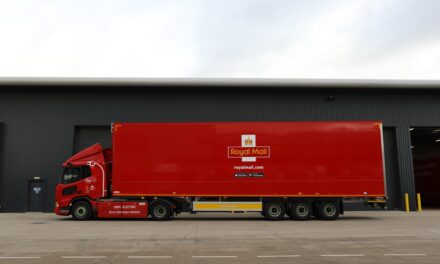




Leighton puts stamp on the Royal Mail
ALLAN LEIGHTON’S powers of persuasion apparently know no bounds. When he took on the chairmanship of what was then ludicrously known as Consignia, even his friends told him he was brave, verging on mad. But now he has lined up not one but four heavyweights to join him on the board of what is now Royal Mail.
What can have attracted them to the job? Leighton does not yet have a chief executive to run the show and he is in the middle of an almighty battle with the regulator over pricing. He is adamant that if he cannot persuade Graham Corbett, the postal services regulator, to change his mind over price restrictions, he will take the case to the Competition Commission for he insists that the current proposals would wreck his plans for reshaping the Royal Mail.
Yet despite these negatives, he has found four non-executives who should be able to make a real contribution in the boardroom. Richard Handover, chief executive of WH Smith, brings the retail experience that the business drastically needs. John Neill, chairman of Unipart, knows about managing a large workforce and is passionate about educating that workforce. Since part of the Leighton philosophy for the Royal Mail is that it will have a drastically smaller but more effective workforce, an equivalent of the Unipart University could be a useful innovation.
Mike Hodgkinson, chief executive of the British Airports Authority, knows about dealing with regulators. Many private sector operators would change career to avoid this additional burden in running a business but for some it is unavoidable. Neither airports nor the postal service are likely to be left to the whim of market forces for some time. For Hodgkinson, who has had to remain sane while the Terminal 5 inquiry has dragged on interminably, leaving a huge question mark hovering over his business, the postal regulator may appear to be close to reasonable.
Finally, Leighton has netted David Fish, not as high profile as the other recruits but a rarity having been a president of the fiercely private Mars group. That is a rare accolade for someone not born into the chocolate business. It is his experience in marketing and personnel that Leighton wants on his board.
Leighton himself continues to have enough boardroom seats to accommodate a sizeable dinner party. By most standards, he could be accused of spreading himself too thinly. Yet if one of the most important role’s of a chairman is to oversee the board, he appears to be finding time to fulfil that part of the job extremely effectively for the Royal Mail.
(c) Times Newspapers Ltd, 2002