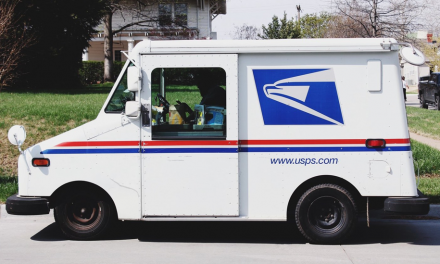




Commission to review US Post Office
The postal system, whose last overhaul was in the 1970s, could face major changes in the future as its mission and operations come under review from a commission set up Wednesday by President Bush.
The U.S. Postal Service is in tough competition from private companies and technology, including electronic commerce and e-mail, over the Internet.
The commission will consider ways to make the postal system more efficient and financially viable. A report, including recommendations, must go to the president by July 31.
"The postal system is not broken but there are changing circumstances which require us to think ahead," said the commission's co-chairman James Johnson, who heads The Brookings Institution, a Washington think tank. His co-chairman is C. Harry Pearce, chairman of Hughes Electronics Corp.
One of the biggest challenges for the service is how to balance providing affordable mail service to communities and trying to be financially sound.
The universal service requirement calls on the agency to provide First Class mail delivery to everyone in the country a uniform price.
Of the service's 30,000 offices, about half are not profitable, a Postal Service official said. Congress limits the post office's ability to close offices, often seen as community hubs.
The commission plans hearings and will get input from businesses, consumers and others.
Peter Fisher, the Treasury Department's undersecretary for domestic finance, said the Bush administration is open to all ideas, but two things are "out of bounds" _ keeping the Postal Service's existing business operation as it is and shoving all costs onto taxpayers or users.
"Our goal is not to privatize the postal service," said Fisher, the administration's point man for the commission, although he is not a member. The issue, however, is likely to come up for debate, officials said.
The Postal Service, which has outsourced billions of dollars in operations, considered privatization, but rejected the idea, Postmaster General John Potter said.
"We did not find a model that we thought would suit America," Potter said. "We tried to formulate our own model and did not come up with one that balanced our obligations to provide universal service with the notion that we would be profit oriented as a private concern."
On Tuesday, the Postal Service said it lost $676 million in the fiscal year that ended Sept. 30; that was about half of the budgeted loss of $1.35 billion. The agency anticipated a large loss from disruptions related to last year's terrorist attacks and anthrax-by-mail contamination.
A work force reduction of 23,000 employees through attrition helped reduce the red ink. In addition postal rates increased in June, raising the price of a letter by 3 cents, to 37 cents.
Mail volume has continued to drop, even though 1.77 million new delivery addresses were added. Volume fell by 4.6 billion pieces in the past year, a decline officials attribute to the Internet, fewer people writing letters, more competition and a poor economy.
The Postal Service operates under a law developed by a presidential commission in the early 1970s. It does not receive a taxpayer subsidy for operations and is required to pay its way from revenues and to break even over time.
Postal managers have contended in recent years that the current structure means it takes nearly a year to change rates, and limits their ability to compete with private companies and to offer new types of service.
The other members of the commission are: Dionel Aviles, president of Aviles Engineering Corp; Don Cogman, chairman of CC Investments; Carolyn Gallagher, former president of Texwood Furniture; Richard Levin, president of Yale University; Norman Seabrook, president of the New York City Correction Officers' Benevolent Association; Robert Walker, chairman of the Wexler Group; and Joseph Wright, president of PanAmSat.