



EWS may sue over Royal Mail contract
Royal Mail’s decision to stop using rail from next March could land the company in court.
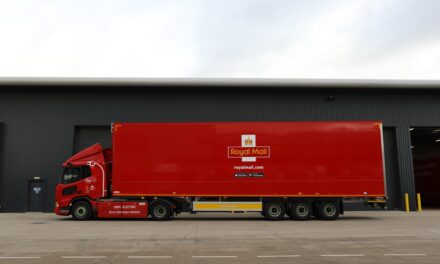
UK rail freight operator EWS provides train services to Royal Mail under a 10-year contract that runs to September 2006.
EWS planning director Graham Smith told IFW that although the company did not want to go down the legal route, Royal Mail had “a genuine commitment to honour this agreement”.
EWS operates 49 trains a day for Royal Mail across the UK rail network, hauling 20m items, including 25% of all firstclass mail. The traffic represents 10% of EWS’s business.
Royal Mail has blamed EWS’s high prices for its decision and will now push ahead with an integrated road/air network, which should be in place by next spring.
Paul Bateson, Royal Mail’s MD for logistics, said other forms of transport could provide the same flexibility and quality, but more cheaply.
The switch threatens 500 EWS jobs, besides Royal Mail staff at eight dedicated rail terminals and 27 other loading points across the UK.
Overall, the loss-making Royal Mail said it expected to save £90m (€126m) a year, but EWS said this figure factored in an assumed greater efficiency in road transport and did not relate simply to a change of modes.
EWS invested £50m (€70m) in 30 class 67 locomotives, delivered in 2000, since upgraded for 200kph (125mph) operations. Royal Mail has invested £150m in rail operations including rail-connected distribution centres and 16 class 325 trains – facilities and equipment Smith said he doubted that mail regulator Postcomm would like to see abandoned.
Bateson said he could not rule out a return to rail for some elements of distribution. But Smith warned that when trains stopped running, infrastructure operator Network Rail usually took back the train paths. “It would be impossible for Royal Mail to get those slots back.” An independent transport analyst told IFW he believed the issue was performance, not price. EWS had been “arrogant and complacent” and its 95% on-time service was not good enough.
He drew parallels with Germany, where Deutsche Post is threatening to withdraw from rail, because of slow delivery, and use more air freight for mail.
Posted: 16/06/2003