

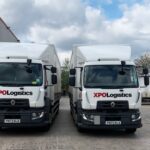


DOT begins review of DHL Airways
One month after Deutsche Post World Net announced plans to acquire the
ground operations of Seattle-based Airborne Express Inc., shoe and apparel
maker Nike Inc. informed United Parcel Service it was switching to the
German delivery giant to move its European shipments.
According to UPS officials, Nike said it changed logistics companies because Deutsche Post offered rates 10 percent below those of UPS.
The loss of the $8-million account for standard, express and return logistics service adds fodder to the battle between global logistics integrators UPS, FedEx and Deutsche Post for global market share and access. And it reinforced the belief held by the U.S. integrators that Deutsche Post's low package rates are being subsidized by its postal business and other state aid.
Immediately after the Airborne acquisition was announced, UPS asked the U.S. Department of Transportation to investigate the matter, saying it raised questions about the degree of control Deutsche Post would have over the U.S. domestic express package and cargo market.
But the ability of international express delivery company DHL to expand its
toehold in the U.S. domestic market remains an open question. Even under normal circumstances, the $1-billion acquisition by a foreign company would
come under scrutiny by Justice Department lawyers to make sure the combination lead to an unbalanced competitive situation that could hurt consumers. Also hanging over the deal is a DOT probe into airline citizenship requirements for DHL affiliate DHL Airways.
Some analysts believe DHL and Airborne could be in a holding pattern until
after the DOT clears up the issue of whether foreign interests actually control Columbus, Ohio-based DHL Airways.
Congress attached a provision to the fiscal 2003 emergency supplemental spending bill that went into effect April 16 forcing DOT to conduct a formal review of DHL Airways with the help of an administrative law judge and complete the fact-finding by Sept. 2. The judge has since requested an extension from DOT until Nov. 24 in order to gather all necessary material.
Even before congressional action, Bear Stearns transportation equity analyst Edward Wolfe, in a note to clients said, "We remain cautious about Deutsche Post's ability to obtain regulatory approval for the transaction without a relatively drawn-out process." Assuming the deal isn't blocked, Wolfe forecast it would take until at least early 2004 for the sale to go through.
The pressure from Congress came just five weeks after DOT Inspector General
Kenneth Meade recommended the department initiate formal, public proceedings into the matter, as requested by rival package carriers United Parcel Service Inc. and FedEx Corp., and Lynden Air Cargo, an Alaska-based carrier pecializing in heavyweight cargo to remote locations around the world.
The inspector general's office, at the request of House Transportation and
Infrastructure Committee Chairman Don Young, R-Alaska, looked into how the DOT determines an air carrier's citizenship following a substantial change in ownership, management or operations. Meade said an open process would ensure that the department's final decision is perceived as impartial and objective.
UPS, FedEx and Lynden have unsuccessfully sought in a series of petitions
dating back to January 2001 to get the DOT to pull DHL Airways Inc.'s operating certificate on the grounds the company was controlled by the partially privatized German postal monopoly through its investment in Brussels, Belgium-based DHL International, and thus violated U.S. ownership rules on airlines operating domestically point-to-point. FedEx filed a similar complaint with the Federal Aviation Administration, and UPS also protested the freight forwarding license granted by DOT to DHL Worldwide Express.
DHL Airways, which operates a fleet of 40 aircraft from its hub at the Cincinnati/Northern Kentucky International Airport, is 25-percent owned by DHL Worldwide Express, a subsidiary of Bonn-based Deutsche Post. Federal law requires that American interests must own a minimum of 75 percent of a U.S. airline and that the president, two-thirds of the board and other managing officers are U.S. citizens.
UPS and FedEx contend they are restricted from competing in the German postal market because of the government monopoly, and that other countries will have little incentive to open their markets to U.S. competition if foreign corporations can penetrate the U.S. market simply through investing in U.S.-based companies. The German government owns 69 percent of Deutsche Post.
Transportation Secretary Norman Mineta conducted an informal review of DHL's ownership status and determined in May 2001 that DHL was a legal U.S.-flag carrier and that DHL International was a legitimate foreign-based freight forwarder. UPS and FedEx requested a formal, public investigation last summer into DHL's nationality as Deutsche Post raised its ownership stake in DHL to 75 percent by acquiring a 25-percent interest in DHL held by German airline Lufthansa AG. Deutsche Post has since purchased the remaining shares in DHL.
DHL contends that UPS and FedEx are using regulatory means to protect erosion of their combined 79-percent share of the domestic air express and ground market. DHL officials argue that UPS and FedEx want to compete globally but keep out competition in the United States.
DHL leases nine aircraft with the UPS livery to an air charter company UPS
uses in Europe, according to Ray Lutz, DHL Airways' vice president of marketing and strategic planning.
"It's a mirror image of what DHL is doing here," he said. "In their mind
it's O.K. when we do it in other countries, but not when you do it here."
DHL claims it reorganized to meet U.S. requirements by selling Idaho investor William Robinson 75 percent of DH Airways' voting stock after a DHL international subsidiary bought out Robinson and other shareholders in DHL Worldwide Express. The remaining stock is held by DHL Holdings (USA), a Delaware corporation that does not qualify as a U.S. citizen. Robinson also appoints three of the airline's four directors. One of the directors is his brother and another is his financial advisor.
Additionally, DHL said Robinson's shareholdings in DHL Airways represented
55 percent of the carrier's total equity. UPS and FedEx charge that Robinson is not acting independently, and that DHL Holdings is a wholly owned subsidiary of DHL International.
"The key issue is whether or not the facts and circumstances surrounding
Mr. Robinson's stock transactions and subsequent ownership of DHL Airways
involve oral or written obligations, express or implied, that govern the relationship between DHL Airways and Deutsche Post," Meade said. "In our view, it is important to verify whether these agreements carried with them… obligations on either party that bear on the question of actual control, and, if so, that they undergo the same scrutiny as have the other agreements in this case."
The probe into whether DHL Worldwide Express meets corporate citizenship
requirements became even more complicated following the announcement that DHL plans to acquire Airborne.
In his letter to Young, Mead said DOT must look beyond technical compliance
with U.S. laws to business relationships that may give Deutsche Post de facto control of DHL Airways. Deutsche Post could exert influence through the amount of business it does with DHL, or through side agreements that call for Robinson to act as the German company's agent. DHL Airways, for example, does 90 percent of its business with DHL and would likely go out of business if Deutsche Post switched carriers.
Lutz said it is common for companies that have been split apart to do business with their former partners, but when DHL looks for additional business FedEx and UPS object. "The very thing they are trying to stop us from doing," he said.
According to Meade, factors that bear on whether DHL and Deutsche Post actually control the airline include whether:
* DHL's votes are weighted to count more than Robinson's.
* DHL has veto power over corporate decisions.
* Clauses exist that would allow DHL to exercise options to force the
airline to buy it's stake in the company.
* DHL's equity in Airways is under the 49 percent typically allowed
foreign air carriers.
* DHL carries any Airways debt.
At an April 29 preliminary hearing on procedural matters convened by Administrative Law Judge Ronnie Yoder, lawyers for DHL made public for the first time that John Dasburg, the newly installed chairman and chief executive of DHL Airways, was leading a group of investors negotiating to buy 100 percent of the airline, according to a transcript and DHL representatives. Dasburg, who resigned as chairman of Burger King Corp. on March 31 and previously served 10 years as president of Northwest Airlines, and previously notified DOT that he would acquire 5 percent of the airline's common stock as part of his compensation package. The ownership announcement "doesn't change the essence of the case, which is about effective control of the airline, which we still feel lies in Germany," FedEx spokeswoman Kristin Krause told American Shipper.
Yoder ruled the burden of proof in the case was on DHL to show that it was
a U.S. corporate citizen, not on UPS and FedEx to show the contrary.
DHL said Congress acted improperly to order the hearing in the first place.
"The legislative intrusion which occurred is very troubling," DHL counsel
Stephen Lachter said in a letter to Yoder. "It creates the perception that
the legislative branch is seeking to influence this proceeding, which would
be wholly improper; such intrusion has been fueled by (DHL) Airways' competitors, who seek to prevent Airways and its principal freight forwarding customer from competing effectively in the domestic expedited freight and small parcel market."
Lachter suggested DHL could challenge the congressional order on the grounds that it violates the Constitution's requirements for separation of powers between the executive and legislative branches of government.
The same questions are being asked about who would have actual control of
Airborne's airline business. Under the agreement ABX Air will be spun off
as an independent company, but will provide dedicated contract carriage to
DHL's ground business as well as other parties. However, since most of
Airborne's revenue is expected to come from DHL, some wonder if it too will
be a captive vendor forced to accede to DHL's, and ultimately Deutsche Posts', wishes or perish.
"Our sense is a transaction would effectively result in Deutsche Post's control of Airborne's domestic airline assets," Wolfe wrote.
The wartime appropriations bill also barred the Defense Department or other
government agencies from using any of the $79 billion allocated by the funding legislation for 2003 to purchase freight transport from any air carrier "not effectively controlled by citizens of the United States."
Senate Appropriations Committee Chairman Ted Stevens, R-Alaska, led the effort during the House-Senate conference negotiations to craft the language, which is aimed at blocking DHL Airways from getting government business, according to a Senate aide. DHL participates in the civil reserve air fleet.
The law defined a carrier that lacks effective control by U.S. citizens as
one that receives 50 percent or more of its operating revenue during the last three years from a non-American entity that either has a direct or indirect voting interest in the carrier or is owned by a foreign government.
In March 19 comments to DOT, Lynden Air Cargo said the department's recommendation that DHL Airways hire a marketing executive to attract other customers was improper and contributed to Lynden's loss of a military transport contract to DHL.