


TNT prepares to revamp U.S. ground deliveries
Dutch global parcel delivery company TNT Express is looking at 'all the options' to replace Airborne as its ground delivery partner for great swathes of the US.
Airborne's ground hub-to-door network now belongs to rival DHL, itself part of the Deutsche Post logistics and express parcel empire.
David Burton, executive director of TNT Express, said: 'Our contract with Airborne is cast iron and does not finish until the end of next year.
'Obviously we cannot wait until the contract runs out and so we are already looking at alternatives, which could include opening more depots in the US and doing the operation ourselves.
'A strategy group has been looking at a number of challenges, including the US, and will consider a variety of options.'
TNT Express already has its own sizeable delivery networks on both the eastern and western seaboards of the US focused on the large population centres, leaving Airborne to handle the geography in between.
It is very unlikely that TNT Express will want to fill in all the US gaps itself, either organically or through acquisition.
Another option would be to find a pan-US operator similar to Airborne, but it may boil down to striking deals with regional operators.
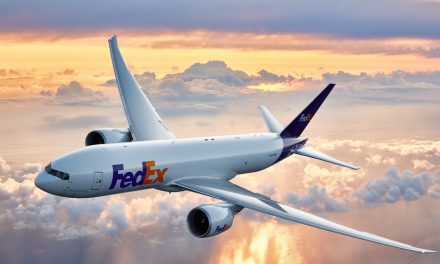
At present US-bound parcels traffic is flown out of TNT Express' Liège hub in Belgium on a B747 freighter belonging to US carrier Polar Air Cargo.
The traffic arrives in New York and is put into the bellyholds of US domestic passenger airlines for onward distribution by either Airborne or TNT Express itself.
It will be a busy period for global strategic thinking at TNT Express, with annual revenues of e 4.4bn ($5bn) last year.
In China, where parcel volumes are growing at 30% annually, TNT Express is now on its own after a 15-year joint venture with state-owned logistics giant Sinotrans came to an end.
'In China we already have up our own depots and vehicle fleet, which previously operated as part of the joint venture,' said Mr Burton.
On the home patch in Europe, the eastward drift of investment and logistical needs continues apace, accelerated by 10 new member states joining the EU next year. The ending of customs procedures for the member state entrants will mean significant savings on road network transit times.
'Sometimes a truck can sit at a border post for 24 hours,' said Mr Burton. 'I would expect significant savings in transit times, a minimum of one day and up to four days for a trip between Poland and Lativa.'
TNT Express, which has one of the largest linehaul trucking networks in Europe, will establish a new hub in the east, probably in Poland, to meet volume increases.
Asked about the implications of the new German distance-based motorway toll, or LKW Maut, Mr Burton said: 'Like everyone else, we will be passing on the cost.'
Parent company TPG, the former Dutch post office, was the first European state-owned mail monopoly to make a big private sector acquisition, Australian-owned TNT, in the mid 1990s.
So can the orange TNT compete on a global scale with the brown and yellow of UPS and Deutsche Post?
Said Mr Burton: 'If you are asking me whether we can be bigger than UPS and Deutsche Post in terms of turnover the answer is no, not in the foreseeable future. But we are still a big player in the market and we are successful in our own right.'
TNT Express has some customers who feel more 'comfortable' dealing with TPG than with the giant Deutsche Post.
In addition, discussions with other postal authorities about 'joint ventures or coloading' are in train at any one time, said Mr Burton.
He sees no reason to change the business model as directed and driven by his straight-talking TNT Express boss Alan Jones.
'We do not need to do anything radically different,' he said. 'And the good thing is that we have a choice about what we do as a company. We will not be forced into a [commercial] relationship.'
The formidable Mr Jones, on his arrival from Britain as top boss at TNT Express four years ago, famously 'got rid of the consultants' and shed unprofitable volumes.
Mr Burton is in the same plain-speaking TNT veteran mould. He confirms that each new account above a certain size is put through a 'rigid and rigorous' costing mechanism to decide the acceptable rate for the volumes.
Each component of the delivery regime, from pick-up, linehaul, delivery to management and administration, plus the cost of capital and other financial aspects, are costed.
'We apply a cost to each component with a high degree of accuracy, depending on the profile of the traffic by air or road, short or long distance, plus sales and administration,'said Mr Burton.
Around 50 of the largest accounts, making up 20% of overall TNT Express turnover and 35%-40% of volume throughput, are handled centrally from head office.
Some of the large accounts are open book, which means the costing structure is made transparent to the customer, who agrees a certain margin for the express operator.
Perhaps that costing model should be applied at TNT Logistics, the underperforming sister company to Express. The head of TNT Logistics, Roberto Rossi, recently received a e 1.9m payoff when he was replaced by the senior manager in the US.
Mr Burton would not comment directly on those matters, but observed: 'In logistics contracts you tend to be strong in one country but relatively small in the others. In express, you tend to be Europe-wide or global.'
There is little chance of TNT Express and Logistics merging in the near future, if only because there is only a small overlap in customers.
Mr Burton said: 'Where there is an overlap, one division or the other will take the lead in terms of communications with the client, so as not to duplicate matters.'
For the business as a whole, he is keen to see greater use of accurate five-year forecasts for investment decisions such those involving the aircraft and road fleet.
He says that 85% is the optimum load factor for aircraft any less and the yield goes down, any more and the profit is threatened as service quality declines.
The idea is to smooth out, where possible, the step cost increases of new equipment.
'If we get our demand forecasts wrong we either have excess capacity or we have to rush into the air freight charter market, which is more expensive,' he said.
Part of the process of keeping costs to a minimum is to purge 'ugly' freight out of the system.
'We strive to handle as much conveyable cargo as possible. We regularly purge out the non-conveyable and non-stackable items that require manual handling.'
However, there has to be some give and take. The automotive companies, a large part of the customer base, often need to transport doors, gearboxes or windscreens.
To Mr Burton the appeal of express is the same as ever: 'We hope there are always people for whom service is more important than price.'