


UK mail chief issues post office revenue warning
Royal Mail chief Adam Crozier admitted last night the Government’s decision to withdraw card accounts is a key factor in the crisis facing the Post Office.
He issued a statement in which he warned: “The decline of official business going through post office branches, including the withdrawal by 2010 of the Post Office Card Account, means that within the next few years less than 10% of the network’s revenue will come from work done for the Government.” And he appealed for “a full debate on the future of the rural network”.
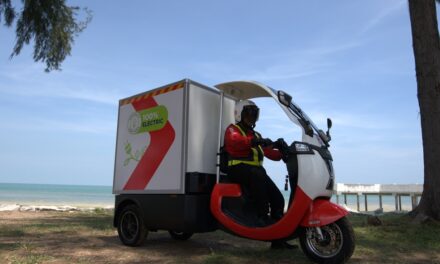
His comments came as the Post Office published a report on “innovative ways of providing its services in rural areas” which foreshadows what many fear will be a major closure programme when the annual £150million Government subsidy for the rural network runs out in 2008. It highlighted the experiment based in Wick using a mobile office in a van.
The report claimed a survey showed 88% of customers were satisfied with the service delivered by 12 mobile pilot schemes, including the Caithness trial, and said it was their favourite option.
It said there were negative responses concerning the frequency and length of visits and admitted the scope of services was limited by the availability of a satisfactory telephone network to enable computers on board the vans to work.
It concluded the mobile post offices were “attractive” for sub-postmasters to operate and said that, although they were loss-making, they were a “less costly” way of delivering the network in rural areas within reach of a “hub” sub-post office in a nearby town where the van would be based.
Other options include postmasters travelling round to set up temporary offices in local pubs, petrol stations or other premises; provision in mobile libraries operated by local councils; an internet-based virtual “home service”; and the provision of post office services by the police or other local “partners”.
Argyll and Bute Lib Dem MP Alan Reid said it was necessary to look at ways of saving post offices but this would not be so pressing if the Government was not planning to withdraw the card accounts, a move he claimed “is turning a problem with the rural network into a serious crisis”.
Earlier, Inverness, Nairn, Badenoch and Strathspey Lib Dem MP Danny Alexander presented a petition urging that the card be kept, drawn up and circulated by Nairn sub-postmistress Sue Benbow to Work and Pensions Minister James Plaskitt.
At the meeting he urged Mr Plaskitt to reconsider Government policy and keep the card to help pensioners and other vulnerable people and because of the devastating effect withdrawing it would have on sub-post offices.
He also called for a full-scale Commons debate.
A Department of Work and Pensions spokeswoman said payments via the card cost £1 each. If done through a bank they cost 1p each.
She said beneficiaries could still obtain payments from bank accounts through post offices.
Mr Plaskitt said later: “Post Office card accounts have served their purpose for many people – helping them get used to banking before moving on to accounts offering more features. The Post Office card account will end in 2010 as always planned.”