



UK Postal services: mail superiority
Postcomm argues that the delay in sanctioning new entrants into the postal market is in the best interests of competition. In the meantime, mailing houses are discovering a change in mindset at Royal Mail. Michele Witthaus reports
It has been a long time in the making, but postal deregulation is finally on its way to becoming a reality.
The various would-be competitors to Royal Mail are engaged in protracted negotiations with the monopoly about the terms of downstream access. Once this is resolved, there is likely to be a rush of marketing promotions by the new entrants. So what is this likely to mean for the direct mail industry, in terms of the kind of offers the new providers will bring? And just how well will these new entrants understand the market?
Businesses wishing to offer services that compete with Royal Mail have been able to apply to industry regulator Postcomm for licences since the beginning of the year. There are two possible operational models: collect, sort and deliver in an end-to-end service, or collect and sort, then pass the mail to Royal Mail to deliver. The second option is causing the logjam, and this appears to be affecting all would-be competitors by delaying their progress on several fronts.
Postcomm has been working to resolve differences between Royal Mail and the biggest local newcomer, UK Mail, over access pricing. UK Mail (in a similar fashion to the biggest continental European rival, Deutsche Post) plans to enter the market through downstream access to Royal Mail's infrastructure. Other players, such as Dutch group TPG and UK- based milk delivery company Express Dairies, will develop alternative delivery networks.
TPG is doing this through a process of acquisition (Circular Distributors, for example), while Express Dairies has begun to build on its milk delivery network to deliver parcels, with the potential to include mail.
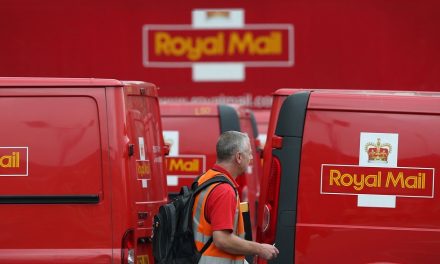
Royal Mail is preparing for the various threats and opportunities associated with deregulation by reducing some costs and introducing various services to customers. Head of advertising markets David Walker says: "Despite impending competition, the advertising community will remain a very important target audience for the business.
"In May, Royal Mail reduced its tariffs for Mailsort products – a move that will save the marketing community around GBP17m per year. We also launched the Universal Suppression Service and Business Changes File to help organisations reduce the number of wasted mailings and improve return on investment."
Walker adds that Royal Mail has invested heavily in services related to permission-based communications. He points to this year's joint venture between Royal Mail and targeting company Jaywing Central to offer customers new mailing options (PM September 12). Walker says Royal Mail has established relationships with companies at board level to help generate a better understanding of their needs.
Properly managed access pricing will be good for competition, says David Robottom, director of industry development and postal affairs at the DMA (UK). "The beauty of access pricing is that it gets competition going pretty quickly and gives users the confidence that the final delivery is still by Royal Mail. And hopefully, with different operators looking to make a margin, there will be downward pressure on pricing."
Robottom is upbeat about the prospect of new players being able to enter the market soon: "Following some additional consultation with Postcomm, I think a deal will be done. There is certainly a strong possibility of a deal which allows UK Mail to be handling mail volumes by the spring."
He points out, however, that although the Royal Mail/UK Mail access deal will set the generic template for access, other operators will have to engage in separate price negotiations. "The access situation is really the catalyst that will provide momentum for different operators, but Royal Mail will continue to have a very high share of the market."
For new entrants, decisions on how to target potential customers are difficult to make while the downstream access issue remains unresolved, says David Higham, development director for TPG. "If access is set at a low point it could discourage operators from coming in to set up their own networks. But if prices are too high it could well be a detractor to those who are looking for downstream access."
Higham believes TPG will start to operate fully in the UK next year: "It's probably a bit early to talk about what our specific plans will be, because a lot depends on the access arrangements, in terms of the range of services that we will offer. However, we plan to put together a very competitive offer to the bulk mail industry: businesses sending more than 4,000 items per mailing, direct mail magazines and transactional markets."
Deutsche Post is to target a similar market to TPG. Marketing director Andy Barrett explains: "Generally speaking, we are going to be targeting bulk mailers rather than anything else, using products similar to Mailsort."
Barrett points out that, because of its proposed market positioning, Deutsche Post's offering will be significantly affected by what is decided regarding access. "We are taking the strategic approach of using downstream access, and are not developing our own end-to-end delivery network. So essentially we are entirely dependent on what Royal Mail decides is going to be its downstream wholesale product range.
"What we offer to our customers will be a derivative of that. It cannot be massively different, because when we pass it back to Royal Mail we are going to have to conform to its product specifications." He adds that the industry can expect to see Deutsche Post investing in ways to offer "propositions rather than just products".
The longer it takes to negotiate access terms, the more difficult it becomes for potential new players to market their services, according to Andy Frewin, external relations director for Postwatch. "We're disappointed that an access charge has yet to be agreed. Until we get that, we don't think we'll get any meaningful opposition at all.
"People won't want to invest in something that's going to take years to achieve. After all, the first competitors applied for access in 2001."
He believes the best move for any new entrant is to find a large customer with a critical mass in the mailing area and show they can offer a better service than Royal Mail, at a cheaper price. "That will then force the other mailers to look around, and Royal Mail will respond.
"It will be a dynamic market, with lower prices in certain areas where they are not currently competitive."
Frewin says end-user interest in deregulation is high, citing feedback from various trade associations showing that many customer groups are urging members to shop around for better deals.
A Postcomm spokesperson says the debate over access will have an impact on how new entrants choose to focus their services: "A lot of the discussion has been about where the mail will be injected into Royal Mail's system – whether at local mail offices or major mail centres. These issues will affect what services are provided.
"Some companies may not choose to provide the same services as Royal Mail. For example, UK Mail wants to offer the Business Post service in two days, using Royal Mail to deliver the final mile."
He admits that, whatever the final access picture looks like, Royal Mail seems set to remain the king-pin in the industry for some time to come: "Nobody else in the competitive market is going to be able to set up such a big network as Royal Mail – or at least not very quickly."
Mailing houses are looking on with interest as the prospect of real competition draws nearer. Deregulation is already improving the way Royal Mail views mailing businesses, says Phil Westoby, managing director of Orchestra West. "Over the past few years, Royal Mail has set up deals with the end client and ignored the position we play within the industry. I think deregulation is starting to awaken Royal Mail to the fact that the mailing houses represent a good sales channel. Our standing within the industry is improving a great deal as a result.
"Royal Mail's attitude towards us is more supportive than it's ever been in the past ten years. Finally, it is treating those organisations that push huge volumes of mail through to it as customers."
Westoby says new competitors such as Deutsche Post are approaching mailing houses with requests for introductions to their end clients. "They want to talk to our customer base about putting together a better proposition than Royal Mail."
The effects of competition have not induced many direct marketers to abandon Royal Mail, says Andy Wood, managing director of database marketing company Total DM. "Most companies seem to be staying with the devil they know. Although Royal Mail is debt-ridden, it reportedly remains one of the best postal authorities in the world. It has significantly more coverage than its rivals and [unlike the new companies] is VAT-exempt. To oust the incumbent, competitors will have a fight on their hands."
Wood believes it is significant that news headlines have made more of the deregulation milestone than any real threat from companies planning to compete with Royal Mail. "Apart from Deutsche Post, rivals to Royal Mail for the direct mail industry's business are spread thinly."
He notes: "The companies that will successfully eat into Royal Mail's monopoly will be those that have an attractive service offering and target their audience intelligently."
While observers wait impatiently for access to be resolved, clearing the way for the new participants to market their services, Postcomm is eager to demonstrate that the delay is in the best interests of successful competition. A spokesman says: "The reason this is going around the houses a bit is that it is the first time it has been done, and we need to take great care that we have got the figure right. If we set it too low, Royal Mail will lose money, and if we set it too high nobody will be interested in getting involved."
Until the newcomers have a chance to prove their mettle in the direct mail arena, Royal Mail will maintain its stranglehold. As Postwatch's Frewin points out: "At the beginning of this year, something like 97.7 per cent of the market was Royal Mail's. Ten months later, it still has 97.7 per cent. It's not moving, which is disappointing because competition has been on the cards for a while now."
That stubborn figure will certainly be under pressure soon, but to what extent, and who will offer the most credible long-term threat, remains to be decided.