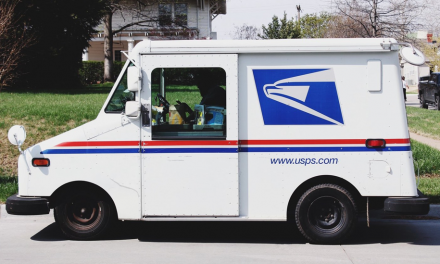




Report on USPS mail scanning initiative
Doing better business was the first theme at the Unisys Air Cargo Conference this October. Hosted as usual in Nice, France, it brought together 60 senior executives from the global industry and focused on the key areas of doing better business, outsourcing, technology and alliances.
Robbie Anderson, managing director Planning & Support of Continental
Airlines Cargo, was the first panel speaker to address this topic. After a
general overview of Continental Airlines’ route network, the fleet (including 18
B777-200s) and the company’s cargo division, he presented details of the
USPS mail scanning and cargo revenue management initiatives on which his
division had worked. Both initiatives had substantially improved revenues, Anderson said. “Any time we have opportunities within the cargo department to leverage margins and revenues, we get quite a bit of interest at the executive level,” Anderson said.
The United States Postal Services (USPS) mail scanning initiative resulted
from the fact that USPS was losing market share to UPS, FedEx and DHL. It
needed to improve service reliability and product visibility in its supply chains. In
June 2003, USPS came out with a contract that required the carriers that
provided mail carriage, to be able to scan all mail during the various phases from
tendering to delivery, as well as provide that information in real-time.
As the mail contract was being shared by several airlines, with a number of them
operating in the same US cities, it didn’t make sense for each to invest millions in
bar-code scanning equipment. “So we decided to write an industry RFP to share
the costs” said Anderson.
A few months before the mail scanning was supposed to become operational,
some major airlines decided not to bid for the contract. That increased the overall
costs for the remaining airlines, which also had a six-month timeframe to put
the project together. “At that time, the contract was worth more than US$30
million a year to Continental, so nobidding was not an option.”
“It wasn’t really a technology issue as much as it was a process one. So we
started out by mapping out what our existing processes were and how they
were going to change. It laid the ground work for our technology and operations
teams to understand what they needed to accomplish.” The result was that
Continental developed, implemented and trained people in more than 90
stations across their network in six months. “It was a pretty formidable task,”
Anderson said.