

Overnite's transformation to UPS Freight is complete
Before UPS Freight could change its corporate culture, it had to make sure its truck drivers could change their socks.
"I couldn't tell you how many phone calls I got about brown socks," Gordon Mackenzie, the company's president, recently recalled with a laugh.
Sock etiquette was one of many wrinkles that had to be ironed out last year after Overnite Corp., the Richmond-based trucking company, was acquired for USD1.25 billion by United Parcel Service Inc.
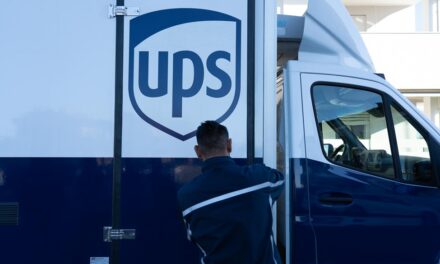
About 6,000 truck drivers were fitted with uniforms that combined Overnite's gray with UPS' brown.
After the uniform shift, Mackenzie said he started to hear from drivers, "What color socks am I supposed to buy?"
Actually, the drivers could wear black, brown or white socks. But if they wanted to truly toe the line, they could buy Pullman brown socks with the company logo from UPS Freight.
Such attention to detail, large and small, has marked the past year at UPS Freight's headquarters on Semmes Avenue in South Richmond.
From socks to hand-held computers to reservation systems to truck trailers, the company formerly known as Overnite has undergone a complete makeover, including an appreciable increase in employees.
Ranked as the area's 17th largest private employer last year, UPS added 266 employees, many of them on the trucking side of the business.
UPS Freight is the fourth largest carrier in the sector of the trucking market known as less-than-truckload, which typically uses trucks to carry multiple loads to various customers. Another Richmond carrier, Estes Express Lines, ranked sixth in 2006 by Transport Topics, a trade publication.
"It's interesting to think that Richmond is home to two clear leaders in an industry that will continue to consolidate," said Thomas Albrecht, an industry analyst at Stephens Inc. in Richmond.
Since the 2005 acquisition, UPS Freight has expanded its Virginia employee rolls by 322, or 23 percent, to 1,400. The 1,400 are located at its Richmond headquarters and six trucking service centers, including one on Midlothian Turnpike in South Richmond. More growth is coming, analysts say.
"They've got significant opportunities ahead of them, notwithstanding the sluggish freight market that currently exists," Albrecht said.
UPS, the global parcel and small package giant, bought Overnite to gain the capacity to haul heavy freight, defined as anything weighing at least 900 pounds. This was crucial to battle FedEx Corp., its major rival, which already had a trucking arm.
The Overnite acquisition improved service for long-time customers like Wilkerson Co. Inc., which makes aircraft tires in Crewe.
The company had a long, happy relationship with Overnite, said vice president Jim Wilkerson. Things have just gotten better with UPS Freight.
"Now you can go on the Internet and plug in nine numbers and you know the status of your shipment," he said. This helps keep aircraft clients happy, and also makes it easier to do real-time checks on shipments, Wilkerson said.
Mackenzie, the UPS Freight president, said the company has about a 6 percent share of the USD36 billion less-than-truckload market, which translates to about USD2.16 billion a year in revenue.
"We're looking to take a bigger portion," he said, " a share point per year for the next several years."
That comes out to about USD360 million a year in additional revenue through 2010. The most growth is expected in regional markets, such as those served by Estes Express.
The folks at family-owned Estes sounded unperturbed about UPS Freight's ambitious plans.
"I don't want to say I'd take them lightly as competitors," said Billy Hupp, chief operating officer and executive vice president at Estes. "But we've always had competition. We've been facing that for years."
The key for Estes, he said, is to maintain high-quality, customized service. "Somebody with a new plan isn't always the one with a better plan," he said.
Albrecht agreed that Estes should survive the onslaught because it has a reputation for good service and nimbleness with its non-union work force. But other carriers won't be as lucky, he said. There are 62 less-than-truckload companies carrying most of the freight in that market.
"I bet in five years that number will be whittled down to 45," he said, with UPS Freight and Estes each getting big chunks of the pie.
"The biggest challenge for UPS Freight is to figure out what kind of relationship they want with the Teamsters," Albrecht said.
Overnite had a protracted, and often bitter, labor struggle with the Teamsters in the 1990s. A lone UPS Freight terminal — in Indianapolis — has voted for Teamsters representation for 125 drivers and dock workers.
"However," the Teamsters said in a recent statement, "the Indianapolis contract will be a model national contract to organize the 300 other UPS Freight terminals nationwide."
UPS' package operation, with 220,000 members, is the largest company with Teamsters representation.
Company officials denied another labor battle is looming.
"It's still the employees' decision," Mackenzie said. "Our employees at this point in their careers have chosen to be nonunion."
At UPS Freight's Richmond terminal, some blue and gray trucks still line the side of the lot, etched with Overnite's slogan, "Our people make a difference."
Skip Goodrich, a 30-year driving veteran, said he's happy with the new owners, and the new socks.
"Overnite always had a five-year-plan," said Goodrich, who runs a regular route around Hanover County. "Now we have an unlimited plan. The future's looking good."
Contact staff writer Chip Jones at [email protected] or (804) 649-6726.