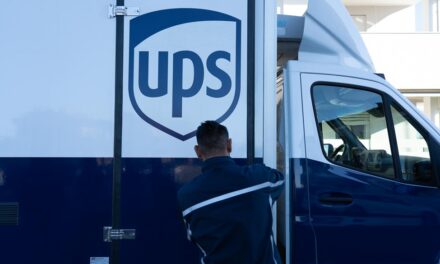


UPS franchisees call delivery giant their biggest rival
UPS Store owners all over the country are packing it in, including 10 in the Dallas-Fort Worth area in the last two years. And the numbers could grow, raising alarms about a possible franchise fiasco.
Mike Gorlano, 50, couldn't get back half of what he paid for his UPS Store in Carrollton. He's living off his savings while looking for a new career. Andy Weir, 43, faces thousands of dollars of debt after closing his UPS Store in Richardson. The problem stems from an unusual situation: The stores can't compete with United Parcel Service Inc.'s Web site.
Many current and former franchisees accuse the package delivery giant of using the Internet to take away their customers.
Most of the franchisees that failed are mom-and-pop operations that sank all of their savings into their stores. The owners say UPS is destroying their livelihoods and retirement dreams.
"I have no retirement," said Gary Davis, whose Lewisville store shut down in December 2005. "I'll be working till I'm dead."
In his nearly two years as a UPS Store franchisee, Mr. Davis never broke even. He invested $180,000 to get the franchise, cashing out his 401(k), selling stock and taking out a loan.
Atlanta-based UPS denies that it's undercutting its franchisees.
"It is an unfounded complaint," said Rich Hallabrin, a UPS Store spokesman. "It is in our best interests to make sure as many of these businesses are thriving as possible."
But many existing stores are fighting to survive as well. Things have gotten so bad that even longtime successful franchisees like Barbara Beyer say they wouldn't recommend the business to others.
"We feel – and have for quite some time – that our biggest competitor is UPS," said the owner of four UPS Stores and one Mail Boxes Etc. franchise in the Dallas area. "Right now, a lot of people are struggling to break even."
The problem isn't limited to the Dallas-Fort Worth market, which has 49 stores. UPS Stores in other cities are also losing money, and some are shutting their doors.
To fight back, a group of 220 current and former franchisees from around the country, including a few from the Dallas area, is suing UPS and its franchisor, Mail Boxes Etc., accusing them of breach of contract, fraud, unfair trade practices and other actions.
'In 28 months in this business, I don't see an opportunity to survive,' says Joaquin Rosal, a UPS Store franchisee in Coppell. His daughter took out a second mortgage on her home to pay off her father's loan for the franchise. The lawsuit is making its way through a Los Angeles court. The fallout could tarnish the reputation of a franchise that consistently wins high marks from Entrepreneur magazine and others.
Some explanations
Mr. Hallabrin of UPS acknowledged the local store closings and gave explanations for some of them.
One owner chose not to renew his franchise, and UPS wasn't interested in reopening at that location. In another instance, a store closed after the shopping center it was in flooded, but the owner wants to reopen at another location. Two of the stores reopened under different franchisees.
Mr. Hallabrin said that since UPS bought the Mail Boxes Etc. chain in 2001, the number of U.S. stores has jumped 26 percent to 4,452 at the end of last year. He also pointed out that the national closure rate for UPS Stores is less than 2 percent.
And not every UPS Store franchisee is unhappy.
"I personally haven't had the experience of them stealing my customers," said Randy Morgan, who owns a store in Fort Worth. "We've been able to increase our business."
But many current and former franchisees say they are suffering because UPS actively markets its Internet site to their main customers: small-business owners and consumers.
On the UPS Web site, it's quick and easy to set up an account, print out shipping labels on a home computer and pay for package delivery. And frequent shippers – mostly small businesses – can speak to a UPS representative to get discounts not available at the stores.
What's more, Web site customers can drop off their packages for free at UPS Stores. That allows UPS truck drivers to make fewer stops, saving time and ultimately hundreds of millions of dollars, current and former franchisees say.
Franchisees earn $1.10 – before royalties – on each drop-off. But that's far less than the $5 or more in profit they get if the customer pays the store to ship the package.
Making matters worse, the number of packages dropped off is growing rapidly. At his UPS Store in Richardson, Britt Roberts noticed last September that drop-offs exceeded the number of store packages for the first time. The situation hasn't changed.
"Our main competitor is UPS," he said. "Knowing what I know today, I would have never gotten into this business."
Like several other franchisees, he's only breaking even because he didn't take out loans to purchase his store or lease any copy machines.
"UPS in my opinion is the strongest competitor the UPS Stores have," said David Iverson, who closed his Garland store at the end of February after losing $130,000 in the franchise.
All of this is a far cry from the days when franchisees, whose stores used to be called Mail Boxes Etc., earned lots of money from small eBay merchants and consumers returning packages to Victoria's Secret and other retail chains.
Most of these people now deal directly with UPS and use the stores as package drop-off sites, franchisees say.
UPS acknowledges that the number of packages dropped off at the stores is growing. But it denies that drop-offs save the company time and money.
"The driver still has to pick up the package," Mr. Hallabrin said.
He noted that technology and convenience are driving the popularity of drop-offs.
"People now have the ability to process a package at home," he said. "It's something consumers and businesses are demanding. If we don't do that as an organization, we don't have a future."
Nonshipping services
UPS has been encouraging its franchisees to put more emphasis on nonshipping services, particularly copying and faxing. It's running television commercials with the tag line "The UPS Store … the place for document services and a whole lot more."
Focusing on these services produced positive results in tests at some stores, Mr. Hallabrin said. "This is the strategy that is going to grow this business," he said.
But even if the strategy works, it may be too late for many franchisees, who say document services account for only a tiny portion of their revenue. They also note that UPS Stores are not known for these services and don't have the equipment and expertise of rivals like FedEx Kinko's.
Meanwhile, FedEx Kinko's is struggling with falling sales as more people e-mail documents instead of mailing them.
Strategy backfires
For Joaquin Rosal, a UPS Store franchisee in Coppell, the strategy cost him money. He leases three copy machines for $8,400 a year. Last year, he sold $8,000 worth of copies, not enough to cover the lease or the maintenance contract.
"In 28 months in this business, I don't see an opportunity to survive," he said.
To keep the business afloat, Mr. Rosal's daughter took out a second mortgage on her home to pay off her father's loan for the franchise.
SUSAN STEWART
UPS has a program to help struggling franchisees. But some in the Dallas area say that they either didn't get any assistance or that it came too late. "They are destroying people's lives in order to make money," Mr. Rosal said. "After two years, I feel the whole thing is a setup."
If business doesn't turn around soon, he faces the prospect of having to sell his home and start over at age 58.
That's the financial sinkhole Mike Gorlano finds himself in. In November 2004, he spent $250,000 of his savings to buy a franchise in Carrollton.
He made a profit the first month he was open but then lost money until he shut the store down in December. Desperate to sell the business, he couldn't get even half of what he paid for it.
The company says it has a program to help struggling franchisees. But Mr. Gorlano and others in the Dallas area say they either didn't get any assistance or that it was too little, too late.
With two children headed toward college, Mr. Gorlano, 50, is living off his savings and searching for a new career.
"They don't care," he said, shaking his head in frustration. "Now I'm in limbo."
Another ex-franchisee, Andy Weir, is working for one of his former customers, putting cables through buildings. He closed his Richardson store in December after investing all of his savings in it, including life insurance benefits he received when his father died.
Now the 43-year-old is saddled with tens of thousands of dollars of debt.
"I put everything into it and tried to find more," he said. "I've been devastated financially. And emotionally, it's been depressing."