



Swap the label – and lose the plot: Global-minded firms are changing their names in droves.
Swap the label – and lose the plot: Global-minded firms are changing their names in droves. It can be a big mistake, writes Heather Connon
From THE OBSERVER, January 14th, 2001
By HEATHER CONNON 'YOU SHOULD not do a rebrand just to get your share price up,' says
Tom Blackett, deputy chairman of Interbrand. It would indeed be hard for anyone to make a financial case for
adopting a snazzy new name. British Steel has hardly set the world
singing since it became Corus; and Bright Station is even duller
than it was as Dialog or, before that, Maid. Uniq may be shorter
than Unigate but its performance since the name change has not
exactly been snappy. Indeed, of the two dozen or so recent name changes, The Observer
could think of only three – Zeneca, Centrica and Spirent – that
could be described as financial successes. Of course, the marketing men have a rational explanation: the
rebranding was not done properly. 'The problem is you need a clear
idea of what you want to be,' said John Williamson, a partner at
Wolff Olins, creator of Orange and Go, then British Airways budget
airline. If you do not you will probably end up with a Greco-Roman name
(think Invensys, Corus, Elementis – or any of the new names dreamt
up over the past decade) that does not mean anything. And,
Williamson warns: 'If you have a meaningless name, people will think
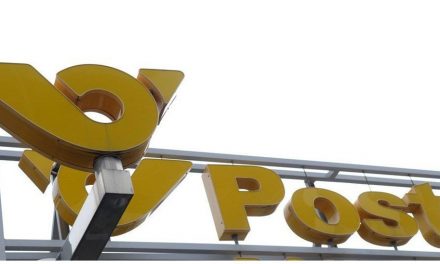
your business is meaningless.' Small wonder, then, that the Post Office was trying so hard to
convince us that Consignia, the new name it unveiled last week, is
not just another bastardisation of a perfectly good Latin word. 'Our
new name and identity is a daily reminder of what is at the heart of
our organisation. At its most basic level, it describes the full
scope of what we can do, in a way that "The Post Office" cannot,'
trumpets the press release. 'The root of our new name is what makes our organisation special. To
consign means "to entrust to the care of", which is exactly what
every customer does when they post a letter, organise a delivery or
visit a Post Office branch.' The Post Office wants a new name to help it go out and conquer the
world. While we Brits readily believe that our Royal Mail is the
only Post Office, foreigners who have their own variations –
Deutsche Post, the US Post Office and so on – may find it harder to
swallow. When the Post Office converts to a plc in April, this will
add impetus to its international ambitions, making a change of
moniker essential. This also makes the Post Office the latest in a long line of British
institutions to play down their roots. British Telecom, British
Petroleum, British Airways, and British Gas have all undergone
successive revamps aimed at persuading us they are really global
companies – and have met with varied success. BA is removing the
notorious multi-cultural tail fins with which it attempted to shrug
off its British roots; BP may think it stands for Beyond Petroleum,
but the world still thinks it is simply a rather British oil
company. The secret for would-be international industrialists is to look
ahead. If BP had started with a name like Shell – what has that got
to do with oil, globalisation or even industry? – it would not have
this problem now. And Williamson pays tribute to Shell and
supermarket group Tesco, as companies that have managed to subtly
adapt their image over the years. But what about a company whose name has become discredited, or is
irrevocably associated with a business that no longer sums up the
group? Many of the companies that have recently changed their names
fall into that category. Some – Harrisons & Crosfield, BTR,
Berisford – were conglomerates so anxious to prove they had changed
their spots that they changed their names, to Elementis, Invensys
and Enodis, respectively. And everyone thought Bowater just made
paper packaging, so Rexam was born. Hambro Countrywide made too much
of its chain of estate agents, but the company preferred to
emphasise the insurance aspect, which is now promi nent in
Countrywide Assurance. The water companies tried to pretend they
were dynamic service businesses, and came up with silly names such
as Kelda and Hyder to show their transformation. Outside the City,
Windscale tried to leave behind its accident-prone past by changing
its name to Sellafield. Alas, such cosmetic changes fool no one. Unless there has been some
dramatic change in the business itself, the old habits are likely to
outlive the new name. Those companies whose change of name has not
been accompanied by a change of fortune bear out Williamson's
comments about the importance of knowing what your business is for,
where it is going and how it is going to get there. Other name changes follow corporate action such as a mergers or
demerger: the new name is intended to show it is a new business.
Andersen Consulting has become Accenture following its break-up with
the accountancy firm, which kept the name. The success of these changes is intimately related to the success of
the action itself. Zeneca was called ICI Pharmaceuticals until it
was demerged from the chemicals group. The shares have never looked
back. Interbrand's Blackett, who advised ICI on the rebranding, says
that escaping from the low-margin, cost-conscious culture of ICI was
energising for the drug company, bringing out its culture of
innovation. But how much of that was due to the demerger and how
much to the change of name that accompanied the split? Elsewhere, Diageo has improved following a lack lustre performance
immediately after the merger of Guinness and Grand Metropolitan that
created it. But Corus has been dogged by the same old problems as
when it was boring old British Steel. So when should a company think about renaming itself, and what will
make it a success? Blackett believes firms should consider it if,
for some reason, their customers have become out of touch with the
services its provides – say they do not know you have a website or
are not buying your new products. Williamson says it is a good idea
for companies that are if you are losing in their market: 'Marks &
Spencer should think about it. It is losing in its market. It has
tried to change but I can't see the difference. Its adverts say
jeans that fit and sexy underwear. What does that mean?' But if the performance of companies that have rebranded is anything
to go by, M&S chairman Luc Vandevelde should avoid the brand
consultants at all costs.
Copyright 2001 The Observer.
Source: World Reporter (Trade Mark) – FT McCarthy.THE OBSERVER, 14th January 2001