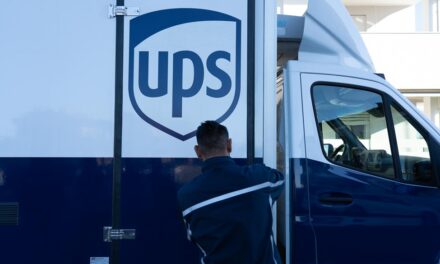




UPS Celebrates it's 100-Year Anniversary
It started out in 1907 as the brainchild of two teenagers in a Seattle basement, whose fledgling messenger service made deliveries on foot or on bicycle. As UPS Inc. celebrates its 100-year anniversary later this month, it now is the world's largest shipping carrier – a USD 47 billion business with a fleet of trucks, an airline and operations in 200 countries.
Increasing competition for delivery of goods has meant the company has had to broaden its global reach and expand its business beyond small package delivery to shipping heavy freight and providing logistics services for companies.
But even as the Internet has made it easier to send, receive or download items electronically instead of paying a service to deliver them, the breaking down of trade barriers has given shippers like UPS overseas opportunities they haven't had in the past.
the global economy.
These days, the U.S. small package delivery market has slowed along with the economy. As a result, UPS has been increasingly looking beyond U.S. borders for business, offering faster delivery to worldwide destinations. International growth has helped the company's bottom line.
Last month, UPS reported a 4.1 percent rise in second-quarter earnings on a modest increase in sales. The company's shares, on an adjusted basis, are up more than 14 percent over the last year.
A century from now, Chief Executive Mike Eskew expects that delivering small packages will still be an important part of the Atlanta-based company's business, but he isn't sure it will be the largest part. In 2001, the company expanded its services by acquiring the Mail Boxes Etc. chain. Most of the stores were later renamed The UPS Store.
Recognized by its brown trucks and uniforms, UPS' lifeblood is its 427,700 employees, who will play a big role in future growth. UPS, also known as United Parcel Service, said that's because customer service – particularly drivers having contact with customers everyday – will always be the area that keeps customers coming back.
As a result, much focus has been on labor talks between management and the unions that represent the majority of UPS employees.
A year ago, the pilots union approved a new contract with UPS that included hefty pay raises, large signing bonuses and higher health care premiums. The deal, reached after more than three years of talks, ended a lengthy battle that included walkout threats.
Contract negotiations between UPS and the Teamsters union, which represents 238,000 UPS drivers and sorters, are currently ongoing. That contract expires July 31, 2008. Pension and health care benefits are major issues.
Linc Dalimonte, a UPS driver from Grand Rapids, Mich., said he recognizes the importance in a highly competitive industry of controlling costs. Dalimonte, who has been with the company since he finished college 15 years ago, said he believes UPS can do that by continuing to emphasize safety, which would decrease accidents and the costs associated with them.
Dalimonte often sees trucks from Memphis, Tenn.-based FedEx Corp. on his route, but it doesn't faze him.
Technology improvements, meanwhile, have led to greater efficiencies.
UPS uses technology to map out the shortest routes for its trucks to reach their destinations. The technology and greater use of alternative fuel trucks have allowed UPS to save on fuel, according to Robert Hall, director of ground fleet engineering at UPS.
In 2006, package flow technology, the software that among other things designs routes with right-hand turns, allowed UPS to save 28.5 million miles of driving off its U.S. fleet.
Eskew, who has been with UPS for 35 years, said keeping costs down and people happy is a challenge.
According to the company, the average UPS driver has been with the company for 16 years. Management turnover runs 5 percent to 7 percent per year. The company says its average driver is paid USD 75,000 a year, while its average pilot salary is USD 200,000 a year.
The company said it is willing to give pay raises, but it must put any raise in the context of its overall cost structure so it can stay competitive.
The company, which moved into its Atlanta headquarters in 1994, went public in 1999. It rebranded itself as just UPS in 2003.
To mark its centennial anniversary – officially Aug. 28 – UPS has been holding events around the world. Eskew has attended many, and he is marking his own 35th anniversary with the company.
The CEO also will be picking out an anniversary gift from a company catalog; he's thinking about selecting a bicycle, which would be symbolic considering the company's beginnings.
But Eskew isn't making any predictions of when he might move on.
As UPS looks forward, Ortwerth, the analyst, said he doesn't believe competition and changing ways of sending goods and services will hurt UPS' growth as long as the company continues to adapt.