



Commune post offices must be brought up to date
Though commune post offices have played a crucial role in the national postal system, they will soon be subject to an overhaul to bring them more in line with latest developments in the area.
According to statistics from Vietnam Post and Telecommunications Group (VNPT), the first commune post offices opened 10 years ago, and now there are 8,025 nationwide, each of which serves, on average, around 4,500 people.
"Setting up commune cultural post offices is a sound policy, which has met with good results," said Le Doan Hop, the Minister of Information and Communication.
In the beginning, these post offices offered necessary services like delivering letters, cards, gifts, newspapers and magazines and selling stamps and envelops.
They also supplied public telephone and telegraph services.
In addition, they offered some free papers and magazines for local people to enhance public knowledge.
Commune post offices then began adding new services like money transfers, bill collection and mobicard sales.
However, at present these post offices offered out-of-date services and required investment for improvement, said Hop.
VNPT should supply high-speed Internet to these offices and offer new services to make the offices more valuable cultural centres for people in the countryside, he added.
The province was ready to invest in infrastructure for those offices, said Ho Duc Phuoc, Deputy Chairman of Nghe An Province’s People’s Committee, and VNPT only needed to improve technologies and services to meet demand.
The cultural post offices should house Automatic Teller Machines (ATM) and Base Transmission Stations (BTS), said Do Trung Ta, special envoy to the Prime Minister of Information Technology.
Do Ngoc Binh, the director of Viet Nam Postal Communication (VnPost) agreed with the idea and added that motorbike and car insurance cards could also be sold at the offices.
VnPost had classified cultural post offices so suitable models could be established for each locality, said Binh.
Quang Ngai Province is one area making progress, with 30 out of 162 offices connected to the Internet and free Internet service every Tuesday and Thursday.
There are also base transmission stations (BTS) in the province’s cultural post offices.
The Ministry of Information and Communication was submitting a plan to the Prime Minister to turn commune cultural post offices into public post offices, said Hop.
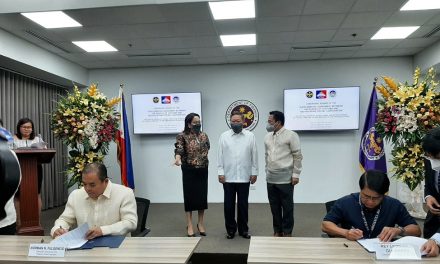
The Ministry of Information and Communication and Intel Viet Nam yesterday also signed a Memorandum of Understanding for a Connect Communities Programme in which public telecommunication spaces would be established in rural areas of Viet Nam.
Reasons for change
"We benefit greatly from the commune cultural post offices," said Le Van Noi, the chairman of Ha Nam Province’s My Thuan Commune Fatherland Front.
"It takes me only five minutes to get from my house to the post office and make a call or send mail to my daughter in Ha Noi," said Noi.
"Our commune’s cultural post office used to be a popular destination for young people in my commune," said Le Van Cuong, the chairman of My Thuan Commune’s People’s Committee.
"They would go to read free newspapers and magazines," said Cuong. This in turn led to fewer social problems and a more educated population, he said.
"These cultural post offices decrease the information gap between rural and urban areas, which I felt quite clearly when I moved from Ha Noi to Lai Chau Province to work," said Nguyen Thi Hai Yen, a 27-year-old journalist.
However, as far as business goes, each year VNPT loses billions of dong per year from these cultural post offices, according to Pham Long Tran, the chairman of VNPT’s executive board.
According to VNPT statistics, the sales of a commune’s cultural post offices have risen from VND 93,000 (USD 5.6) per month in 1999 to VND2.35 million (USD 1,407) per month in 2007. However, this was not enough to offset the VNPT’s operation costs.
In addition, sales were decreasing as mobiphone cards and public telephone services dwindled with a rise in land line subscribers, said Ngo Van Thuc, the director of Bac Ninh Province Post Office.
"Because fixed telephone costs are not as high as they used to be, many households in my commune have opted for these phones," said Noi.
Also, households used to rely more heavily upon newspapers before television and the Internet became widespread, but things had changed, Cuong said.
Hopefully, services and activities provided by such offices would change, so they could regain their position in commune culture, said Cuong.