


Posts collectively cut their annual CO2 emissions by more than 40% since 2008
On 6 November, the IPC Board approved the 2025 results of the IPC Sustainability Measurement and Management System (SMMS) .
Postal operators participating in the SMMS programme cut their combined Scope 1 and 2 carbon emissions by 18.9% between 2019 and 2025. That is a reduction rate of 3.4% per year: twice the pace achieved over the final years of the preceding EMMS programme (2012–2018). Over the same period, the group’s Sustainability Management Proficiency score rose from 52% to 75%.
Carbon Emissions fall twice as fast since 2019
In 2020, the SMMS group set a new 2030 target for absolute carbon emissions – to reduce collective scope 1 and 2 emissions (emissions from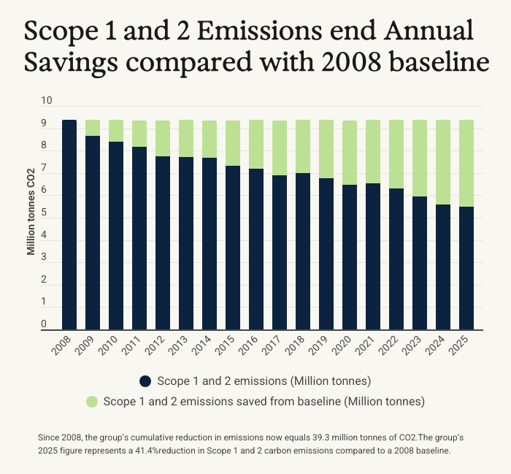 own operations) by 50% compared to a 2019 baseline. In 2025, posts reported an 18.9% decrease in emissions compared to 2019 and a 41.4% decrease compared to 2008, a reduction sustained over 18 years of measurement.
Between 2019 and 2025, emissions fell by an average of 3.4% a year, compared with around 1.7% a year between 2012 and 2018 under the preceding Environmental Measurement and Monitoring System (EMMS). To accelerate towards the 2030 target posts will continue to expand their alternative-fuel fleets, with decarbonising long-haul transport the priority, alongside further growth in renewable electricity and energy-efficiency measures in buildings and operations.
Sustainability Management Proficiency
The group’s Sustainability Management Proficiency score has risen from 52% in 2019 to 75% in 2025, with strategy, risk assessment and public disclosure among the areas showing the strongest gains. The pattern across the last seven years is consistent: where management proficiency improves, performance follows. The structural reduction in emissions reflects the management disciplines the SMMS was designed to build.
Holger Winklbauer, CEO, IPC, says “Targets make the headlines, but it is management discipline that sustains progress between them. The SMMS results show posts are setting strategy, measuring what matters and learning from each other year after year – and that is why the sector’s emissions keep falling, long after the easy gains have been made.”
Continuous progress towards other 2030 joint targets
As part of their collective 2030 targets, posts on five continents participating in the SMMS programme strive to have 75% of electricity used in their buildings originating from renewable sources, 50% of their vehicle fleet composed of alternative fuel vehicles, with at least 25% of the total fleet to be electric vehicles, and 75% of group waste to be recycled or reused.
Posts participating in the SMMS programme are progressing on all targets:
- In 2025, alternative-fuel vehicles made up 35% of the postal fleet, against a 2030 target of 50%. Electric vehicles made up 28%, and the 2030 target of 25% was reached in 2024, six years early.
- The share of renewable electricity in SMMS postal operators’ facilities rose from 14% in 2012 to 38% in 2025.
- In 2025, participants reused or recycled 72% of non-hazardous waste.
The full results of the 2025 reporting cycle of the SMMS can be found in the Interactive Web Report.
The Sustainability Measurement and Management System (SMMS)
The IPC SMMS programme was launched in 2019 to address the sustainability objectives of the postal sector for the next ten years, aligned with the Sustainable Development Goals (SDGs). It expands on the 2009-2019 Environmental Measurement and Monitoring System (EMMS) programme, which focused on reducing carbon emissions, and broadens the remit to the seven sustainability focus areas most relevant for the postal sector: Health and safety, Learning and development, Resource efficiency, Climate change, Air quality, Circular economy and Sustainable procurement. These focus areas are aligned with the following UN SDGs, identified by our stakeholders and SMMS participants as most relevant to the postal sector:
SDG 8 – Decent work and economic growth
SDG 9 – Industry, innovation and infrastructure
SDG 11 – Sustainable cities and communities
SDG 12 – Responsible consumption and production
SDG 13 – Climate action
As such, the SMMS programme is designed to further the postal sector’s contribution to global sustainable development, focusing on the areas in which it can have the most impact.