

Dutch TPG shows Post Office just how to deliver the goods
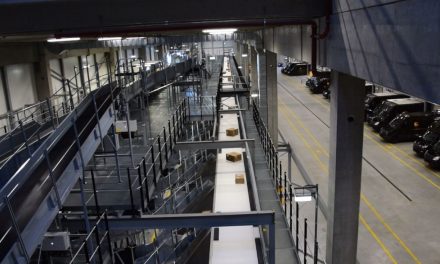
LESS than a week after the Post Office admitted that it might need a government bail-out or commercial loan, its Dutch rival TPG Group has announced a profit of Eu460m ( pounds 289m) for its first half. Yesterday, Peter Bakker, chief executive of TPG, said the company had had a "satisfying half-year" despite declining mail in the Netherlands because of the poor economic environment. TPG, which owns the TNT Express mail group, is an Amsterdam-listed company with global ambitions. The group has applied for an interim licence to operate in the UK market, and under the terms of this licence would handle 20 million items of bulk mail in the UK. It is hoping, ultimately, for a full licence and Mr Bakker said yesterday that the company was working on its UK mail strategy and would reveal it in the fourth quarter of this year. "It will be a complete proposition, ranging from data management and printing as well as mail," he said yesterday. The company caused a minor sensation earlier this year when it emerged that it had held talks with Royal Mail about a possible merger of their operations. Mr Bakker said yesterday that the company's proposition would now be independent of any involvement with Consignia's mail delivery arm. "They are the incumbent, and they have a market share of which we, and other competitors, can only dream," he said. "However they are not the most efficient postal company any more and this allows us a chance." Mr Bakker has spoken out before about his UK ambitions. He wants to hire his own postmen, rather than use the Royal Mail's "final mile" delivery. The company would be one of the biggest benefactors from the competition plans being introduced in the UK mail market. It already has more than 15,000 employees in the UK and 138,563 in 59 companies worldwide. In the 1940s, Holland's state-owned postal service faced many of the problems which Consignia is facing today. It operated at a loss, with high labour costs and too many small mail offices. A major restructuring took place in the following 20 years, installing new machinery and further automation before the company, which also included the Dutch telecoms business, was privatised in 1989. In 1994, the combined business was listed after the state sold a proportion of its shares. TPG split from KPN telecommunications four years ago, and has made a series of strategic acquisitions and alliances to build up its position in global markets. These include a memorandum of under- standing with China's state government on cooperation in international express delivery outside that country. Like Consignia, TPG is dealing with difficulties in its home market, because of declining mail volumes. The company believes it can deal with this global phenomenon, which is caused by the rise of e-mail, text messaging and other media, by decreasing its cost bases. Currently, 78pc of its mail is sorted automatically. This has resulted in decreased labour costs, and the company has not had to cope with strike action from its employees. It has also kept its cost base low by leasing a large number of the planes and vans it uses, a practice that Consignia is now beginning to adopt. "In the medium term, we could match a potential reduction of volumes with a corresponding decrease of cost," the company has said. Unlike Consignia, whose attempts to acquire global mail businesses have all been unprofitable, TPG makes much of its money from its express mail and logistics businesses. Unlike Consignia, TPG will not have to cope with competition in its monopoly area in its home country until about 2009. Mr Bakker has criticised PostComm, the UK postal watchdog, for allowing competition in the UK before the rest of Europe, arguing that it places Consignia at a disadvantage. Yesterday's figures showed a first-half revenue increase for the group of 4.2pc to Eu5.8 billion, although net income declined by 9.7pc to Eu288m. The company increased its interim dividend by 7.1pc to Eu0.15. "The economic market was as tough as expected," Mr Bakker said. "Despite ongoing economic challenges, TPG expected to grow net income from continuing operations for the full year by 5pc to 10pc."