



China Post's IPO not ready
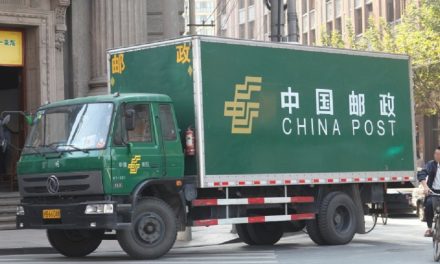
China Post, or the National Postal Bureau (NPB), has submitted to the State Council, China's cabinet, its proposal to list its branches in six most profitable regions overseas. Analysts suggest the listing could raise US$500 million. The firm would use the huge pool of funds to prop up its business and compete with the increasing number of privately run rivals in the booming market. Former NPB Director Liu Liqing, who resigned in late March, previously confirmed the firm planned to place its operations in Beijing, Shanghai, Jiangsu, Zhejiang, Fujian and Guangdong into a separate company for listing. NPB would become the latest large State-owned enterprise (SOE) to list overseas, a plan developed by the central government to restructure SOEs' capital bases and enhance their competitiveness. But Chen Furong, deputy director of NPB's office, said nothing has been finalized. "We have several plans … but the final plan is still under review," Chen told China Business Weekly in a telephone interview. "Speculation about a listing in Hong Kong before the year's end is pure rumor." Thorny issues to be solved first The first priority, which is also the most challenging task before listing is the spinning off of NPB's functions into independent industry administration departments and market-oriented enterprises, Chen said. Since the days of the former planned economy, NPB has been a quasi-governmental institution functioning as a giant SOE. It operates numerous businesses — such as postal services, EMS (express mail service) and postal savings. However, it also serves as an industry watchdog, and, as a result, overseeMDBOMDNMs the sector's growth. "It is not possible for the firm to go public before its functions are split, as the government cannot be listed," Chen said. China enhanced efforts in the late 1990s to reform its key industrial sectors, including transforming State-owned companies from monopolies into market-oriented enterprises with modern corporate governance systems. The purpose was to ensure SOEs were able to compete with foreign rivals. Chinese officials have long considered public flotation as one of the most efficient ways to restructure a firm. Chen declined to provide further details of the spin-off. Yang Hairong, a professor with Beijing University of Post and Telecommunications, said the bureau, in cooperation with the former State Development Planning Commission, began drafting its restructuring plan more than one year ago. Yang was involved — during consultations and the review of the plan — with the firm's drafting of the reform blueprint. According to the draft, NPB's departments in charge of supervision will join the Ministry of Information Industry, while the remaining units will form the China Post Group — a super large, wholly owned State enterprise. The firm's operations in the six regions were the NPB's most profitable businesses — including all services they offer, such as postal delivery, express mail, newspaper and magazine distribution and postal savings. China National Postal Logistics Co, a newly launched joint venture between China Post and its subsidiary with 100 million yuan (US$12.07 million) in registered capital, will be included in the China Postal Group. NPB has invited domestic and foreign investment banks to act as advisers for the listing. China International Capital Corp (CICC) is helping design the restructuring and is hopefully the underwriter of the listing. But CICC officials were not available for comment. Termination of excess workers is another thorny issue. The company has more than 500,000 employees, but restructuring will result in job cuts to ensure efficiency and prop up performance. "I think many of China Post's employees could be reallocated to other sectors, such as newspaper retailing," Yang said. Separating the assets of the six regions from the rest of the NPB — which has long operated as a single entity — is another problem. Also, the firm could have a tough time convincing foreign investors to invest in operations that either lose money or have low rates of return. Revenues generated from the six regions make up almost half of China Post's revenues. The firm's revenues last year reached 51 billion yuan (US$6.15 billion), with net earnings reaching 100 million yuan (US$12.07 million). But giant foreign rivals and private companies are gaining a larger share of the market. Experts predict China will become a strategic market for foreign courier giants DHL Express and TNT Express, especially as China continues integrating with the world economy. Under China's commitments to the World Trade Organization, foreign investors are permitted to hold up to 75 percent in a Sino-foreign freight transport joint venture. After 2005, that foreign ownership restriction will be lifted. China Post faces a tough situation. In line with the reform schedule set by the central government, NPB this year will be officially deprived of government subsidies, which it has received for decades in return for its losses under the former planned economy. "As far as I know, NPB is applying for more policy-oriented subsidies from the central government," Yang said. "These include tax rebates and other preferential policies." Many experts, discouraged by NPB's determination not to pursue its first split plan, contend the reform formula will ensure a smooth restructuring. "NPB is quite different from China Unicom and China Mobile, which selected several units as their first assets for listing," Yang said. "NPB's businesses cover numerous sectors, which makes it very hard for efficient macromanagement." NPB previously planned to restructure itself into many different subcompanies in line with their businesses — such as a postal delivery unit, postal saving unit and EMS unit. These subcompanies had been designed for public flotation on overseas capital markets. The reform of NPB's postal saving business has also been long planned. Unwilling to lose the cash cow, NPB has delayed a central government proposal to turn it into a bank. It wants to include the six regions' savings units in the listed vehicle.