





Author: Archive

Pallet Network sale ‘imminent’

Rumours are rife of a pallet network sale and point to one of the three independent market leaders. DfT report points to the sector’s effectiveness in moving goods.

A pallet network is about to be purchased by a major company, disclosed Paul Carvell, chief executive of Business Post last week. He told a Triangle express delivery conference that he had just heard that a sale was about to be announced.

Read More
UK Royal Mails size-based pricing proposal still causing concern

Royal Mail’s size-based pricing proposal is continuing to cause concern for the magazine and direct mail industry with differences over the issue of uniformity.

The PPA and Royal Mail are set to meet and reach a compromise over the proposal that items 10mm-thick could be classified as packages rather than large letters, depending on a tolerance level of 2mm.

Read More

DHL Lithuania set to complete takeover of Danzas by November

The express and logistics company DHL International Lithuania hopes to complete the takeover of the freight transportation company Danzas by Nov. 1.

The merger is part of the strategy of Deutsche Post World Net (DPWN), which owns both companies, to place all of its worldwide express and logistics operations under the DHL brand. The financial value of the deal has not been disclosed.

Read More

Network sale ‘is imminent’

A pallet network is about to be purchased by a major company, disclosed Paul Carvell, chief executive of Business Post last week. He told a Triangle express delivery conference that he had just heard that a sale was about to be announced. The sector was already rife with speculation, with a purchase price of around (pounds sterling)30m being mentioned. That would point to one of the “big three” – Palletways, Pall-Ex or Palletline. And the pallets-as-parcels sector has been boosted by a report for the DfT, which indicates that the networks are far more efficient than, for example, supermarket distribution chains. That report went to the DfT ten days ago, industry sources say. Carvell did not reveal the name of the company to be bought and major players have denied it is them.

Read More

Pall-Ex Wins ASDA Nominated Carrier Status

Major supermarket chain ASDA has awarded leading pallet distribution network Pall-Ex a nominated carrier contract for smaller consignments of up to 3 pallets. Pall-Ex will collect products from a designated group of Asda suppliers across the UK and will consolidate consignments at its state-of-the-art Leicestershire hub. Asda’s own fleet will then collect the consolidated trailer loads from Pall-Ex’s central hub, for onward shipment to Asda distribution centres.

Read More

Main Developments in the European Postal Sector

Study for the European Commission, DG Internal Market by WIK consult
Contents
List of Figures IV
List of Tables VII
List of Case studies IX
Abbreviations X
1 Executive Summary 1
2 Background 13
2.1 European Union in brief 13
2.2 Development of postal policy in the European Union 13
2.3 Evaluating the effects of the Postal Directive 16
2.4 About this study 18
3 Postal services in the European Union 21
3.1 Postal services, delivery services, and terminology 21
3.2 Revenues and employment in the sector 25
3.3 Market structure 26
3.4 Changing role of postal services 28
4 Regulatory developments 29
4.1 Overview of regulatory framework 30
4.2 Universal service 34
4.3 Reserved services 45
4.4 Authorization of competitive postal operators 53
4.4.1 Authorization of CPOs inside the universal service area 54
4.4.2 Authorizations of CPOs outside the universal service area 62
4.5 Tariff principles 67
4.5.1 Scope and methods of price regulation 67
4.5.2 Special tariffs 70
4.5.3 Rate investigations 75
4.5.4 Value added tax (VAT) 76
4.6 Transparency of USP accounts 78
4.6.1 Accounting principles 79
4.6.2 Financial accounts of USP 84
II Main Developments in the European Postal Sector
4.7 National regulatory authorities 86
4.7.1 Adequacy of resources 88
4.7.2 Independence of NRAs 89
4.7.3 Regulatory powers 91
5 Sector developments 93
5.1 Market development 94
5.1.1 Competition and market shares 94
5.1.2 Organization and business strategies 102
5.1.3 Demand structure and development 111
5.2 USP development 118
5.2.1 Overall situation of USPs 118
5.2.1.1 Financial development: revenues and profits 118
5.2.1.2 Employment 127
5.2.2 Mail volumes 133
5.2.2.1 Letter post 133
5.2.2.2 Parcels 141
5.2.3 Price performance 145
5.2.3.1 Public tariffs for letter post 145
5.2.3.2 Special tariffs for letter post 149
5.2.3.3 Public tariffs for parcels 152
5.2.4 Technological and productivity developments 155
5.2.4.1 Technology and automation 155
5.2.4.2 Productivity 158
5.3 Universal service 162
5.3.1 Access to universal service 162
5.3.2 Quality of service 169
6 Specific Policy Issues 177
6.1 Factors in the development of letter post volumes 178
6.2 Drivers of quality of service 184
6.3 Effects of competition 193
Final Report III
7 Conclusions and recommendations 197
7.1 Postal services market 197
7.2 Regulatory developments 198
7.3 Sector developments 205
7.4 Specific policy issues 210
7.5 Recommendations 212
References 215
P:LibraryPostalEC Postal StudiesMain Developments in European Postal Sector.pdf

Read More

Economics of Postal Services: Final Report

A Report to the European Commission DG-MARKT
Prepared by NERA
EXECUTIVE SUMMARY i
1. INTRODUCTION 1
1.1. This Report 1
1.2. Our Terms of Reference 1
1.3. Coverage of the Study 3
1.4. Structure of the Rest of this Report 3
2. OUR APPROACH 5
2.1. Methodology 5
2.2. Information Sources 7
3. THE CHANGING NATURE OF POSTAL PROVISION 9
3.1. Introduction 9
3.2. Services Provided by Universal Service Providers 10
3.3. The Traditional Postal Value Chain 11
3.4. Parcels and Express Services 26
3.5. Conclusions 30
4. DEVELOPING POSTAL BUSINESS STRATEGIES 33
4.1. Introduction 33
4.2. The External Context that Operators Face 34
4.3. Strategies Adopted by Postal Operators 39
4.4. A Typology of Postal Operators 49
4.5. Conclusion: Impact of Strategy on the Economics of Postal Services 55
5. POSTAL COSTS IN EUROPE 59
5.1. Introduction 59
5.2. Availability of Cost Information in the Postal Sector 60
5.3. Total Cost Levels 62
5.4. Categories of Cost: Labour; Depreciation; Materials etc 66
5.5. Unit Labour Costs 68
5.6. Costs in the Postal Value Chain 71
5.7. The Costs of Different Types of Traffic 73
5.8. Costs of Parcels and Express Services 75
5.9. Conclusions: Information on Postal Costs 79
6. AN INITIAL VIEW OF THE DETERMINANTS OF POSTAL
COSTS 81
6.1. Introduction 81
6.2. Economies of Scale, Density and Scope 81
6.3. Unit Costs and Demographic Factors 87
6.4. Unit Costs and Postal Infrastructure 90
6.5. The Impact of Universal Service Obligations 93
6.6. The Impact of Quality of Service Requirements 96
6.7. Conclusions: Summary of the Initial Review of Cost Drivers 97
7. THE ECONOMETRIC APPROACH TO ASSESSING COST
CAUSALITY 99
7.1. An Introduction to the Econometric Approach 99
7.2. A Review of Previous Econometric Studies of the Postal Sector 100
7.3. Conclusions 114
8. ESTIMATION OF A EUROPEAN POSTAL COST FUNCTION 117
8.1. Introduction 117
8.2. Data 118
8.3. Total Cost Function 121
8.4. Collection Cost Function 128
8.5. Sorting Cost Function 130
8.6. Transport Cost Function 131
8.7. Delivery Cost Function 133
8.8. Conclusions 134
9. POST OFFICE RETAIL NETWORKS 135
9.1. Introduction 135
9.2. Functions of the Retail Network 135
9.3. Constraints on Changing the Retail Network 136
9.4. The Network of Retail Post Offices 138
9.5. Changes in the Provision of Post Office Services 139
9.6. Non-Postal Services Provided by Retail Post Offices 144
9.7. Selling Postal Banks 146
9.8. The Cost of the Retail Post Office Network 147
9.9. Conclusions 147
10. CONCLUSIONS: THE ECONOMICS OF POSTAL SERVICES 149
10.1. Introduction 149
10.2. The Aims of the Study 150
10.3. The Evidence on Costs in the Postal Sector 151
10.4. Implications for the Development of Competition 155
10.5. The Role of Retail Networks 158
10.6. The Dynamic Development of the Industry 159
REFERENCES 163

P:LibraryPostalEC Postal StudiesEconomics of Postal Services July04.pdf

Read More

Austrian Post Plans Staff Reduction

Oesterreichische Post AG has announced that it will reduce its staff from 27,000 to 23,000 by 2006. The planned job cuts are largely due to the company’s effort to limit its personnel costs to less then 60% of the turnover. Oesterreichische Post AG has laid-off 6,000 employees since 1999 and plans to cut further a 1,000 jobs in 2004. A 36 million Euro social program will be developed for the laid-off workers. The company plans to expand its operations in Eastern Europe in order to compensate the shrinking domestic market.

Read More

Advertisement

Advertisement

Advertisement

P&P Poll

Loading

Have you noticed a decrease of non-EU inbound parcel volumes since the implementation of the new €3 charge?

Thank you for voting
You have already voted on this poll!
Please select an option!


Post & Parcel Magazine


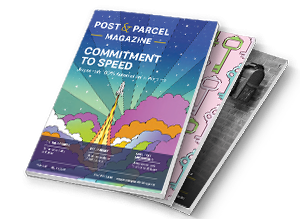
Post & Parcel Magazine is our print publication, released 3 times a year. Packed with original content and thought-provoking features, Post & Parcel Magazine is a must-read for those who want the inside track on the industry.


Pin It on Pinterest