




IPC – Market flash #374
IPC – Market flash #374
Read MoreIPC – Market flash #374
Read MorePostwatch Scotland published the results of a second study of the delivery service residents in EH3 are experiencing. This follows a study undertaken in 2006 which revealed considerable problems in the area, after which Royal Mail promised to introduce a number of improvements, including having more regular delivery officers on the routes.
One in five has suffered lost post, while 17 per cent have had letters and parcels delayed, according to a survey by Postwatch Scotland. It said the results in the EH3 postcode area, which includes Edinburgh’s New Town, were “symptomatic of the problems Royal Mail has in delivering to the whole of Scotland”.
In 2006, Postwatch Scotland carried out a study of more than 400 addresses which showed seven out of ten had experienced misdelivery, more than half had received mail for entirely different addresses and one in three had been given post that was meant for neighbours in the same building.
The study covers delivery experiences between 2nd January and 31st March 2008
Read MoreAlthough consumers are reacting to the economic downturn by spending less, this will create more of a hardship for retail stores than for e-tailers. A drop in new online buyers—an inevitable sign of the maturation of the online retail channel—will contribute most to the decline of e-commerce sales growth.
The US Retail E-Commerce report charts and analyzes the factors that are contributing to the changing dynamics in online sales.
Consumers are reacting to the economic slowdown by cutting back on discretionary spending. However, store sales will be hit harder than Internet sales because affluent shoppers, who form the core of online buyers, tend to ride out economic downturns better than lower- and middle-income consumers.
Some consumers even plan to increase online spending to save gas money or find bargains.
eMarketer estimates that US retail e-commerce sales (excluding travel) will reach USD 146 billion in 2008, up 14.3% over 2007. Still, over the next few years sales growth rates will steadily decline.
Royal Mail is demonstrating its commitment to the customer publishing industry by offering a financial incentive to organisations to benchmark their publications and improve their marketing value.
The initiative, part of a strengthening of Royal Mail’s relationship with the Association of Publishing Agencies (APA), means that customer publishers can save GBP 2,000 from the cost of having the effectiveness of their titles measured through the acclaimed Royal Mail APA Advantage Study.
Launched in 2005, the Royal Mail APA Advantage Study tracks customer magazine effectiveness as a valuable marketing tool and shows how titles perform against others in their sector.
The study currently features 70 magazines and over 20,000 customer interviews, conducted by Millward Brown, making it one of the largest pieces of media research in the UK and more cost effective for publishers than undertaking their own analysis.
Julia Hutchison, COO of APA, said: “The initiative means The Advantage Study will now be co-branded between Royal Mail and APA. The results that have been delivered as a result of the Advantage Study have to date been one of the main reasons for the astonishing growth of this medium.
“Proving that customer magazines are read on average for 25 minutes, deliver a 44 per cent response rate, eight per cent sales uplift and 32 per cent brand loyalty is a highly persuasive argument in convincing marketers that a customer magazine is a must have in the marketing plan.”
In 2007, sales of GeoPost, subsidiary of the French La Poste Group and leader in the European BtoB express delivery market, topped the euro 3-billion mark. Its 2007 sales totalled 3.171 billion euros, an increase of 6.8% compared to 2006, on a like-for-like basis and at constant exchange rate.
GeoPost consolidated its position in Europe by acquiring Seur’s Santander franchise, in Spain, and reinforced its partnership with the leading express delivery company in Turkey, Yurtiçi Kargo, by acquiring a 25%-stake in the company. In South Africa, a new joint venture with the Laser group has enabled GeoPost to move into the country’s domestic express market.
GeoPost has expanded its international brand DPD into Poland, Benelux, Russia and the Baltic States. Thanks to its subsidiaries, leaders in their respective countries, and to a first rate DPD European transport network, GeoPost is today, in terms of sales, the third leading express parcel service provider in Europe.
Agreements signed with Air France /SoDeXi and Aramex have given GeoPost access to intercontinental routes.
Hence, in terms of volume, 2007 saw GeoPost confirm its position as the second largest express company in Europe – 528 million parcels delivered, in 2007 – for 300,000 customers.
Read MoreFedEx Corp unit FedEx Ground has filed a lawsuit against the Washington State Department of Labor & Industries seeking to gain control of an unedited copy of a report on the company’s use of contractors to deliver packages.
The lawsuit, filed with the Superior Court of Washington for Thurston County on Monday, is the latest chapter in a broad-ranging battle between FedEx Ground and a number of critics of its contractor model, including the Teamsters union.
FedEx Ground uses some 15,000 independent contractors as drivers whom the company describes as entrepreneurs.
FedEx Ground states in the lawsuit that it was contacted by an employee of the labor department in late 2006 or early 2007 who stated that the department had received a report addressing FedEx Ground’s classification of “pick-up and delivery drivers” from an entity named Clark Consulting.
In February 2007 FedEx Ground said it issued a Public Disclosure Act request to the labor department seeking a copy of the report and information about who compiled it. The labor department originally refused to release the report, FedEx Ground said in its filing.
Read MoreDeutsche Post World Net and Deutsche Post Selekt Mail Nederland C.V. filed a joint complaint with the European Commission today to protest the renewed delay of the opening of the mail market in the Netherlands. Basis for the complaint is the Dutch government’s decision not to end the mail monopoly as planned on July 1, 2008, but to extend it indefinitely, thereby creating a competitive advantage for Post TNT of the Netherlands.
Through their decision, the Netherlands join the group of opponents against a liberalization who refuse the uniform opening of postal markets in Europe and continue to count on market foreclosure instead of competition.
Under the European law, a member state may reserve the national postal market exclusively for one provider only if this approach plays an essential role in financing the universal service. However, the statements of the Dutch government clearly show that the renewed delay only serves the interests of TNT. The Dutch government’s activities are, therefore, a clear violation of European legislation.
The allegation of an insufficient competition in the neighbor countries, especially in Germany, is just an excuse. The German postal market has been completely open since January 1, 2008. An indefinite delay protects the home market of the Dutch TNT that has been acting in Germany for years and that has unlimited business opportunities since the fall of the mail monopoly there.
In anticipation of liberalization, DP Selekt Mail, like other TNT competitors, has already made extensive investments. For this reason, Deutsche Post and DP Selekt Mail are calling on the Commission to act promptly and to eliminate the unacceptable distortion of competition contrary to European law in the Dutch postal market as soon as possible.
Read MoreDutch Economic Affairs State Secretary Frank Heemskerk promised the Dutch coalition government parties on Tuesday that he will work towards liberalising the Dutch postal market from January 1, 2009, Dutch media reported.
In May, the Dutch government decided against opening up the postal market to competition on July 1, 2008, stressing there are too many uncertainties to allow for full liberalisation.
But Heemskerk was confronted with a parliamentary motion backed by the coalition parties Christian Democrat CDA, Labour PvdA and the Christian Union on Tuesday in which January 1, 2009, was suggested as a new targeted date for liberalisation, Dutch media reported.
Heemskerk said he will maximise efforts to meet the targeted date, but added that liberalisation will still be subject to two conditions, namely a level playing field in Europe and good workplace conditions for postal deliverers, the reports added.
Read More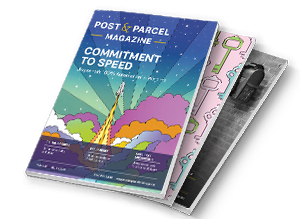
Post & Parcel Magazine is our print publication, released 3 times a year. Packed with original content and thought-provoking features, Post & Parcel Magazine is a must-read for those who want the inside track on the industry.