





Author: Archive

Modiv Media launches retail in-store self-service solutions

Modiv Media Inc., provider of retail interactive media delivery solutions, has announced the launch of Modiv Shopper, Modiv DeliVision and Modiv Mobile, a multitouch platform that delivers consumer-convenient media through in-store self-service solutions and on-the-go shoppers’ mobile phones. The new products enable brand marketers and retailers to connect and engage with individual consumers when they are at their “moment of decision,” making it possible to create truly personalized relationships. By reaching customers at the right times and locations, retailers and brand marketers can better influence buying behaviors and drive sales throughout the shopping experience.

“More than ever, the way shoppers shop and the way media is delivered are changing,” said Robert Wesley, president and chief executive of Modiv Media. “Today, 40 percent of shoppers are using self-service checkout at retail stores when available, and 240-plus million U.S. mobile-phone subscribers are beginning to use their mobile phones as personal convenience devices. Reaching consumer purchasers at these touchpoints — and at the most critical moments — is proving to be the best way to take shopping to the next level. Modiv Media’s products let brand marketers and retailers reach the target they seek and give customers relevant coupons and offers the way they want to receive it.”

Read More
Why Big Newspapers Applaud Some Declines in Circulation

Big American newspapers sell about 10 percent fewer copies today than they did in 2000.
The big American newspapers sell about 10 percent fewer copies than they did in 2000, and while the migration of readers to the Web is usually blamed for that decline, much of it has been intentional. Driven by marketing and delivery costs and pressure from advertisers, many papers have decided certain readers are not worth the expense involved in finding, serving and keeping them.

That rational business decision is being driven in part by advertisers, who have changed their own attitudes toward circulation.

In the boom years, “there was more willingness by advertisers to assign some value to the occasional reader, the student, the reader who doesn’t match a certain profile,” said Jason E. Klein, chief executive of the Newspaper National Network, a marketing alliance.

But advertisers have become more cost-conscious and have learned how to reach narrowly tailored audiences on the Internet. Sponsors of preprinted ads that are inserted into a newspaper have been especially aggressive in telling papers that some circulation just is not worthwhile.

As a result, newspapers have sharply curtailed their traditional methods of winning customers — advertising, cold-calling people and offering promotional discounts. That strategy was always expensive, and it has become more so with do-not-call laws and the rising number of people who have only cellphones. According to the Newspaper Association of America, the average cost of getting a new subscription order, including discounts, was USD 68 in 2006, more than twice as much as in 2002.

Read More

India Post hires more mail carriers

Enthused with the success of the freighter hired last month to carry postal material from Kolkata to north-eastern states, the India Post department is believed to have been planning to hire three more freighters for the same purpose.

According to sources, the three separate routes on which three hired freighters would fly are said to have been identified. However, they are yet to be finalized. One hurdle is said to have been coming in the way of the finalization— The destination of the route must be reached within six hours as the duty of freighter crews comes to an end in six hours. If the freighter takes more than six hours to reach its destination, it would be more costly for the department.

The proposed routes may be from Delhi to Mumbai via Nagpur, Bangalore to Chennai and Hyderabad to Kolkata. With the beginning of new projects, besides other parts of the country, north India and central India might reap the benefits of quick service of the postal department.

According to sources, postal department wants to quicken its services as private players (courier service providers) are giving a tough competition to the government-owned postal department. This is the reason why the postal department wants to end dependence on the railways. The second reason behind hiring more freighters is that the first experiment of postal department of hiring freighter for north-eastern states has been successful. In the beginning, the department was apprehending whether it would be able to collect 15 tones of postal material everyday as the said freighter has 15 tones load capacity.

Read More

U.S. photo-kiosk industry bets future on gifting, creative products

The North American photo-kiosk market is poised to continue its growth streak, thanks largely to the emergence of the diverse gifting and creative product mix, reports Frost & Sullivan.

With an anticipated compound annual growth rate of 57 percent through 2013, the gifting and creative mix could well increase its share of all transactions to 20 percent by 2013.

For these levels of growth to be achieved, industry leaders in both the vendor and retail markets must work toward increasing customer awareness of the photo kiosks and their growing product mixes.

New analysis from Frost & Sullivan, U.S. Photo Kiosk Markets, reveals that this market earned revenues of USD 2.15 billion in 2006 and estimates this to reach USD 13.0 billion in 2013.

“Retailers no longer battle for the meager profits earned from the traditional 4×6 prints, but focus their efforts on encouraging customers to create lasting souvenirs in the form of photo-books, calendars and other image enhanced keepsakes,” said Frost & Sullivan’s Rufus Connell.

Besides offering consumers an additional means to print and share their images, the gifting and creative product mix provides retailers a significantly better ROI than the 4×6 prints. Vendors, too, have taken note, and innovative software and improved workflow are now helping consumers take advantage of the ever-growing possibilities that exist beyond traditional photo-kiosk use.

Read More

Advertisement

Advertisement

Advertisement

P&P Poll

Loading

Have you noticed a decrease of non-EU inbound parcel volumes since the implementation of the new €3 charge?

Thank you for voting
You have already voted on this poll!
Please select an option!


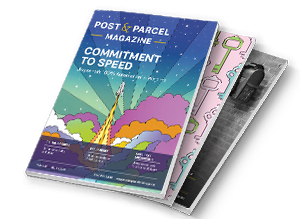
Post & Parcel Magazine


Post & Parcel Magazine is our print publication, released 3 times a year. Packed with original content and thought-provoking features, Post & Parcel Magazine is a must-read for those who want the inside track on the industry.


Pin It on Pinterest