





Author: Archive

Post Offices at the crossroads. L13979

Postcomm, the independent regulator for postal services, today urged the Government to make the tough and overdue decisions needed to plan the future of the Post Office network. The Government must take into account the wider social role played by Post Offices in local communities as well as the imperative of establishing a sustainable, stable business.

Postcomm does not regulate Post Offices but it does monitor and research developments in the network of over 14,000 offices and provides independent advice to the Government in the form of an annual report which is published today, entitled “Post Offices at the crossroads”.

Research for Postcomm has provided clear evidence on why Post Offices urgently need a direction from the Government to secure their future. Postcomm believes that keeping things as they are is not an option, because:

The Post Office Network lost GBP 111 million last year even after Government’s yearly subsidy to Rural offices of GBP 150 million – this subsidy is due to be withdrawn in 2008;

Government departments such as the DWP and DVLA are withdrawing services from Post Offices – revenue from transactions carried out by Post Office Ltd on behalf of Government has fallen by GBP 168 million since last year;

New products such as investment bonds, personal loans and credit cards continue to deliver only very low business and income levels – less than 1% of total weighted sales in urban areas – and are not filling the gap left by the withdrawal of government business; and

Post Office Limited has made some progress in developing alternative delivery models, such as mobile Post Offices, which offer a good opportunity for continuing the valuable services that Post Offices provide in local communities, but more needs to be done.
The rural Post Office network faces particular financial difficulties due to changes in customer use. Only 1,500 of the 8,000 rural Post Offices are making money for Post Office Ltd, with the remaining 6,500 branches costing more to run than they provide in income.

Postcomm has seen a distinct change for the worse over the past year in the mood and expectations of those involved in the Post Office network, reflecting a recognition that without clear direction from Government the problems will escalate. Despite a rise in gross pay, the number of sub-Postmasters who are not confident about the future has increased to 72% from 60% last year.

Nigel Stapleton, chairman of Postcomm, said:

“The Government must decide what it wants from the Post Office network and plan for its long-term sustainability. The network needs a clear vision and consultation is needed at national and local level taking into account the plans for regions as a whole.

“A key objective of our report is to help to inform the Government’s decisions on the so-called ‘social network’ of rural and urban deprived offices and on the network more generally. Despite the apparent success of reinvention programmes, the end of the Post Office Card Account and loss of future contracts point to an uncertain future for these branches. Sub-Postmasters need support, training and guidance in order to plan for the future of their businesses.”

Postcomm wants a flexible but planned approach to addressing the issues affecting the network and is concerned that Post Offices might miss out on the business opportunities from other postal operators coming into the market. Customers and Post Offices could benefit from other operators offering their services through Post Office branches. Royal Mail could also do more to use Post Offices as their shop window, and possibly bring in more business for both parties.

Read More
Neopost launches comparison tool

Neopost, provider of mailing and shipping solutions, is now offering online shipping through an agreement with UPS and the US Postal Service.

Neopost will provide its customers with a new multi-carrier online shipping application that lets users compare shipping options.

The tool was designed for businesses that average two or more packages per day.

“This is an excellent example of ways UPS’s easy-to-use shipping technologies can complement the applications and product offerings of other companies,” said Diana Hatcher, a UPS spokesperson.

Representatives from Neopost and USPS did not respond in time for comment.

Read More

EU states strike partial mail liberalization deal

European Union states have reached a partial deal on opening the bloc’s 88 billion Euro (USD 123 billion) postal markets to full competition, but starting dates are still unresolved, an EU diplomat said on Wednesday.
The European Commission has proposed stripping away the remaining barriers to competition from 2009 but the measure needs approval from EU member states and the European Parliament.
Envoys from member states agreed to push ahead with the basic text of the measure, a diplomatic source said.
EU ministers meet in Luxembourg on Oct. 1.
Currently the market for letters weighing up to 50 grams is shielded from competition. Mail above that weight is fully liberalized.
States are divided over when full liberalization should start.
“The main issues to be resolved by ministers are the final date and possible list of countries that can delay implementation, as well as the reciprocity clause,” the source said.
Under parliament’s first reading compromise, the 12 mostly eastern European states that joined the EU in 2004 and after will have until 2013 to implement the reform.
Parliament also introduced new criteria for delayed implementation, such as for countries that have many islands, a reference to Greece. Luxembourg was also effectively given a delayed start by parliament.
Parliament has inserted a reciprocity clause in the measure so that a country that is fully liberalized does not have to authorize competitors from states that have yet to open up their own sectors.
Some EU states are opposed to these compromises agreed in parliament.
The sector employs 5.2 million people, who deliver 135 billion items a year to the European Union’s 490 million consumers.

Read More

Post Parcels Reach Single Day Record High

The number of parcels sent by post on Monday totaled 1.2 million, setting a new single day record in Korea’s 123-year postal history, Korea Post said on Tuesday.

The figure is four times higher than the average number of parcels usually sent per day. It is also an increase of 25 percent from the 960,000 parcels sent on last year’s Chuseok holidays and up 14 percent from the 1.05 million sent on Lunar New Year’s Day.

The number of parcels registered in post offices reached 5.2 million between Sept. 10 to 17 (except Sunday), the first seven days of the special Chuseok postal delivery period of Sept. 10 to 23. That’s an increase of 37 percent from the 3.8 million parcels registered over the same period last year.

Korea Post said the number of fresh product parcels for families in provincial areas is growing ahead of the holidays. The postal service is now using a special task force to deal with the growing number of letters and parcels at its headquarters, eight provincial service centers, and post offices across the nation.

Read More

DHL increases capacity for Hong Kong-Beijing service to meet growing trade volume

DHL has further enhanced its overnight service between Hong Kong and Beijing, by increasing its dedicated flight frequency to meet the growing demand for cargo capacity fuelled by the robust trade between Hong Kong and Mainland China.

Customers utilizing this ten-time weekly dedicated service will now enjoy more options for their Hong Kong-Beijing shipment delivery schedule with the newly-added weekend flights, representing a 25 percent uplift capacity. As part of the service enhancement, DHL will utilize a larger Boeing B727-200F aircraft operated by Air Hong Kong – a 60/40 joint venture between Cathay Pacific and DHL – and customers will benefit from an overall 58 percent increase in payload capacity as the new freighter has a capacity to hold 24 tons per sector.

Trade between Hong Kong and Mainland China has been registering double-digit growth in recent years, boosted by strong Chinese exports. According to figures from China’s Ministry of Commerce, two-way trade figures in 2006 rose an impressive 21.6 percent, reaching US$166.2 billion. The uptrend continues in the first half of 2007, as trade volume expanded by a further 23.5 percent compared to a year ago. Hong Kong was China’s fourth largest trading partner and third largest export market last year.

The upgraded Hong Kong-Beijing service will further strengthen DHL’s Asia Air Network. The network currently comprises more than 30 destinations in 16 countries and territories, served by over 20 aircraft in dedicated air operations. This allows major Asia Pacific cities and other business centers to be interconnected through DHL’s regional hubs and gateways, providing DHL’s customers with overnight services across the region.

Read More

DHL moves road operations from Vienna to Bratislava

Global transport and logistics company DHL has moved part of its express road transportation outlet from Vienna’s Schwechat Airport to Bratislava’s M.R. Štefánik Airport, Kamila Mráziková of DHL Express (Slovakia) said on September 18.

Thus, the M.R. Štefánik Airport has become an international sorting junction (a so-called hub) for road consignments from designated central European countries. Truck consignments from Hungary, Croatia, Slovenia, part of Romania and Austria, as well as a large part of the Czech Republic, which in the past used to come to Vienna, where they were processed, will from now on come to Bratislava.

In connection with the strategic changes, the DHL has employed new people at its terminal at Bratislava Airport, and, at the same time, it has made current personnel capacities more effective.

Read More

DHL launches new service between U.S. and Western Canada

DHL introduces a new daily air service between the U.S. and Western Canada, designed to meet the growing needs of customers shipping across the northern U.S. border. The new service provides the most competitive transit times in key Western Canadian markets, as well as additional express service options, including next day delivery for heavyweight shipments weighing over 150 pounds between the entire U.S. network and Western Canada.

DHL’s new daily direct service from its principal U.S. air and ground hub in Wilmington, Ohio, to Calgary, Alberta, with a subsequent stop in Vancouver, British Columbia, now offers customers the earliest arrivals and latest departures in the Calgary and Edmonton markets within the industry as well shorter transit times to and from Vancouver. The service also enables next day delivery for larger non-conveyable shipments, which comprise a critical segment of the overall U.S.-Canada cross-border volume shipped by key industries, including automotive, energy, agriculture and forestry.

The new U.S.-Canada service is DHL’s latest move under its North America Trade Lane initiative, which was launched in November 2006 to increase the speed and efficiency of cross-border shipments across North America. Earlier this year, DHL opened two gateways in Hermosillo and Merida, Mexico, and introduced a new service in Southern Texas to better serve the needs of customers shipping across the U.S.-Mexico border.

Read More

The Pallet Network trials reduced time frame for RDC deliveries

(TPN) and its members are trialling a system to cut the amount of time trucks are sat waiting to make deliveries into RDCs. At a meeting of TPN members in July this issue was raised as a major concern for all hauliers and as a result trial has been set up. Adam Leonard, managing director at TPN, says an increasing proportion of the deliveries made through the network were into RDCs.

“Our members are fed up with queuing and losing the vehicle for hours if not a whole day, while it waits to make a delivery at an RDC and so we are trialling a system where we will only make deliveries into RDCs between 9am and 2pm.” He adds the problems are symptomatic of the fact that major retailers are putting the squeeze on their suppliers. “The trial is a fairly radical step [designed to] prevent the rest of our members’ customers being penalised because the trucks carrying their deliveries are stuck in an RDC.”

Leonard admits that the policy has resulted in some “tough” conversations with the retail customers of some members. “But there needs to be sensible dialogue so the retailers understand why we are doing this. “This is something that collectively the pallet networks should be addressing with the major retailers because it is not cost effective for the transport industry,” he says.

The trail is due to run for a month, after which TPN will collect feedback from the members and decide whether to extend the policy more permanently. Jack Semple, director of policy at the Road Haulage Association, says that the way hauliers are forced to wait at RDCs is not green and it is uneconomic. “The users of transport services need to take on board the realities of the haulage industry.”

Read More

Advertisement

Advertisement

Advertisement

P&P Poll

Loading

Have you noticed a decrease of non-EU inbound parcel volumes since the implementation of the new €3 charge?

Thank you for voting
You have already voted on this poll!
Please select an option!


Post & Parcel Magazine


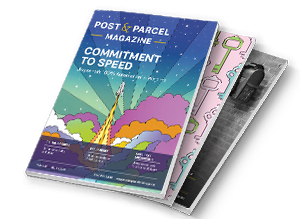
Post & Parcel Magazine is our print publication, released 3 times a year. Packed with original content and thought-provoking features, Post & Parcel Magazine is a must-read for those who want the inside track on the industry.


Pin It on Pinterest