

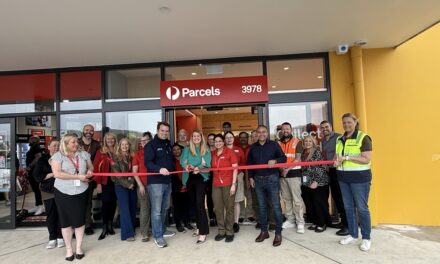



Scarlett leaves Palletforce
Scarlett leaves Palletforce
Read MoreScarlett leaves Palletforce
Read MoreThe primary reason behind the finance ministry’s rejection is that an increase in interest rates would result in a proportional increase in the on-lending rate to states.
In a move that will disappoint millions of Indians who have small savings deposits in post offices, the finance ministry has rejected the demand by the postal department to increase the interest rates on deposits and small savings schemes.
At present, those who utilize the small savings schemes of the postal department get an interest of 9.5 pct; the rate has been constant for the past 25 years.
The primary reason behind the finance ministry’s rejection is that an increase in interest rates would result in a proportional increase in the on-lending rate to states. Additionally, all states have indicated to the ministry that they didn’t want an increase in their cost of borrowing from the National Small Savings Fund (NSSF).
The finance ministry, in its response to the postal department, said, “Interest rates of small savings schemes are benchmarked to the average yields on g-g-secs of comparable maturity in the secondary market as recommended by the expert committee on administrated interest rates under the chairmanship of the deputy governor of RBI, and reviewed from time to time. At present, there is no proposal under consideration of the government to increase the interest rates on small savings schemes.”
Read MoreSince the launch of its new Shape-Based Pricing (SBP) initiative with the May 14, 2007 postal rate change, the United States Postal Service has produced and distributed over 200,000 official rate classification guides based on a design by Hasler, Inc. These guides, circulated to USPS Retail Associates in over 38,000 post offices around the United States, are used to simplify the process of calculating mailing costs under the new SBP regulations.
In order to better align the price of postage with actual processing costs, the USPS shifted from the use of a pure weight value to a size, thickness and weight combination when determining the cost of postage. Under these Shape-Based Pricing guidelines, it is now critical that a mail piece be measured and classified either as a letter, flat or parcel, to ensure the proper postage value is applied. Hasler, in order to help its customers better understand and take advantage of the new mailing rates, designed a Shape-Based Pricing sorting device that efficiently categorizes the mail under the new regulations. The guide contains the size measurements and thickness slots necessary to allow a mail piece to be correctly sorted as a letter, flat, or parcel.
The new rate guide is a handy, must-have tool that will greatly facilitate the job of pricing for the Retail Associates. Hasler has already produced both hard cardboard and sturdy, self-standing acrylic versions that are available to its dealer network and its customers throughout the United States.
Read MoreDeutsche Post World Net AG’s efforts to cut costs are unlikely to offset the impact of the end of its German letter monopoly next year, as competitors are preparing their market entry, analysts said.
“Deutsche Post has always been under pressure to reduce its costs, but now more than in the past,” said Per-Ola Hellgren, an analyst at Landesbank Baden-Wuerttemberg.
Deutsche Post’s monopoly on letters below 50g, which account for 60 pct of its mail volume, is scheduled to end in January 2008.
“A delay to German mail liberalization now seems unlikely,” wrote analysts at Goldman Sachs in a recent note to clients. “We believe that this implies volume loss and margin erosion for Deutsche Post. Our analysis suggests a cost-cutting program is unlikely to compensate for revenue declines.” Deutsche Post expects profit losses of 10-20 pct due to mail liberalization, from 2006 earnings before interest and taxes (EBIT) of 2.03 bln eur.
During the first half of 2007, the mail division accounted for 55.8 pct of Deutsche Post’s EBIT.
Read MorePostal workers in New Zealand have been awarded back pay for a period of industrial action in which posties took undelivered mail and put it back in post boxes.
The workers undertook the “secret strike” in July last year as part of a row over an employment agreement, the New Zealand Herald reported.
During the strike the workers went to delivery branches and helped sort the mail in the morning, before taking some of it and re-posting it, preventing it from reaching its destination.
As soon as New Zealand Post worked out what was going on, managers issued suspension notices, stopping the workers from getting paid from the time they began the action.
But the country’s Employment Relations Authority (ERA) on Wednesday ruled that the suspension notices could not be backdated and the workers had to be paid for the time they undertook the action until the notices were issued.
NZ Post said it was not immediately aware the industrial action was occurring, so should have been able to issue the suspension notices from the time it began.
But a member of the ERA said that argument wrongly relied on the notion that an employer was entitled to a notice of intended strike action.
Postal Workers Association organiser Mike Treen said the company was found to have breached the Employment Relations Act.
Treen said the action was limited to not delivering some non-essential mail.
Associate Professor Sean Cooney from the University of Melbourne’s Law School said Australian workers found to have been undertaking illegal activities during strike action would face stiff penalties.
Read MoreAzkar Spanish express and freight company Azkar this week opened a new EUR 9.5 million distribution hub at La Coruña in Galicia, north-west Spain.
The mixed 17,000 sqm logistics, parcel and pallet facility is built on a 25,000 sqm plot with separate zones for logistics and transport and distribution.
The new platform, staffed by 173 employees, holds 68 docking bays and has a fleet of 97 trucks, 33 for heavy vehicles and another 64 for local pick-up and delivery.
It is equipped with modern systems of classification and automatic reading of the parcels, and 10.500 pallet slots in the logistics area, the company said.
Azkar has now invested some EUR 50 million in new facilities over the past 18 months, including other new platforms near Bilbao and Zaragoza to improve distribution across the Iberian Peninsula and connections with the rest of Europe.
Read MoreWestern Union is rewarding its customers in the UAE, Bahrain, Kuwait and Qatar, with the chance to win a valuable set of household goods during its home festival promotion.
All customers in UAE, Bahrain, Kuwait and Qatar, who transfer money through Western Union between 5 September and 19 October 2007 will automatically be entered into a draw to be held on 25 October in Dubai.
Ten winners in the UAE and five winners in each of the other participating countries will receive a household set containing an LCD TV, refrigerator, vacuum cleaner, washing machine, microwave, home theatre system, and a mobile phone.
Jean Claude Farah, Western Union Regional Vice President for Middle East, Pakistan and Afghanistan, said, ‘We have millions of hard-working customers throughout the Gulf who depend on our fast, reliable and convenient services for transferring money to their families abroad. This promotion comes from our desire to thank them for their loyalty.’
Western Union operates around the globe mainly through Agents such as banks, post offices or retailers. In the United Arab Emirates alone there are over 350 Agent locations at well-known establishments such as UAE Exchange, Emirates Post, Wall Street Exchange, Al Razouki International Exchange, Orient Exchange, Al Ghurair Exchange, Alukkas Exchange, Emirates India International Exchange, Al Ansari Exchange, National Exchange, Travelex and Habib Exchange.
Read MoreEKN: “Ms. Webster we are pleased that you have taken time out of your schedule to speak to our readers. Tell us a little about your position at The United States Postal Service?”
Janet: “Thanks for the opportunity to speak with you, Robert! Right now I’m the Manager of Retail Service Network & Access Management. Long title – basically it means I have responsibility for retail optimization and access management initiatives, retail service equipment programs, and alternative access policies and programs. Lucky for me that includes the Automated Postal Center (APC) program!”
EKN: “Explain briefly how you identified the self service opportunity, and began planning for such a massive undertaking?”
Janet: “The Postal Service has a goal of being Quick, Easy, and Convenient for our customers – and, a self-service kiosk solution contributes to that goal. Plans for our APC included providing easy access to our products and services at 2,500 of our busiest post offices and offering 7/24 access in most locations.
Based on our Point of Service (POS ONE) data, customer feedback, and marketplace initiatives, it was apparent that the APC would be a good addition to our post offices. We started with a Market Test of 30-kiosks in selected geographic locations. And the results were excellent – customer acceptance was fairly quick, and the usage grew at better than projected rates.
The positive customer acceptance and overall success of the Market Test enabled us to move forward with a plan to purchase and implement the current 2,500 APCs in a production mode. This procurement process was completed over multiple years, and we were able to begin implementation in April, 2004.”
Read More
Post & Parcel Magazine is our print publication, released 3 times a year. Packed with original content and thought-provoking features, Post & Parcel Magazine is a must-read for those who want the inside track on the industry.