





Author: Archive

Self-Service economy arrives gradually

At airports, supermarkets and big-box retailers, “customer service” in recent years has meant self-serve _ aided by touch-screen kiosks.

As digital kiosks become more user-friendly and capable of handling more complicated tasks, health care providers, fast-food chains and other businesses say trading face-to-face encounters for face-to-monitor transactions improves service and saves money.
Yet the complexity of human decision-making and service expectations in different industries means any possible self-serve revolution is more likely to be a gradual transition.

“Every time you see a door, there’s an opportunity for a kiosk to be deployed,” Juhi Jotwani, director of marketing and strategy for retail stores at Armonk, N.Y.-based IBM, likes to tell her staff. Opportunity is knocking: IBM’s kiosk orders have quadrupled in the past four years.

Numerous airlines use IBM’s customer kiosks. Caribou Coffee and Cheesecake Factory employees use them to manage recipes and to enhance order speed and accuracy. The Virgin Megastore in Times Square has 150 kiosks that process 450,000 music previews per month.

Still, “none of the players in this market have even scratched the surface” of the multibillion-dollar potential, Jotwani said, even though consumers hooked on text-messaging and interactive Internet gaming now expect greater control over their purchasing experiences.

An April report by consulting firm Summit Research Associates Inc., estimated 800,000 customer kiosks, not including ATMs, will be installed in North America by the end of 2007 and hit 1.2 million by 2009.

Read More
Emirates Post launches a range of online services

Emirates Post has announced that its website (www. emiratespost.ae) has been enhanced to offer a wide range of postal and non-postal services, backed by a secure online payment system.

Users can after registering online pay DewaDewa and SewaSewa bills, Sharjah Traffic Police and Sharjah Municipality, track parcels and registered items and calculate postal tariffs.

In addition, they can reserve, renew and pay for P.O. Boxes and view list of approved applicants for Shaikh Zayed Housing Programme, among other services.

The website also allows people to form their own utility bill management system online by registering with an electronic P.O. Box which enables people to select the bills they want to pay online and get updates on latest transactions, due date, bill information and notification of incoming registered mail.

Read More

Royal Mail – Strike action poses big questions for Direct Mail

Fears mount that stalled services may drive sector to use alternatives to print.

It’s not been a good year for Royal Mail so far. The company has been thwarted by postal regulator Postcomm over its plans for a zonal price structure and has faced an outcry from its own workers over its proposed modernisation.

This has now resulted in strike action that has all the signs of rumbling on for the foreseeable future. Last month, the Communications Workers Union (CWU) signalled its unhappiness with a 2.5% pay offer and got its way on industrial action. It started with two 24-hour stoppages and has since escalated its action to a rolling programme of strikes over the next week.

If this continues, then there are implications not only for Royal Mail but the direct mail sector. A knock-on effect is starting to concern printers and industry bodies with brands eying up potential alternatives to print.

‘The postal strike is having an effect, no doubt about it,’ explains Howitt managing director Gurdev Singh. ‘I am convinced that the combination of the traditional summer lull and uncertainty over mail deliveries is making people postpone some campaigns.’

Read More

DB subsidiary Schenker plans takeover of Spain-TIR

DB subsidiary Schenker is planning to acquire 100 percent of the Spanish logistics group Spain-TIR. An agreement to this effect was signed with the shareholders today. Subject to regulatory approval this acquisition will enable Schenker to further expand its European land transport network. The planned takeover of a leading provider of land transport services will be a major step forward for Schenker on the Iberian Peninsula. Schenker is currently represented by a country organization in both Spain and Portugal.

“With the acquisition of Spain-TIR, we are consolidating our network in a European growth region that has great potential,” said Dr. Norbert Bensel, Chairman of the Transportation and Logistics Division of Deutsche Bahn AG. “We can offer our customers on the Iberian Peninsula all modes of transport including rail from a single source, plus direct access to our global network.”

“Spain-TIR has an extensive network in Spain and Portugal that is an ideal supplement to our own European land transport network, added Hans-Jörg Hager, Member of the Management Board of Schenker AG, and responsible for European land transport. “More presence means greater proximity to the customer. And together we can offer even better services to the customers of both companies.“

Lluis Gay Mundó, the chief negotiator for the Spain-TIR Group and one of the shareholders, said: “In around 30 years, Spain-TIR has developed into one of the leading providers of land transport services in Spain and Portugal. All customers will now have direct access to Schenker’s global network. I am convinced that the two companies are well matched and that customers will all benefit from this move.“ Lluis Gay Mundó will also be actively involved in the integration period in the company.
The corporate management and employees of the Spain-TIR Group will be fully integrated into the Schenker AG organization.

Spain-TIR has its own network on the Iberian Peninsula, consisting of 19 branch offices – 16 of which are located in Spain and three in Portugal – a storage area of 92,000 square meters, plus 46 franchisees. The company, which operates in the field of general cargo, direct services and logistics, has a workforce of over 800 employees and last year generated revenues of around EUR 200 million.

Read More

on line commerce data

Council of Supply Chain Management Professionals (2005)

As much as 28 percent of all transportation costs occur in the last mile.

Geminus: Poland 2005

54% of online purchasers said secure home delivery was critical to their decision to buy from an online store. 40% said it was critical if buying from an auctions site.

E-Thematics EU: 2005

550 Million Euro per annum would be saved in the EU through a reduction of 50ù in first time delivery failures

Taiwan: Govt report 2006

The most common delivery methods are door-to-door by private courier (48.4%) and convenience store pick-up (30.0%), followed by postal service delivery (11.7%), and direct delivery by the online vendor (8.7%).

Read More

GLS establishes start-up in Romania

Parcel network in Eastern Europe expanded: GLS Romania went into operation on August 1st. Headquartered in Sibiu, the new subsidiary will be headed by Gabor Szemkeo, Managing Director GLS Europe East. The investment volume amounts to five million euros.

From the very beginning, GLS will be offering a national regular delivery time of 24 hours in Rumania: full-area distribution will be achieved by the hub in Sibiu as well as ten depots in Sibiu, Brasov, Pitesti, Bucuresti (Bucharest), Targu Mures, Cluj Napoca, Baia Mare, Oradea, Timisoara and Deva. The start-up company is linked to GLS’ European network via regular line haul transports to the Austrian hub in Ansfelden and the Hungarian hub in Budapest. “From our European transhipment centre in Neuenstein, Germany, the hub for our international line haul transports, we are able to realise a regular delivery time of 72 hours for Rumanian import parcels”, explains Rico Back, CEO at GLS B.V., Amsterdam.

GLS already has experience in establishing start-up companies in growth markets: already a year before its entry into the EU, GLS Hungary was a hundred per cent subsidiary of the GLS Group. In May 2004, GLS Slovakia was launched; in April 2005, GLS Czech Republic began its operations. “We want to be present for our customers in eastern European EU markets to meet the increase in demand”, says Back.

Read More

The Postal Market 2010 and Beyond – Emerging

Postcomm’s Strategy ReviewA summary of emerging themes from Postcomm’s Strategy Review
In August 2006 Postcomm published a Strategy Review document for consultation. The review looked at whether we needed to alter our regulatory policies so we can continue to protect mail users in the future – from 2010 and beyond – and yet allow mail operators the flexibility to adapt to changes in the market.

This document briefly summarises emerging themes in the responses we received to that Strategy Review document.

Full document – Postcomm’s Strategy Review. The postal market 2010 and beyond: Emerging Themes (pdf, 429KB)
What respondents told us
Royal Mail said the current regulatory framework is no longer fit for purpose and is subjecting the company to serious financial pressure. It said Postcomm should allow Royal Mail to compete in the business market without any restrictions and limit regulatory interventions to stamped mail.
Royal Mail’s competitors pointed out that Royal Mail, which is focusing hard on retaining every item of mail, enjoys the advantages of economies of scale and the unique privilege of VAT exemption. They questioned whether our current regulatory tools are sufficient to deal with Royal Mail’s market dominance.
Postcomm’s main conclusions in the emerging themes document, on which we are seeking feedback, are:

Customers are benefiting from competition. However, Royal Mail is finding the impact of competition and of new media very difficult to cope with, in part because of its slow progress in improving efficiency and in developing new services. The universal service (USO) remains profitable and is being provided to a very high quality of service.
More innovation is needed in order to exploit the changing mail market. Mail operators in the UK are not fully grasping the opportunities – or facing up to the challenges – of new communications media to the extent that some of their European and North American counterparts are. Mail has some important characteristics, such as personalisation and hand delivery, which valuably differentiate it in a digital world. If operators focus on how their mail products can add value for users, there is no reason to accept the prospect of a contracting mail market.
Postcomm reaffirms its aim to move to less detailed regulation. If Royal Mail can improve its cost transparency and respond better to the changing market, Postcomm should be able to scale back the regulatory regime from 2010 onwards.
The universal service will be secured in a changing mail market. Postcomm is responding to Royal Mail’s request to remove business products from the universal service and, in doing so, it wants to promote a wider debate as to how the scope and specification of the USO should adapt to changing social, economic and technological conditions. However, the basic right to post a stamped letter anywhere in the UK for the same price will remain at the centre of the universal service.

Read More

Advertisement

Advertisement

Advertisement

P&P Poll

Loading

Have you noticed a decrease of non-EU inbound parcel volumes since the implementation of the new €3 charge?

Thank you for voting
You have already voted on this poll!
Please select an option!


Post & Parcel Magazine


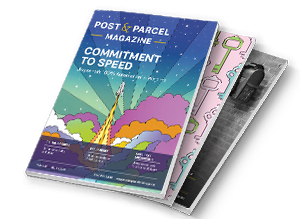
Post & Parcel Magazine is our print publication, released 3 times a year. Packed with original content and thought-provoking features, Post & Parcel Magazine is a must-read for those who want the inside track on the industry.


Pin It on Pinterest