





Tag: Courier/Express/Parcels

Brazilian Bonsucesso forges partnership with Correios

The Brazilian bank Bonsucesso has signed a contract with the mail & express service company Correios to offer credit with discount in payroll for 103,000 workers. The company will compete with another banks who provide this service to Correios such as Alfa, HSBC and BMC. Bonsucesso may increase the credit portfolio by 20percent with this move, from RD100mil to RD120mil, since Correios will be its major partner.

Read More
UPS and Yahoo! offer integrated shipping tools

UPS and Yahoo! Inc. have announced the integration of a suite of online UPS shipping tools into Yahoo! Small Business, a leading provider of services enabling small businesses to be successful online.

The tools, now available to Yahoo! Small Business’ more than 30,000 merchants, provide easy access to UPS services that allow them to process and ship orders in a more efficient and cost-effective manner, while improving customer satisfaction by displaying key shipment information at check out.

Read More

Irish An Post to sell loss-making parcel and freight subsidiary

An Post is to sell its loss-making parcel and light freight delivery subsidiary, SDS, as the semi-state company struggles to return to profitability by 2006.

Company chief executive Donal Curtin has given the board three options for SDS, including its disposal. Last week, An Post reported an operating loss of EUR43 million last year. SDS is believed to have accounted for around EUR40 million of the losses.

Read More

Public-private partnerships take flight

Last year, Belgium-based DHL, the international express-delivery subsidiary of Germany’s Deutsche Post World Net (DPWN), purchased Airborne, Inc., the third-largest U.S. express-parcel carrier, for USD1 billion. That transaction was one of the more dramatic examples of a trend that has been developing over the last 10 years in the international transportation arena. While competition is still the name of the game, alliances–and outright acquisitions–are becoming more and more common between national postal services and private delivery companies.

Read More

UPS, FedEx rivalry a study in contrasts

Every once in a while, a purple emblazoned truck shows up with a delivery at the home of UPS chief executive Mike Eskew, whose company’s package cars are a familiar brown.

“The FedEx guy shakes his head when he gives it to my wife and says, ‘I don’t know what I’m doing here,” Eskew recalls with a laugh.

The rivalry between UPS and Memphis, Tenn.-based FedEx is not as vocal as those in other industries _ neither likes to utter the other’s name and both insist they are focused on themselves _ but it is equally intense.

Besides the very different colors of their trucks, the two have chosen contrasting operational structures, labor strategies and business opportunities.

“Both of them are being challenged to expand their market share. That puts them in head-to-head competition with each other even if they don’t talk a lot about that,” said John Gnuschke, a University of Memphis economics professor who follows the shipping industry.

Based in Atlanta, UPS has grown since its 1907 founding into the world’s largest shipping carrier with $33.5 billion in annual revenue and 357,000 employees, 60 percent of whom are part of a union. Its average driver earns $55,000 a year. While three-quarters of its business comes from U.S. small-package deliveries, it believes a big part of its future lies in overseas shipments and supply-chain management services, which help companies control the flow of their products and reduce costs.

In a recent interview with The Associated Press, Eskew said it’s a numbers game.

“The small package market in the U.S. is about a $60 billion market. The worldwide supply-chain market is about a $3.2 trillion market,” he said. “It’s everything from the moment something gets made until it gets delivered for final delivery, and then after market, it’s parts replacement.”

He added, “It’s, ‘How do we participate and give our customers solutions beyond the small package?'”

On the other side, FedEx, founded in 1974, has $24 billion in annual revenue and 245,000 employees. Only its 4,000 pilots are unionized and it uses independent contractors as drivers for its U.S. ground deliveries. It won’t say what its average driver earns. FedEx remains focused on its core business and believes supply-chain management is only a small piece of the puzzle.

“People here have been dealing with skeptics and naysayers since Day One, and we have been proving them wrong and will continue to do so,” said FedEx spokesman Bill Margaritis. “Obviously, our model has proven to be successful because we’re taking share and our margins are comparable.”

In the United States, FedEx carries more packages by air than UPS. While UPS has an overwhelming advantage in U.S. ground volume, FedEx has been gaining share in recent quarters. A key strength for UPS, however, has been its international business, especially in China. The U.S. Postal Service and German shipper Deutsche Post AG also are major competitors.

As with labor and future goals, UPS and FedEx also have different operational philosophies.

UPS believes its biggest asset is in its integrated network. Each of its drivers, who work in defined areas, carries and delivers to their final destination items that were initially shipped by ground or air or from overseas.

FedEx uses different drivers to deliver air and ground shipments to their final destination, meaning a business could get a visit from multiple FedEx drivers with different colored trucks in the same day if it is receiving items from different methods of delivery. Yet another driver would deliver a FedEx package to your home.

As for management, UPS gives autonomy to its managers in units across the company, but its leadership is mostly centralized at its headquarters. FedEx has a mostly decentralized management structure, with its air, ground and freight units all based in separate parts of the United States.

UPS spokesman Norm Black said the company believes its strategy brings it closer with cu

Read More

Advertisement

Advertisement

Advertisement

P&P Poll

Loading

What's the future of the postal USO?

Thank you for voting
You have already voted on this poll!
Please select an option!


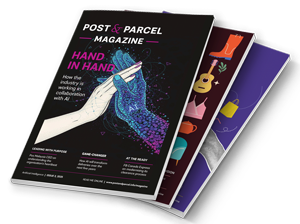
Post & Parcel Magazine


Post & Parcel Magazine is our print publication, released 3 times a year. Packed with original content and thought-provoking features, Post & Parcel Magazine is a must-read for those who want the inside track on the industry.


Pin It on Pinterest