




Tag: Domestic

Steinbrueck presses for Deutsche Post to keep sales tax exemption (Germany)

Finance Minister Peer Steinbrueck plans to maintain Deutsche Post AG’s exemption from Germany’s general sales tax, Frankfurter Allgemeine Zeitung reported.

The move would rebuff economy minister Michael Glos, who is seeking to limit Deutsche Post’s existing tax break to services to households and small businesses, the newspaper said.

Companies that deliver letters countrywide at ‘affordable prices’ should be spared the general sales tax of 19 pct, the paper quoted the documents as saying.

This would leave only Deutsche Post benefiting from the exemption, the paper said.

Competitors of Deutsche Post including PIN Group have claimed that new minimum wage rules favour Deutsche Post and are forcing them to abandon or rein in plans to compete with the former postal services monopoly across Germany.

They have also said Deutsche Post’s tax break puts them at an even greater disadvantage.

The sales tax exemption is designed to reward Deutsche Post for delivering mail to even the remotest parts of Germany.

Read More
US Postal Service needs more autonomy

The U.S. Postal Service is hurt more than it is helped by its status as a government entity, the Federal Trade Commission said in a study released on Wednesday.
Federal constraints, such as restrictions on the postal service’s ability to manage its labor force and configure its network, increase its costs by an estimated USD 330 million to USD 782 million a year, the FTC found.
The FTC report recommended that Congress reduce constraints on the postal service, narrow the scope of its monopoly, and make the postal service’s competitive products division a separate corporate entity.
The service does enjoy a monopoly on the delivery of items such as personal letters, bills and advertisements.
The postal service also benefits from being exempt from certain state and local requirements such as taxes and licensing, it said. The FTC estimated the value of these implicit subsidies range from USD 39 million to USD 117 million a year for the postal service’s competitive products operations.
Overall, the FTC said the postal service’s government- related benefits and restrictions hurt the entire competitive mail industry by distorting the market.
Legal constraints cause the postal service to use more resources to create its products, but the higher costs are partially masked from consumers by the service’s legal advantages.
These distortions mean more resources are used to produce the current volume of mail products than is necessary.
The postal service, which handled 212 billion pieces of mail and earned nearly USD 75 billion in fiscal 2007, has struggled in recent years because of increased competition from commercial rivals such as FedEx Corp and United Parcel Service Inc and because of the growing use of the Internet.

Read More

Postcomm asks for views on the regulatory framework for postal services from 2010

Postcomm is considering how, and to what extent, it should regulate Royal Mail from 2010 onwards, when its current price control is due to be replaced.

The regulator wants to begin by taking a ‘top down’ approach, based on what was learned from last year’s Strategy Review, before focusing on detail later on in the process. Most specifically, Postcomm wants to consider whether adopting a different approach could allow a significant reduction in the scope of regulation, whilst maintaining sufficient protection for customers and operators in those areas where Royal Mail has substantial and enduring market power.

An initial letter, issued to stakeholders, sets out a number of possible approaches and seeks feedback on the advantages and disadvantages of each of them. Postcomm is also looking for stakeholders’ views as to what other measures might be needed to ensure that a proposed approach would be effective.

Responses to this initial consultation should be sent to Postcomm by Friday 14 March 2008. Following this consultation, Postcomm will carefully consider responses, before publishing initial proposals for changes to the regulatory framework around June 2008.

Read More

Pakistan Post increases service charges

The Pakistan Post (PP) has increased its service charges with the start of 2008, according to an official notification made available to Daily Times.

“A commission on the issue of inland money order and urgent money order at the flat rate of Rs 50, irrespective of the value of a single money order up to Rs 10,000, shall be charged from January 1, 2008,” says the notification. The charges of the Pakistan postal order (PPO) have been increased from Rs 5 to Rs 15. The notification has been dispatched to all PP offices and they have been asked to follow it strictly. The charges have been increased for inland ordinary money orders, urgent money orders, PPO and insured articles.

A PP official told Daily Times that earlier Rs 15 were charged for the delivery of a Rs 1,000 money order and Rs 20 for a Rs 2,000 money order. An additional amount of Rs 5 was charged with the increase of every Rs 1,000 into the value of a money order, he added.

The official said most PP customers had criticised the increase in the PP service charges. “Heated arguments have become a routine at the PP offices, irritating the staff,” he said. “The PP has increased charges manifold, inconveniencing its customers,” Sahibzada Fakhar, a PP customer, said.

1 USD = 62.2600 PKR

Read More

Postcomm publishes decision document on its interim review of 2006-10 Price Control (UK)

Postcomm has published a decision document confirming its proposals made in August 2007 that Royal Mail should be given extra flexibility to increase some retail prices and that access margins should be left unchanged.

These decisions are in response to the requests by Royal Mail, TNT Post and UK Mail for a review of some aspects of the 2006-10 Price Control.

As set out in Postcomm’s proposals document published in August, this decision would allow Royal Mail to raise the price of a second class stamp to 29p by 2010, subject to inflation (the original price cap was 26p). The price cap on a first class stamp will not be affected by this decision2.

In addition, Postcomm has decided to reject the requests from Royal Mail, TNT Post and UK Mail to change the margin between Royal Mail’s prices for bulk mail products and the amount Royal Mail charges other mail operators for access to its network and delivery of bulk mail over the ‘final mile’. Royal Mail had wanted to reduce the margin and the two Access operators argued that it should be increased.

Read More

Advertisement

Advertisement

Advertisement

P&P Poll

Loading

What's the future of the postal USO?

Thank you for voting
You have already voted on this poll!
Please select an option!


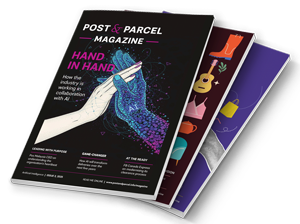
Post & Parcel Magazine


Post & Parcel Magazine is our print publication, released 3 times a year. Packed with original content and thought-provoking features, Post & Parcel Magazine is a must-read for those who want the inside track on the industry.


Pin It on Pinterest