


Tag: Germany

Axel Springer CEO says PIN mail buy was a mistake

Axel Springer AG said its strategy to enter the German mail and logistics business was a mistake and that it will stick to expanding its digital and international business.

“2007 was a bad year for Axel Springer AG,” Chief Executive Mathias Doepfner told shareholders at the company’s annual general meeting on Thursday.

“The investment into the mail and logistics business, acquiring the majority of the PIN Group, was wrong from today’s view.”

He added that the PIN endeavour, as well as a financial crisis in the capital markets in the second half of 2007 and general scepticism among investors towards media companies, had weighed on Axel Springer’s share price.

“At any rate, we cannot be satisfied with a closing share price of 98 euros on December 28, 2007, and the recent development of the Axel Springer share price,” Doepfner said.

The stock fell 28 percent in 2007 and 22 percent since the start of 2008. Shares were down 1.33 percent at 74 euros at 0924 GMT, while the DJ Stoxx European media index was down 0.63 percent.

It reported a loss of 288 million euros (USD 459.2 million) last year due to 572 million euros in writedowns from the now insolvent PIN Group, in which Springer has a 64 percent stake.

Hoping to take advantage of deregulation of the German postal market, the Berlin-based publisher had planned to set up a German mail service and challenge the country’s dominant player, Deutsche Post, but pulled out when the German government forced through a minimum wage for the industry, which was higher than PIN salaries.

Read More
Deutsche Post World Net Magazine Award

Deutsche Post World Net’s worldwide executive magazine Network received the top platinum award at the 2007 Inspire Awards in San Diego, California, USA. Network took first place in the “Employee Publications-Print-Bimonthly” category.

The magazine also received the “Best Visual Design” special achievement award.

In the overall competition that included all categories, Network received 99 out of 100 points, which matched the winner and put the magazine in second place among the over 550 internal corporate publications submitted from all over the world.

In producing Network, Deutsche Post World Net draws on the graphic design and writing expertise of two communications agencies: medienfabrik Gütersloh in Germany and theblueballroom in England.

The jury explained why Network stood out among the great field of competitors. “Overall we find this to be first class work; it received a total of 99 points, which was the maximum number of points awarded this year. The magazine makes a unique connection with the target audience and delivers relevant and persuasive messages,” said Christine Kennedy, Managing Director of LACP.

Read More

German publisher Madsack buys PIN Mail in Hanover

PIN Group has sold a key subsidiary “PIN Mail Hannover GmbH” in Hanover, Germany, to the German publishing group Madsack GmbH & Co. KG for an undisclosed sum.

The insolvency administrator of PIN Holding, Bruno M. Kübler, announced that Madsack had agreed to take over the company’s 156 employees.

PIN Group had already sub-contracted mail transport in the region of Hanover to Madsack which will become its direct contractual partner with the takeover. The regional PIN network will thus be preserved within the nationwide network of the company, PIN Group said in a statement.

“The takeover through Madsack will further strengthen the strong key region,” Kübler pointed out. “The sale shows that individual PIN subsidiaries are valuable, efficient companies working in a profitable market.” He added that strong key regions in a nationwide network were an important signal also in terms of selling major parts of the PIN Group to an investor.

Read More

Deutsche Post faces Germany-wide strikes starting next month

Deutsche Post AG may face strikes across Germany next month after the company failed to reach agreement on pay and working hours with the Ver.di labor union.

Ver.di plans to vote on open-ended strikes from April 25 to April 29, which would allow them to start on May 2, Guenter Isemeyer, a spokesman for the union said today by telephone.

Deutsche Post offered a 5.5 percent pay raise over two years and extended job security to workers until June 30, 2011, in return for increasing the workweek by 30 minutes, the Bonn- based company said April 19. Deutsche Post also wants to reduce workers’ break-time, adding an extra 2 1/2 hours work a week, Isemeyer said. The union has demanded a 7 percent wage increase.

Read More

Deutsche Post: ver.di rejects very good offer

Deutsche Post made ver.di a very attractive offer, according to which dismissals protection would be extended to June 30, 2011 and contractual employees’ wages would be increased by around 5.5 percent over the next two years.

In return, employees’ working hours would be moderately increased. That means that employees would work an extra half hour each week, or six minutes more each day. Civil servants will work 40 hours a week instead of 41 in the future, that’s one hour less than is usual for German federal civil servants and has been in force at Deutsche Post since April 1st ver.di rejected this offer.

Walter Scheurle, Board Member, Personnel, commented: “Whoever rejects 39 months of dismissals protection and a reasonable salary increase in exchange for a working-hours increase of six minutes per day, definitely does not represent the interest of our employees.”

Deutsche Post emphasized its readiness to continue with the employment pact and thus its commitment to job security as well as to a salary increase that is attractive to employees, but at the same time economically viable. This precludes that the social partner is prepared to discuss an increase in working hours.

According to the assessment of Deutsche Post, job security assurance and the proposed salary increase correspond to the paramount interests of employees. The stubborn attitude of ver.di in regard to the working hours issue is obviously based more on dogmatism and in strategic and image goals than anything else.

Read More

Advertisement

Advertisement

Advertisement

P&P Poll

Loading

Have you noticed a decrease of non-EU inbound parcel volumes since the implementation of the new €3 charge?

Thank you for voting
You have already voted on this poll!
Please select an option!


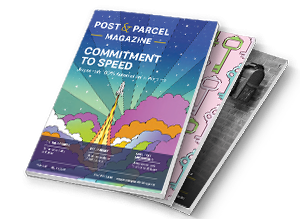
Post & Parcel Magazine


Post & Parcel Magazine is our print publication, released 3 times a year. Packed with original content and thought-provoking features, Post & Parcel Magazine is a must-read for those who want the inside track on the industry.


Pin It on Pinterest