





Tag: Royal Mail

New prices produce Direct Mail postal cost cuts

Mailroom equipment manufacturer, Neopost, has highlighted that when Pricing in Proportion (PiP) comes in to effect in the UK postal market this month, there is more changing than just the way mail is valued. Philippe Masson, Neopost’s marketing director, explained: ‘Royal Mail’s GBP10m advertising campaign is now fully underway with awareness of PiP increasing. However, one message is still not being heard by businesses – the reduction applied to metered, or franked mail, compared to stamps, will increase.’ He added: ‘The saving on a standard letter will rise from 1p to 2p for both first and second class mail and this differential increases at larger formats and higher weights.

Businesses, that currently use stamps, can easily access discounts simply by using a franking machine.’ Neopost said it has already introduced a number of systems to enable businesses to control their postal budgets in response to PiP – from folder inserters programmed to select the smallest appropriate envelope size, to dynamic scales that automatically weigh and measure items as they pass through.

Read More
Survey shows firms think postal changes will be costly

Smaller businesses think the changes to the postal system being introduced on 21 August will lead to an increase in costs. That’s the result of a survey of nearly 200 hundred firms carried out by the Forum of Private Business (FPB).

Currently, the cost of sending mail is based purely on the weight of the item being sent. When Pricing in Proportion (PIP) is introduced, the size, length and thickness of the item will all be taken into account when considering the cost of postage. The FPB, which represents around 25,000 small and medium-sized UK businesses, has surveyed firms to discover what they think of the changes. The FPB’s Research Analyst Andy Mowlah says the results show that businesses believe the changes won’t reduce their costs.

“It’s rather ironic that this new system is designed in part to cut costs yet 60% of respondents thought it would actually increase them.”

Twenty five per cent of respondents said they thought there would be no change in their costs while only 14% said costs would decrease.

Over a quarter of respondents said the cost of their post would increase by 15% or more. Mr Mowlah said the administrative cost of the new system would also be a burden: “60% of respondents thought the new system would mean extra time spent in administration, while 50% didn’t realise they may have to purchase a new franking machine,” he said.

Read More

Royal Mail forces direct rethink

An overhaul in postal pricing is set to spark a sea-change in the way mailing campaigns are planned.

‘Pricing in proportion’ (PIP) has been touted as the biggest change to the postal service since the debut of the adhesive postage stamp in 1840. Its introduction has sparked debate across the direct marketing industry, with many worried the changes will have dramatic implications for campaign costs as well as the execution of mailings themselves.

The Royal Mail’s new rules particularly affect charity, business-to-business and FMCG direct marketers who send out samples in bulky packs. The effects of the changes range from the relatively trivial – folding A4 letters to get them into the cheapest letter format – to more fundamental considerations concerning creativity.

The Direct Marketing Association (DMA) has encouraged agencies to carry out impact assessments on their existing work over the past year, and some have expressed concern about the results.

Read More

Special deliveries on the increase

The volume of items sent annually through the post soared by five billion over the past decade, Royal Mail has said.
Alcohol and food was one of the fastest-growing sectors, with deliveries more than quadrupling between 1995 and 2005.
An upturn in home shopping meant clothing and shoe deliveries more than trebled over the 10-year period.
Royal Mail said its Life Through The Letterbox study gave a unique insight into Britain’s changing consumer habits.
Its data comes from “mail diaries” kept by 100,000 households over the course of a decade.
Royal Mail said it delivered 22 billion items of post last year compared to 17 billion in 1995.
Travel and holiday-related post increased from 103 million to 183.5 million over that same period.
And the volume of credit, bank and store cards hitting householders’ doormats nearly doubled to 182 million by 2005.

Read More

Postcomm review of UK Royal Mail break-up

The postal regulator Postcomm will confirm today that it is to consult widely on plans to split Royal Mail in two in a drive to increase competition in the letters market.

The proposal is contained in a strategy document being sent to customer groups, business users, suppliers, other postal operators and Royal Mail itself, canvassing views on how the regulatory system should evolve over the next five to 10 years.

Postcomm will also consult users on Royal Mail’s one-price-goes-anywhere universal service guarantee and whether the scope of the obligation should be narrowed to a smaller range of postal services.

The idea behind separating Royal Mail’s trunk network from its “last mile” delivery network of postmen and women is to make the business more transparent to rival operators.

Read More

Advertisement

Advertisement

Advertisement

P&P Poll

Loading

How ready do you feel for the de minimis changes coming in July?

Thank you for voting
You have already voted on this poll!
Please select an option!


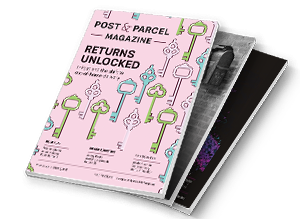
Post & Parcel Magazine


Post & Parcel Magazine is our print publication, released 3 times a year. Packed with original content and thought-provoking features, Post & Parcel Magazine is a must-read for those who want the inside track on the industry.


Pin It on Pinterest