




Tag: UK

Axe falls on thousands of post offices

The government will this week announce the closure of 2,500 post offices across the country as part of plans to stem losses of GBP 4m a week across the 14,000 strong network.

Trade and Industry Secretary Alistair Darling will release the government’s response to a six-month consultation on the network, indicating where offices will be lost and what measures will be taken to support those that are left.
At the same time, the Communication Workers Union is preparing to launch a ballot for strike action across its 140,000 membership at Royal Mail in a dispute over pay. The union plans to issue notification of the ballot on Tuesday if talks with Royal Mail on the current 2.5 per cent offer on Monday fail to reach a breakthrough.

There are also plans for a ballot among staff at main Crown post offices over plans to move 85 offices into WH Smith stores, while members at Post Office Cash Services, the division that handles and transports money from branches, are threatening a ballot over pay as well. A union source said there could be strikes across the mail and postal sector.

A spokesman for the National Federation of Sub Postmasters said half the government closures were expected in rural areas and half in towns and cities.
The government has indicated that if the post office network were a purely commercial organisation, it would run only 4,000 branches. However, it accepts that it also has a social role.
Read More

Royal Mail heading for first national strike in a decade

Britain is heading for its first national postal strike in more than a decade after pay talks broke down between Royal Mail and its unions.
The Communications Workers Union announced yesterday that a ballot for industrial action would go ahead after it formally rejected a 2.5 per cent pay offer from Royal Mail linked to further efficiency gains. The union fears that Royal Mail is planning up to 40,000 job losses.
The CWU will serve notice of its intention to ballot its 130,000 members in Royal Mail on Tuesday and despatch ballot papers a week later. The result is due to be announced on 7 June. The last national postal strike was in 1996.
Royal Mail executives said the union’s pay claim was “clearly madness and not in our view justified in any way”. The company said that the claim for a 27 per cent increase coupled with a reduction in the working week would cost it GBP 1bn a year at a time when its profits had shrunk to just GBP 22m for the first six months and the UK mail market was declining by 2.3 per cent a year.
Royal Mail also claimed that its staff were paid 35 per cent more than those working for rival postal companies, if pension benefits were taken into account, while productivity within the state-owned organisation was 40 per cent lower than that of its competitors.
The company said it did not believe the pay claim would be supported by customers or taxpayers. “The union must also realise that the consequences of meeting its demands would be hugely negative for Royal Mail’s competitiveness and would result in further large job losses as well as the loss of vital contracts and revenue.”

Read More

DHL investigates the use of biodiesel for its fleet in the UK

A UK division of the international DHL logistics group, DHL Exel Supply Chain, has started to investigate the possibility of operating its delivery vehicles using 100% biodiesel.

DHL has undertaken this project in partnership with JD Wetherspoon and Argent Energy UK, a producer of biodiesel. The project will involve recycling and re-processing cooking oil, previously used to cook meals in Wetherspoons pubs, for further deliveries back into the pub estate.

Test runs on an initial trial vehicle will begin end of May to prove the feasibility and assess maintenance and operational requirements before rolling out the program to the wider distribution fleet.

Bill Bacon, National Account Director from DHL Exel Supply Chain said: “We are committed to being an environmentally responsible business and are always looking at innovative ways to create sustainable supply chains. This is a superb example of everyone’s collaboration into exploring new technologies and alternative fuels that could potentially lead the way into long term sustainability. As the leading provider of contract logistics services we have a responsibility to set best practise solutions to reduce the carbon footprint of our vehicles.”

Andy Hunter from Argent Energy, said: “We specialize in producing biodiesel by recycling by-products of other industries, specifically tallow and used cooking oil which are both by-products of the food industry. Our stringent quality assurance procedures ensure that all our output is of the highest quality and that we can produce biodiesel to customers’ precise specifications. More and more businesses are looking at ways to reduce their carbon footprint and we are delighted that our expertise has been called on in this innovative project.”

Read More

Sharp suit with an iron hand in a woolly glove

The Guardian photographer is trying to make Adam Crozier relax. He tells him to loosen his shoulders and Crozier, sitting stiffly and gripping a Royal Mail mug, makes an effort to shrug a little. The photographer asks him to stand. “If you can get your back against the wall,” he says. Crozier does as he is told and looks like he is facing a firing squad.

I had first met Crozier some 12 years earlier, on the day he and Tamara Ingram were named joint chief executives of the advertising agency Saatchi & Saatchi. Maurice and Charles Saatchi had just walked out and taken most of the senior staff and some of the biggest clients with them. Crozier was just 31 and looked even younger. The more energetic Ingram did much of the talking. Against the odds, they held the business together. She went on to carve out a successful career in advertising and now manages the USD 1bn Proctor & Gamble advertising account. But Crozier was the one to step further into the public eye. He was chairman of the Football Association at 36 and chief executive of the Royal Mail by 39.

It is an odd career path on paper – Crozier admits with a laugh that his CV might suggest he is someone who doesn’t know quite what he wants to do. But there are common threads. Each has involved periods of painful upheaval. A business studies student might call it change management. Each of them has also been high profile – he was a familiar fixture behind former England coach Sven-Goran Eriksson during FA press conferences – but still the spotlight makes him shudder. “I hate it,” he says in his soft Scottish accent. “Absolutely hate it. The bizarre thing about the last three jobs I’ve done is that I don’t like [the public profile] at all. I will go to enormous lengths not to do public things – because it is just not me.”

Read More

Royal Mail fears exodus

The exodus of big business from the Royal Mail could see as many as one in five letters being handled by competitors such as Dutch group TNT and the UK Mail arm of courier group Business Post, it has emerged.

Senior Royal Mail executive Stephen Agar has admitted latest figures show that about 12.5% of the post was lost to the competition last year.

But with major customers continuing to ditch the Royal Mail at alarming rates, Agar said that figure could rise to 20%.

The defection of companies with major bulk billing operations to Royal Mail’s rivals has become increasingly embarrassing for the former state postal monopoly.

Earlier this year, the £8m-a-year BBC TV licensing operation took its postal needs to UK Mail, following an earlier decision by the Department of Works and Pensions to switch its £12m-a-year contract to the same operator.

That followed the decisions, recently revealed by the Evening Standard, of BT and British Gas group Centrica to move to TNT for their mail needs, together worth GBP 150m over three years.

Most of the mobile phone companies, banks and utilities have also decided to quit Royal Mail, citing price and quality of service.

Royal Mail chief executive Adam Crozier, pictured, today defended the business’s ability to handle competition.

‘We’ve gone through the process [of market liberalisation] that BT went through over 25 years,’ he said. ‘We’ve concertinaed it into three.’

Read More

Advertisement

Advertisement

Advertisement

P&P Poll

Loading

Have you noticed a decrease of non-EU inbound parcel volumes since the implementation of the new €3 charge?

Thank you for voting
You have already voted on this poll!
Please select an option!


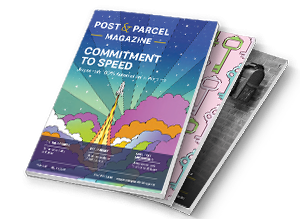
Post & Parcel Magazine


Post & Parcel Magazine is our print publication, released 3 times a year. Packed with original content and thought-provoking features, Post & Parcel Magazine is a must-read for those who want the inside track on the industry.


Pin It on Pinterest