



Tag: UK

Postwatch aims to get Royal Mail to deliver on its promises

Its immaculate cobbled crescents and scrubbed stone porches are typical of Edinburgh’s refined and orderly New Town. But the EH3 district – home to top law firms, foreign consulates and some of Europe’s most exclusive residential addresses – had Scotland’s highest number of complaints about its postal service last year.

In 2006, cumulative first-class next-day deliveries stood at 93.5 per cent for Edinburgh, 92.1 per cent for Dundee and 93.6 per cent for Glasgow for the first three-quarters of last year – all comfortably ahead of targets set by the regulator, Postcomm.

But all three lag behind Manchester, Liverpool, Newcastle, Leeds, Cardiff, Nottingham and Sheffield. Only Aberdeen, with an impressive 95.6 per cent, drags Scotland up the league table.

Half of residents had their mail left in the hall or communal stairs at least once a week. One-third of all residents had lost items of mail, including credit cards, bank statements, chequebooks, concert tickets and medical test results. Many residents reported receiving no mail for several days, followed by a bundle in a red rubber band.

Even the Postwatch questionnaire itself fell victim to the problem: 12 per cent were not delivered until between four and eight working days after posting.

Royal Mail says the problems are down to the number of tenements in Edinburgh and Glasgow, many of which have no names on doors or main entrances which prevent access to delivery staff during the day.

Despite these challenges, performance in Edinburgh improved dramatically during 2006.

Read More
Mayor of London slams Post Office 'privatisation' plans

The Mayor of London has slammed the announcement by the Post Office that it will privatise 70 Crown Post Offices across the country, including 15 in London.

Ken Livingstone claims the move could lead to the loss of around 3,000 jobs nationally and a loss of around 700 jobs in London.

The announcement comes only weeks before the Government is expected to announce the results of its consultation on the future of the Post Office Network next month. The Government’s consultation paper proposed closing up to 2,500 Post Offices.

Ken Livingstone, said: “This proposal for the privatisation of Post Offices across London is terrible news for the hundreds of thousands of Londoners who rely on their local Post Offices.

“Recent research has shown that privatised Post Offices have poorer information on services, worse facilities for disabled customers and lower levels of customer service.

“WH Smith’s cut price approach to pay and employment practices will mean that Post Office customers will lose out as services deteriorate.

“The Post Office should be investing in better services for customers not reducing local services.

“With the number of Post Offices in London having fallen by over a quarter in the last three years, the last thing we need is further cuts and closures.

“That’s why I am supporting the ‘Future for our Post Office campaign’ to put the unquestionable case to Government to invest in the Post Office network and not make further closures.”

Read More

Postcomm extends deadline for responses to zonal pricing consultation

On 20th February 2007 Royal Mail submitted a revised application to Postcomm for permission to change the way that it prices many of its bulk mail services. The application seeks permission to be allowed to vary certain business tariffs according to the geographic location of the recipients of mail (known as “zonal pricing”).

On 2 April 2007, Postcomm, the independent regulator for postal services in the UK, published a letter seeking views from all interested stakeholders on whether Royal Mail should be allowed to proceed with its zonal pricing application.

We have received a number of requests to extend the current deadline of 7 May 2007 for responding to Postcomm’s consultation letter.

We have carefully considered these requests, weighing them against Postcomm’s requirement to make a decision on Royal Mail’s application to introduce zonal pricing no later than 2 January 2008. Postcomm has decided to extend the deadline for responding to its consultation letter to allow interested parties more time to respond and make full use of Royal Mail’s zonal pricing calculator. We expect that better informed responses will greatly help Postcomm’s analysis in developing its provisional conclusions.

The new deadline for sending your views to Postcomm is 1 June 2007.

Read More

GBP 1 Post Office® travel money card means no hidden cash fees

Holidaymakers can now avoid the hidden costs involved in withdrawing cash abroad by using the Post Office® Travel Money Card, which has been relaunched with a GBP 1 minimum spend.

In contrast to the exchange rate loading fees and percentage-based cash advance charges levied by credit card companies and banks, the Post Office® Travel Money Card represents the foolproof, affordable way to use ‘plastic’ when holidaying overseas, with a straightforward GBP 2 fee on cash withdrawals and no charge at all on shop or restaurant purchases.

Originally launched last summer with a minimum spend of GBP 250, the Post Office Travel Money Card now allows customers complete flexibility to choose how much money they put onto the card.

Holidaymakers can put between GBP 1 and GBP 5,000 onto the Travel Money Card instantly at 2,400 Post Office® branches. The card can then be used to pay for goods and services in locations where Visa Electron is accepted or to withdraw funds at any Visa ATM.

Trials undertaken in Post Office® branches since the introduction of the GBP 1 minimum spend on the Travel Money Card have already indicated a significant 40% increase in demand. Average spend has dropped from GBP 530, a high figure for foreign currency transactions, to GBP 342 since the more flexible investment policy was introduced.

Post Office® Head of Travel Kevin McAdam says that “the cost of convenience can be high when withdrawing cash abroad using your debit card. Too often holidaymakers return home to an unpleasant financial surprise when they discover that they have incurred unexpected costs for using a debit card.

Read More

Advertisement

Advertisement

Advertisement

P&P Poll

Loading

Have you noticed a decrease of non-EU inbound parcel volumes since the implementation of the new €3 charge?

Thank you for voting
You have already voted on this poll!
Please select an option!


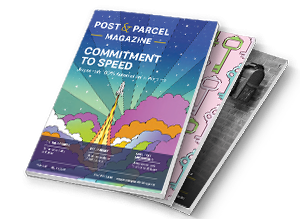
Post & Parcel Magazine


Post & Parcel Magazine is our print publication, released 3 times a year. Packed with original content and thought-provoking features, Post & Parcel Magazine is a must-read for those who want the inside track on the industry.


Pin It on Pinterest