




Tag: USA

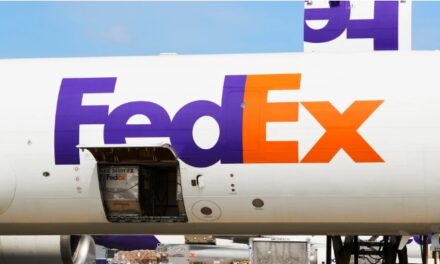
FedEx Freight and BP Solar complete second solar power installation (U.S)

FedEx Corp. and BP Solar announced the completion and activation of a second project together: a solar system for a FedEx Freight distribution center in Fontana, California. The 269 kW (kilowatt) rooftop solar array utilizes BP Solar modules.

FedEx is committed to integrating the use of renewable technologies into its operations. FedEx Express built and operates a solar-powered hub in Oakland, California, that produces power equivalent to that used by more than 900 homes during the daytime. FedEx will be adding solar to its Cologne, Germany hub when it opens in 2010. FedEx also operates the largest fleet of commercial hybrid trucks in North America, which improve fuel economy by 42 percent, reduce greenhouse gas emissions by approximately 30 percent and cut particulate pollution by 96 percent.

Read More

The World's Top 50 Cargo Airlines

The first tier of the 2007 Top 50 Cargo Airlines worldwide looks a lot like the 2006 ranking with FedEx Express, UPS, Korean Air and Lufthansa retaining their No. 1 through No. 4 positions. With a 17.4 percent growth last year, Cathay Pacific, and its subsidiary Dragonair, bumped Singapore Airlines from the No. 6 slot, while China Airlines moved up a notch to No. 7, with Air France close behind at No. 8.

FedEx and UPS retained their vaulted positions despite punishing high fuel costs, a faltering economy and a noticeable decline in domestic air cargo. Significant quarterly losses in early 2008 showed how even the integrated express carriers continue to get pounded financially. FedEx lost USD 241 million in the three months ending May 31 compared with a profit of USD 610 million for the same quarter in 2007, while UPS saw its net profit fall 21 percent in its second quarter.

Korean Air, which slowed its growth engine significantly last year in the face of declining yields and migration of traffic to ocean vessels, retained its No. 3 overall position and the airline remains the world’s largest international freight airline with 9.5 million freight tonne kilometers flown.

Air France’s elevation to the No. 8 spot and its partner KLM Cargo’s jump to the No. 12 position from No. 14 can be attributed to a rejuvenation of its fleet and tight cost controls, which has seen a significant bump in profits.

The fastest growing carrier last year among the Top 50 airlines was Shanghai Airlines, which jumped from No. 57 to No. 42 and expanded its business 60.8 percent. Following close behind was No. 33 Qatar Airways, which posted a 50.6 percent growth from 2006 to 2007.

The long-term growth of the industry remains in parts of Asia and the Middle East, where Emirates moved up to the No. 9 spot from No. 12 despite slowing from 19.9 percent growth the year before. Air China, the world’s fifth largest domestic cargo carrier, grew 12.3 percent last year and moved up to No. 16 from No. 18.

Not all Asia and Middle East carriers showed traffic gains in 2007. Nippon Cargo Airlines, which slipped to No. 28 from No. 26, showed a 17.2 percent decline in traffic last year over 2006. Gulf Air’s growth dropped 26.5 percent in 2007, the second straight annual decline.

A number of combination carriers posted modest gains or losses in air freight traffic. Yet United Airlines, at No. 18, showed 15.6 percent traffic growth last year. American Airlines retained its No. 20 position, increasing traffic 4 percent in 2007. Northwest Airlines, which left Chapter 11 bankruptcy in 2007 and is awaiting regulatory approval to merge with Delta Air Lines, posted a 9.4 percent decline in traffic in 2007, dropping to No. 19 from No. 17.

The top 50 list is based on freight traffic, measured in freight tonne kilometers flown, reported by the International Air Transport Association and on figures provided by airlines.

In a change from previous years, we have sought to include only carriers in scheduled service rather than “wet lease” carriers. That means that carriers such as Atlas Air, Evergreen International Airlines, Air Atlanta Icelandic and the defunct Gemini Air Cargo are not included. U.S. carrier ABX Air operates largely on an ACMI basis, is included mostly as a proxy for DHL in the United States.

Our goal remains to show the relative scale of all carriers that fly cargo. Carriers that have ceased operations are not listed in this year’s top 50.

Where available, we have included revenue figures and notable orders for aircraft, particularly freighters.

Read More

eBay focused on reducing shipping & handling charges

eBay updated two listing tools so sellers can update the shipping details on all of their listings at once as part of the new requirement that sellers specify at least one domestic shipping service when listing an item. eBay said it has added new bulk-edit functionality, available on Friday, to its Selling Manager and Turbo Lister listing tools.

To comply with eBay’s new rule, sellers must either select a flat-rate shipping rate, or they must use eBay’s shipping calculator that displays actual charges in their listings based on the shopper’s zip code. The calculator supports USPS and UPS, but it does not support other carriers, such as FedEx and DHL.

eBay has been focused on getting sellers to reduce shipping & handling fees and make it clearer in search results and in listings what those charges are. In an unprecedented move, eBay recently announced limits on shipping and handling charges in the media category (Books, DVDs & Movies, Music and Video Games). Beginning next month, media sellers must offer at least one shipping option within the specified limits. Maximum shipping & handling costs vary by subcategory.

Read More

UPS won't refund surcharge (U.S)

Bowing to high fuel prices, UPS will change its policies on parcel service guarantees next month and no longer include the fuel surcharge in its refunds to customers.
The shift effective Sept. 2 means UPS will only refund the basic charge and whatever other accessorial charges were included in the bill, including pickup and special service charges.
“While nothing changes the ability of our customers to request a refund of shipping charges, we do still make the delivery,” a UPS spokesman said. “So since we still make the delivery, including fueling the truck to get it there, we are going to stop refunding the fuel surcharge fee.”
UPS adds 10.25 percent to its ground parcel bills as a fuel surcharge and will raise that rate to 10.5 percent Sept. 1. The fuel surcharge for air and international package shipments is 34.5 percent.

Read More

Airlines to lose USD 5.2 billion in 2008 – Slowing Demand and High Oil to Blame

IATA announced a revised industry financial forecast that would see the global airline industry post losses of US$5.2 billion in 2008 based on an average crude oil price of US$113 per barrel (US$140 for jet fuel).
“The situation remains bleak. The toxic combination of high oil prices and falling demand continues to poison the industry’s profitability. We expect losses of US$5.2 billion this year,” said Giovanni Bisignani, IATA’s Director General and CEO.
Fuel
“While there has been some relief in the oil price in recent months, the year-to-date average is US$113 per barrel. That’s US$40 per barrel more than the US$73 per barrel average for 2007, pushing the industry fuel bill up by US$50 billion to an expected US$186 billion this year,” said Bisignani. Fuel is expected to rise to 36% of operating costs, up from 13% in 2002.
Demand
IATA also announced industry traffic data for July which showed a continued slowing of demand.
July year-on-year passenger demand growth fell to 1.9% – the lowest in five years. Capacity increased by double that – 3.8% – indicating that service cuts are not keeping pace with the fall in demand. This pushed the load factor for the month to 79.9%, a drop of more than 1% compared to July 2007. The surprise of July was a 0.5% drop in passenger demand by Asia-Pacific carriers partly attributable to a change in Chinese visa requirements but also showing that economic weakness is spreading to previously robust economies.
Cargo demand in July contracted by 1.9% compared to 2007. Asia-Pacific carriers – the largest players in the cargo market – were hit hard with a 6.5% drop in demand.

As a result of the weaker economic outlook, IATA significantly revised downward its traffic forecast for domestic and international markets combined. Passenger traffic is now expected to grow on average by 3.2% (was 3.9%) and air freight volumes by just 1.8% (was 3.9%). This is only half the pace of expansion seen in 2007 and is boosted by the stronger growth seen at the start of the year. Strong traffic growth allowed the industry to partly absorb the rise in fuel costs from 2003-2007. This is no longer the case.
Regional
“While some regions will show small profits, the negative impact of the industry crisis is universal,” said Bisignani.
– North American carriers are expected to post losses of US$5.0 billion in 2008 making them the hardest hit by this industry crisis.
– Asia Pacific is expected to see profits shrink from US$900 million in 2007 to US$300 million this year.
– European profits will tumble seven-fold from US$2.1 billion in 2007 to US$300 million in 2008.
– Middle Eastern profits will drop by US$100 million to US$200 million.
– Latin American and African carriers will see losses deepen to US$300 million and US$700 million respectively.
2009
IATA announced its initial outlook for 2009. The difficult business environment is expected to continue. Most economies are expected to deliver even weaker economic growth next year, which will negatively impact air travel and freight. With an expected oil price of US$110 per barrel (US$136 for jet fuel) and continued weak growth (2.9% tkp), industry losses are expected to continue at US$4.1 billion. The 2009 fuel bill is expected to rise, as hedging offers less protection, to US$223 billion comprising 40% of operating expenses.
Change
“While we expect the bottom line to improve by about US$1 billion next year, the industry will be US$4.1 billon in the red,” said Bisignani. “This crisis is re-shaping the industry in more severe ways than the demand shocks of SARS or 9.11. When fuel goes from 13% of your costs to 40% in seven years with an increased cost implication of US$183 billion, you simply cannot continue to do business in the same way. Fundamental change is needed,” said Bisignani.
“Airlines have reduced non-fuel unit costs by 18% since 2001. Airports and air navigation service providers must join the effort. Efficiency gains are criti

Read More

Advertisement

Advertisement

Advertisement

P&P Poll

Loading

Have you noticed a decrease of non-EU inbound parcel volumes since the implementation of the new €3 charge?

Thank you for voting
You have already voted on this poll!
Please select an option!


Post & Parcel Magazine


Post & Parcel Magazine is our print publication, released 3 times a year. Packed with original content and thought-provoking features, Post & Parcel Magazine is a must-read for those who want the inside track on the industry.


Pin It on Pinterest