



Christmas stocking on the net
TINSEL TIME 2004 and one question is dominating the High Street: where have all the Christmas shoppers gone? Did they stock up at Marks & Spencer's one-day Christmas sale spectacular, or were they too busy sweeping up Mix & Match three-for-the-price-of-two offers at Boots? Were they queueing up for the pre-Christmas sales at Allders or Debenhams or filling their stockings with buy-one-get-one-free DVDs at WH Smith?
While High Street stalwarts are increasingly resorting to desperatelooking promotional drives to lure shoppers, online retailers are reporting phenomenal sales. The latest figures coming through are so strong that internet retail association Interactive Media in Retail Group (IMRG) had to raise its earlier prediction of online Christmas sales, made in October, by more than 15% to Pounds 4 billion.
Interest rate rises and a dip in house prices may be having an effect on consumer habits but the misery reported from some quarters of the High Street does not appear to have affected internet shopping. "We have not seen a bit of that pain online," says IMRG chief executive James Roper. Nationwide, people say they will spend just 2% more in the eight-week run-up to 25 December than they did last year.
However, they are expected to spend 62% more with internet retailers than last year's online Christmas total of Pounds 2.5 billion.
If IMRG's current estimates pan out, it means the nation will spend five times as much money online as is taken by the whole of the West End.
Or, for those who have swapped the nightmare trudge down Oxford Street on Christmas Eve for the hell that is the out-of-town mall, the equivalent to 15 Bluewaters.
IMRG says 85% of people who shopped online during October said they also expected to do their Christmas shopping on the net. This equates to 15 million people, who will each spend on average Pounds 220 online. The most successful online retailers, such as Amazon, are consistently cited by experts as a threat to traditional High Street retailers. In a recent research note on WH Smith, brokers at Numis named competition from the online bookshop as one of the key drivers for a share price downgrade.
But not all online Christmas shopping is detracting from the big names.
John Lewis is expecting to see a 75% increase in online transactions this Christmas and is "cautiously optimistic" for sales at its 26 department stores. John Lewis Direct managing director Phil Hullah says: "In just over three years, we've built up from scratch to become one of the UK's leading online and catalogue retailers and we still think there's significant growth."
Best-sellers this Christmas fall into three categories. Plasma TVs, leather sofas and sofa beds are among the most sought-after items as people prepare their homes for extra guests.
Cashmere, football tables and traditional toys top the gift lists. MP3 players, particularly Apple iPods, and digital radios are outselling all other small electronic items.
Hullah is adamant that online selling is not detracting from sales at the bricks-and-mortar operation. "Far from cannibalising the customer bases, we believe the different channels are reinforcing one other. We see people walking around the shop with a catalogue in their hands. One of our busiest times online is Monday lunchtime. We suspect shoppers are looking at things instore at the weekend and making the purchase on Monday online."
Other retailers with strong online departments include Mothercare and wine merchant Majestic.
Supermarkets group Tesco expects online orders in the run-up to Christmas to be double those of last year. Online shopping is increasingly about convenience.
Roper's research suggests that half the adult population intends to spend at least 40 hours shopping this Christmas. "We reckon you can do it online in just a quarter of the time. It's like gaining a week's holiday," he says.
The figures merely highlight the overall shift in favour of the internet.
Roper says online shopping is growing 10 times faster than the High Street: "Large numbers of consumers continue to switch to buying online, especially for high-ticket discretionary purchases such as plasma TVs and digital cameras."
According to shopping search engine Kelkoo, now owned by Yahoo!, hi-tech electronics dominate the best-seller lists for Christmas with DVD recorders and portable DVD players the most-wanted items. The number one film is Shrek 2. The biggestselling game is Grand Theft Auto: San Andreas while the boxed DVD set of Live Aid has been a fast seller.
Early worries about internet shopping centred on security. Even today, 34% of people cite fraud as the reason they do not shop online.
Voluntary accreditation schemes such as Internet Shopping Is Safe (Isis) are trying to address this. Roper says Isis now accounts for two-thirds of all UK online shopping in terms of value. "I can honestly say that we have never had a dispute which we could not settle since we started operating it," he adds.
IF THE internet has revolutionised Christmas shopping, it has also revitalised the Post Office. The Royal Mail and its specialist delivery service Parcel Force will deliver 55 million internet-bought items this Christmas, about 60% of the 90 million items purchased online. While Richard Roche, head of multi-channel retail at the Royal Mail, claims the net should not "be seen of itself as the saviour of the Royal Mail", he admits that it is the fastest-growing revenue stream.
One indication of this is the extent to which the Post Office is now actively courting pure-play e-tailers and multichannel retailers. It has developed a raft of services including warehousing and supply-chain logistics, catalogue delivery, an unwanted goods return service and more specialised data targeting services. In a recently commissioned research paper, The future of Retail: a 2010 Vision, the Royal Mail concludes that it will see "huge growth in the next six years as home shopping comes of age".
Consensus forecasts see online sales accounting for Pounds 40.5 billion, or 15% of total retail sales by 2010. While some of the most-hyped internet shops have now all but faded from memory, online shopping is here to stay.
How an opportunity has been delivered BACK in the days when every man, woman and child in the country was scrambling to think of a brilliant business plan to make money out of the internet, a milkman had a bright idea.
He realised that if online shopping took off, people would still need someone to physically distribute all the millions of parcels to the homes of the happy shoppers.
The tired old Royal Mail couldn't cope.
What was needed was a network of trusted local delivery vans criss-crossing the streets on a daily basis.
Yes – he saw the humble milk float reborn as the hi-tech wagon of the internet age. The idea was taken up by the company at the highest level and even aired to shareholders at the annual meeting.
Sadly, the electric hum of the milk float is just that – a milk float.
Questions of security got in the way. It's one thing to lose the odd pint of milk to a thieving urchin, but quite another to lose a DVD player or digital camera. Nevertheless, the milkman rightly identified delivery as one of the key business opportunities arising from the internet. The biggest beneficiary so far has been the Royal Mail, which delivers six out of every 10 items ordered online.
However, stiff competition has seen its market share fall off in the past year or so.
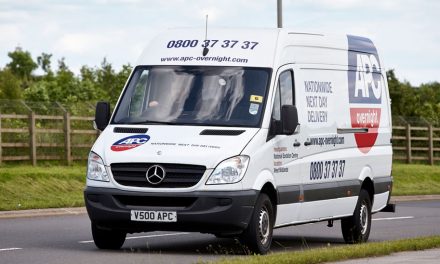
It now faces 13 competitors including DHL, Lynx, Business Post and TNT.
However, all these carriers face the problem of what to do when shoppers aren't at home.
Here the Royal Mail has the upper hand.
Its local collect service allows customers to nominate a post office from which they can pick up their items.
However, it won't hold parcels delivered by other carriers. One start-up company aiming to tackle this is CollectPoint.
It has built a network of 1600 local collection venues, including petrol stations, Coop branches and convenience stores, and will hold anything delivered by any carrier for a flat Pounds 2.50 charge.
Founder Andrew Starkey reckons he needs about 3500 local pickup points to achieve nationwide coverage.