


Allan Leighton persuaded the government and Post Office workers to take a chance on a promised restructuring
ALLAN LEIGHTON HAS PERSUADED THE GOVERNMENT AND POST OFFICE WORKERS TO TAKE A CHANCE ON A PROMISED RESTRUCTURING. BUT PRIVATISATION BECKONS IF HE FAILS TO DELIVER, SAYS DAN ROBERTS:
As he cleared away the Consignia-branded coffee cups from his desk yesterday, Allan Leighton took at least one small step in the restructuring of the Post Office.
The chairman's decision to change Consignia's name back to the historic, and popular, Royal Mail is likely to be by far the easiest step. The detritus of the previous rebranding – involving everything from china mugs to corporation chocolates – will cost little more than Pounds 1m to replace.
But the symbolic break with the group's recent attempts to reinvent itself could prove a turning-point. By making no secret of his contempt for the clumsy makeover ordered by his predecessors, Mr Leighton has reinforced his reputation as a new broom capable of taking a fresh approach to its problems.
At first sight, it looks an impossible mess. Yesterday, the group revealed a loss of Pounds 1.1bn for its last financial year. A further 17,000 job cuts in delivery offices were announced on top of 13,000 redundancies already planned in the parcels division. Ultimately, the 200,000-strong workforce could shrink by a fifth once natural wastage is added to the toll. And John Roberts, the chief executive who presided over the rebranding 18 months ago as part of a failed international expansion plan, is retiring early.
Mr Leighton, currently part-time chairman, has little interest in filling the vacant chief executive's job himself. The former Asda chief executive has staked his reputation on building a career based on a series of 11 non-executive directorships and is only now conceding that he may need to relinquish two or three of them.
But Mr Leighton's experience in the retail industry has left him with obvious talents as a showman. His first tactic has been to appear brutally honest about the extent of the Royal Mail's difficulties. "Frankly the business is in a mess and there is no point trying to hide the fact. The most important thing is that everyone in the company understands the current position is untenable."
There is a suspicion that the company wants to exaggerate the problems to justify harsh medicine. Yesterday's press release carried the headline: "Pounds 1.1bn loss underlines need for radical restructuring". In fact only Pounds 318m was owed to operating losses. The rest is an exceptional charge taken to pay for the 13,000 redundancies planned in Parcelforce, a big part of that restructuring. A further Pounds 500m of exceptional restructuring costs is expected this year.
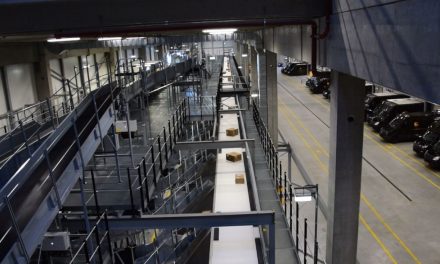
Operating losses on this scale are worrying enough. Until last year, Royal Mail had been consistently profitable for two decades – paying Pounds 1.8bn in dividends to the Treasury over that period. But the slide into financial crisis has its roots in the past. Decades of under-investment have left the distribution network with relatively little automated equipment to compete with growing competition from private rivals. Overcoming this legacy requires expensive investment in new equipment in addition to the redundancy programme. By stoking the atmosphere of crisis, Mr Leighton has persuaded the government to give back the dividends of the past 20 years, helping to fund generous enough redundancy terms to have a fair chance of avoiding industrial action from the heavily unionised workforce.
Patricia Hewitt, the trade secretary responsible for Mr Leighton's appointment, has also been persuaded to take another step. One big threat to the Royal Mail's finances was a plan by Postcomm, the independent regulator, to end its monopoly rapidly and open up the market to competition faster than had been foreseen. Against her own government's policy to encourage the independence of such regulators, Ms Hewitt was encouraged by Mr Leighton to apply not-so- subtle pressure on Postcomm to delay the proposals.
It worked. Although Postcomm denies that ministers forced its hand, the regulator climbed down earlier this month and gave Royal Mail an extra year to prepare for the end of its monopoly.
It was persuaded by new figures, showing a rapid deterioration in the group's finances, to grant a narrow window of opportunity for Mr Leighton to make job cuts and start on new investment.
Mr Leighton has a second quality from his retail background that may help him. As part of a personal campaign to sell the changes, the chairman has been getting up early to visit sorting offices and post offices to share his message with the workforce. "I have probably spoken to about 2,000 of our front-end people," he says. "They want to get on with it. They want to know what it means for them."
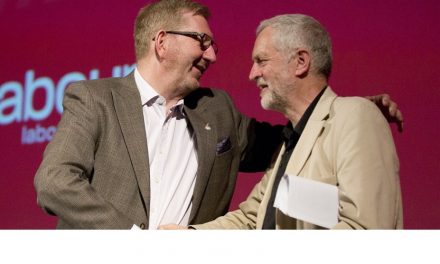
This man-of-the-people strategy has had limited results with Royal Mail's management, which Mr Leighton wants to slim down from 15 layers to fewer than six. He has a reputation among some senior executives for being unpredictable and aggressive. But it seems to be working where it matters most. The postal unions, used to dealing with a remote management, have responded well to his overtures. The threat of strike action over redundancies has receded.
This has been made possible only by the generous public subsidy. Without the government money to pay for redundancies, Mr Leighton would have been unable to meet the union demand for no compulsory job losses. But the mixture of sweet-talking and scaremongering has worked wonders with the Communication Workers Union, one of the most militant in the UK. Billy Hayes, general secretary, conceded yesterday that the group's financial results were "undeniably bad".
The staff restructuring will still not be easy. The union argues that service standards could suffer as a result – and wants a say in how it is done. "Indiscriminately shedding staff is not an option if we are to continue the universal service," says Mr Hayes. But the strongest response the union could muster yesterday was to insist that "any and every job cut is justified by management and that it will not affect the service nor impact adversely on workmates". Given that 30,000 jobs are at stake, that is quite a step forward for a company that in past years has been responsible for more working days lost due to strikes than any other business.
Mr Leighton also faces political pressures. Having intervened on his side, Ms Hewitt has made it clear that she expects him to produce quick results. Stephen Timms, latest in a line of DTI ministers to take direct responsibility for the Post Office, says there is no scope for a further bail-out. "From a trading point of view the position of (Consignia) funding is clear. They've got the funding resources they need to bring about the changes they need," he says.
The government has its own reasons for nervousness. By backing him so clearly, and putting pressure on the regulator, it has aligned its reputation with that of Mr Leighton, in contrast to its earlier promises to leave Consignia's management to "commercial independence". But a rare mood of optimism is creeping across Whitehall. "I have every confidence that the Post Office has a very successful commercial future ahead of it," says Mr Timms. "Beyond the next two-to-three year time frame the Post Office can be very optimistic of its commercial prospects."
Even Mr Leighton is cautiously hopeful. "If we had not got funding from the government and did not have a turnround situation and a series of actions then the business would be in serious trouble. I am pretty confident with the organisation, and with one or two new people coming in we will be able do this." He emphasises the change of attitude among workers. "I am confident we have come a long way to getting people's minds around the problem."
If Mr Leighton's plans fail, however, it would leave the government with few options apart from privatisation of a business that would have resisted all efforts at reform within the public sector. "No change is not an option," he says. "Unless we change we die".