
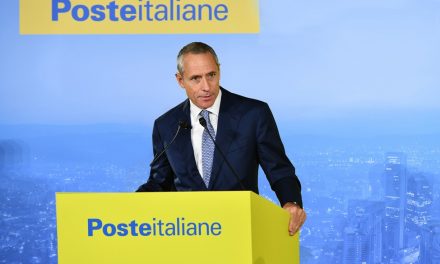



Author: Archive

Rivals seek to block UK Royal Mail's pounds 2bn handout

TNT, a competitor to Royal Mail in the UK, is warning that it will complain to Brussels if the government agrees to put public money into the state-owned postal operator to fund investment. With all restrictions on competition lifted today, Royal Mail chairman Allan Leighton believes the group needs pounds 2 billion investment if it is to compete with major international operators such as TNT and DHL Global, part of Deutsche Post. The government is considering a loan or an equity investment styled on a rights issue. However, TNT believes any such move could be anti-competitive and break the rules on state aid. Nick Wells, chief executive of TNT Mail, said: ‘If it is unfair and anti-competitive, we are not going to sit there and watch it happen.’ TNT’s legal adviser, Angus Russell, said there were problems with both arrangements. With a rights issue, the government as the shareholder would subscribe to all shares offered – unlike in the City, where investors can refuse if they think it offers bad value.

Read More
Returns and Retail

Introduction 3
Shoppers and Returns survey 4
High Street shoppers and on-line shopping 4
Why High Street shoppers purchase on-line 5
When High Street shoppers shop least on-line 6
Returns and Shoppers 7
Returns differences across product and channel 8
When do you think goods can be returned? 10
Returns impact on Trading 11
Returns and Consumer understanding of their rights 12
Survey Summary and Conclusions 13

P:LibraryB2CRetail and Returns Survey 2006.doc

Read More

Ten trends to watch in 2006

Those who say that business success is all about execution are wrong. The right product markets, technology, and geography are critical components of long-term economic performance. Bad industries usually trump good management, however: in sectors such as banking, telecommunications, and technology, almost two-thirds of the organic growth of listed Western companies can be attributed to being in the right markets and geographies. Companies that ride the currents succeed; those that swim against them usually struggle. Identifying these currents and developing strategies to navigate them are vital to corporate success.

What are the currents that will make the world of 2015 a very different place to do business from the world of today? Predicting short-term changes or shocks is often a fool’s errand. But forecasting long-term directional change is possible by identifying trends through an analysis of deep history rather than of the shallow past. Even the Internet took more than 30 years to become an overnight phenomenon.

Macroeconomic trends

We would highlight ten trends that will change the business landscape. First, we have identified three macroeconomic trends that will deeply transform the underlying global economy.

1. Centers of economic activity will shift profoundly, not just globally, but also regionally. As a consequence of economic liberalization, technological advances, capital market developments, and demographic shifts, the world has embarked on a massive realignment of economic activity. Although there will undoubtedly be shocks and setbacks, this realignment will persist. Today, Asia (excluding Japan) accounts for 13 percent of world GDP, while Western Europe accounts for more than 30 percent. Within the next 20 years the two will nearly converge. Some industries and functions—manufacturing and IT services, for example—will shift even more dramatically. The story is not simply the march to Asia. Shifts within regions are as significant as those occurring across regions. The United States will still account for the largest share of absolute economic growth in the next two decades.

2. Public-sector activities will balloon, making productivity gains essential. The unprecedented aging of populations across the developed world will call for new levels of efficiency and creativity from the public sector. Without clear productivity gains, the pension and health care burden will drive taxes to stifling proportions.

Nor is the problem confined to the developed economies. Many emerging-market governments will have to decide what level of social services to provide to citizens who increasingly demand state-provided protections such as health care and retirement security. The adoption of proven private-sector approaches will likely become pervasive in the provision of social services in both the developed and the developing worlds.

3. The consumer landscape will change and expand significantly. Almost a billion new consumers will enter the global marketplace in the next decade as economic growth in emerging markets pushes them beyond the threshold level of USD 5,000 in annual household income—a point when people generally begin to spend on discretionary goods. From now to 2015, the consumer’s spending power in emerging economies will increase from USD 4 trillion to more than USD 9 trillion—nearly the current spending power of Western Europe.

Shifts within consumer segments in developed economies will also be profound. Populations are not only aging, of course, but changing in other ways too: for example, by 2015 the Hispanic population in the United States will have spending power equivalent to that of 60 percent of all Chinese consumers. And consumers, wherever they live, will increasingly have information about and access to the same products and brands.

Social and environmental trends

Next, we have identified four social and environmental trends. Although they are less predictable and their imp

Read More

Facing the Forces of Change: Lead the Way in the Supply Chain

Facing the Forces of Change®: Lead the Way in the Supply Chain is the eighth edition in the acclaimed wholesale distribution trends series from the NAW Institute for Distribution Excellence. This all-new report provides wholesaler-distributors, manufacturers, suppliers, and their customers with strategic insights into the key business and economic trends affecting the wholesale distribution supply chain through 2012. The report also describes innovative strategies and tactics that wholesaler-distributors can use in response to these trends.

Read More

Multi-channel Shopping Survey

Table of Contents
Introduction 1
Objectives & Methodology 1
Summary of Findings 2
Section One: Who Shops Across Multiple Channels? 4
Section Two: Influence of Shopping Channels on Most Recent Purchase 6
Section Three: Awareness and Expectation of Channels Offered 8
Section Four: Channels Actually Used for Purchase and/or Research by Sector 11
Section Five: Habits of Multi-channel Shoppers 13
Section Six: Respondents’ Comments from the Survey 15
P:LibraryB2Cendor Multi-channel Shopping Survey Jan06.pdf

Read More

Advertisement

Advertisement

Advertisement

P&P Poll

Loading

Have you noticed a decrease of non-EU inbound parcel volumes since the implementation of the new €3 charge?

Thank you for voting
You have already voted on this poll!
Please select an option!


Post & Parcel Magazine


Post & Parcel Magazine is our print publication, released 3 times a year. Packed with original content and thought-provoking features, Post & Parcel Magazine is a must-read for those who want the inside track on the industry.


Pin It on Pinterest