



Author: Archive

DHL install new automated sorting system at Chubu Gateway, Japan

DHL, today installed an automated sorting system for parcels at the Chubu Gateway at Central Japan International Airport, a dedicated facility providing DHL customers with bonded warehousing and customs clearance processing at one convenient location. This installation is part of DHL’s commitment to invest an additional 11 billion yen (USD 90 million) in Japan over the next few years, and comes on the heels of the inauguration of the expanded DHL Kansai International Airport Gateway in June this year.

The processing capacity of the new automated sorting system at the Chubu Gateway is 7,500 pieces per hour, expanding capacity to approximately three times the volume possible with standard manual sorting. The automated sorting system accommodates the growing volume of cargo handled in the Chubu area, especially for trade between Japan and China, and promotes the effective utilization of the Gateway – complementary to DHL’s other Japan Gateways at the Narita International Airport and Kansai International Airport – through the enhancement of shipment processing speed and service quality.

With the opening of the Central Japan International Airport in 2005, DHL has made substantial investments in the Chubu area. The Chubu Gateway was opened in March 2006, joining the six service centers established in the Tokai and Hokuriku regions since 2005. In October 2006, Air Hong Kong – DHL’s joint venture with Cathay Pacific – began operating a five-time-weekly dedicated service connecting the Central Japan International Airport to DHL’s Central Asia Hub in Hong Kong, expanding transport capability and fortifying next-day delivery services between the two regions. Based on this strengthening of both ground and air networks, a greater number of locations in the Tokai and Hokuriku regions now enjoy same-day pick-up and same-day delivery services, reducing transport times by as much as one day.

Read More

USPS Board of Governors approves request of USD 117.7 for 2009

The US Postal Service’s Board of Governors approved an appropriation request of USD 117.7 million for fiscal year 2009 yesterday.

Every year, the board makes an appropriation request to Congress. For the fiscal year 2008, the board requested USD 153.4 million. At this time, the House has recommended USD 88.9 million of that amount and the Senate has recommended USD 117.9 million.

For the fiscal year 2009, the board’s request included a reimbursement of USD 69.8 million for services such as free mail for the blind and overseas voting. The USPS is required to provide these services without charge. In fiscal year 2008, the USPS requested a reimbursement of USD 83.5 million in this category.

The request also included USD 29 million for the latest annual installment from the Revenue Forgone Reform Act of 1993. In accordance with this act, the USPS is entitled to be reimbursed for lost revenue as a result of certain services it was required to provide in fiscal years 1991 through 1993. This amount also covers shortfalls in reimbursement related to the cost of processing and delivering certain types of nonprofit mail from 1994 through 1998.

The appropriation request also included reconciliation adjustments for fiscal years 2006 and 2007 of USD 16.1 million and USD 2.8 million, respectively. These amounts are based upon final audited mail volumes. By law, the USPS is authorized to request partial reimbursement for costs related to providing universal service. However, since fiscal year 1993, the USPS has not requested funds for this purpose.

Read More

Technology developed by Mysore PTC to be launched on January 1, 2008

Mysore is likely to emerge as a “technology hub” for postal services in South Asia. With the Postal Training Centre (PTC) here already in the forefront of developing innovative technologies for the improvement of postal administration in 22 postal circles across the country, India Post is strongly vying for bringing the proposed South Asian Postal Technology Centre to Mysore.

India Post has sent a formal request to the Bern-based Universal Postal Union (UPU) and the Asia Pacific Postal Centre in Bangkok for considering Mysore as the venue for establishing the premier centre to train officers from South Asian countries in developing state-of-the-art technology in postal matters.

As a first step, India Post, which functions under the Ministry of Communications and Information Technology, Government of India, is establishing the National Postal Technology Centre on the premises of PTC in Mysore. The centre, which will be one of its kind, will be developed as a “centre of excellence” to impart specialised training to the personnel of postal circles in developing technologies such as developing software and custom-made computers to suit postal services.

The Mysore PTC has been training postal employees from several African countries and Thailand. Significantly, the postal departments in countries such as Nepal, the Maldives and Bhutan are using the software developed by the PTC to improve their postal administration.

Read More

MP Kitty Ussher Uses GCMT to Announce FSA to Regulate Payment Services Directive

“In the UK, according to our best estimates, around GBP 2.3bn worth of remittances are made each year. The money transfer sector is growing rapidly. Already we have almost 4000 money transfer business operating out of almost 30,000 premises. A transparent and robust system for overseas money transfers is crucial and we need the market to work as effectively as possible.”

With this statement, Economic Secretary and City Minister Kitty Ussher opened the third Global Consumer Money Transfer conference in London.

She went on to announce to the industry that the Financial Services Authority will regulate the Payment Services Directive (PSD) in the UK, clearing the uncertainty that has surrounded this issue. “We think that the FSA is the best choice; they are the best people to do it.”

“It’s a whole new system of regulation under the Payment Services Directive that we think will make our sector stronger while preventing abuse. Everything to do with the Directive, with the exception of the money laundering issue will be done by the FSA.”
While the FSA will be the UK regulator for the PSD, the HM Revenue and Customs will retain its supervisory role over businesses. Ms Ussher said, “HMRC are experienced anti-money laundering and counter terrorist financing supervisors. By retaining supervision of money service businesses HMRC will provide continuity for the sector and be able to utilise their supervisory powers under the Money Laundering Regulations 2007. I believe this will provide the most effective approach.”

Read More

Boost for WEEE reuse as alliance agreed between FRN, DHL and DSG (UK)

A pact which aims to boost the reuse of waste electrical and electronic equipment (WEEE) by 100,000 items a year has been agreed between the Furniture Re-use Network (FRN), delivery company DHL and retailer Dixons Stores Group (DSG). Under the agreement WEEE collected by DHL from DSG’s nationwide takeback-on-delivery service will be reused by FRN.

DSG’s 14 UK regional distribution centres have been partnered with an FRN Approved Reuse Centre (ARC) through FRN subsidiary FRN Enterprises. Each ARC is reusing between 70 and 200 items a week.

DSG group reverse logistics operations director Sarah Geddes explained: “Since the introduction of WEEE legislation in July, we have been keen to play an active role in encouraging customers to recycle their old electrical items responsibly. This alliance is important as it enables us to encourage reuse.”

This type of structured approach is maximising the amount of electrical and electronic appliances that can be reused through a nationally prescribed agreement dovetailing with local relations between site operators and reusers.”

When delivering new products delivery staff will ask customers if the product being replaced still works and if it does they will tell customers that the item will be reused by the local FRN ARC. Working items will be labelled to enable distribution site staff to sort returned items for reuse or recycling. Then one of 14 ARCs will collect the reusable WEEE from DSG.

Read More

Royal Mail stops grey fleet usage (UK)

The Royal Mail has confirmed that it is to stop its employees from using their own vehicles for work. More than 8,000 of the Royal Mail’s 120,000 staff currently use their own transport while at work.

They will be required to end the practice within the next two to three years and use alternatives provided by Royal Mail as part of a wider £1.2 billion upgrade investment.

According to a Royal Mail spokesman, delivery staff should never have to use their own vehicles, although it has become accepted practice in some areas.

However, on occasion, postmen and postwomen ask to use their vehicles to travel to and from their delivery route in preference to officially planned transport.

Approval is subject to an assessment by the local delivery office manager and considerations include insurance, health and safety and security.”

Despite these checks, the Royal Mail has said it will now insist that employees no longer use their own vehicles at work.
The Royal Mail said the initiative would take several years to complete, but that it had the backing of staff, especially after they had been presented with alternatives such as electric trolleys.

Read More

USPS Automated Postal Centers save time (U.S.)

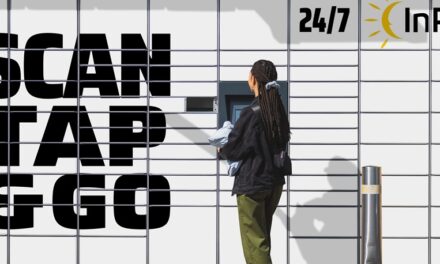
Mail packages and conduct other postal business regardless of Post Office hours using self-service kiosks located in thousands of Post Office lobbies across the country. Just as an ATM is a virtual stand-alone bank, Automated Postal Centers are virtual, stand-alone Post Offices.

APCs are as easy to use as an ATM, but without the fees. APCs accept major credit and debit cards and generate a receipt for payment. All APCs also conduct business in Spanish.

With time always short and schedules overbooked, APCs allow customers the extra convenience of being open 24 hours a day, seven days a week. APCs are located in well lit and secure Post Office lobbies, transactions are private and safe.

A touch screen guides customers through their transactions by providing a series of prompts for each purchase or sale. A retail associate can help answer questions during Post Office hours.

Every APC has a scale to weigh the package. Use the SmartMat on the left side of the station to measure packages. Weight and size help determine the proper amount of postage. Customers also input the destination and how quickly the package should arrive to calculate postage.

APCs allow customers to print shipping labels for the services and pay using a credit or debit card. With the address label and postage secured on the package, it can be placed inside the parcel slot next to the APC. Packages up to 12 inches high by 13 inches deep and 20 inches wide can be accepted.

Read More

Advertisement

Advertisement

Advertisement

P&P Poll

Loading

What's the future of the postal USO?

Thank you for voting
You have already voted on this poll!
Please select an option!


Post & Parcel Magazine


Post & Parcel Magazine is our print publication, released 3 times a year. Packed with original content and thought-provoking features, Post & Parcel Magazine is a must-read for those who want the inside track on the industry.


Pin It on Pinterest